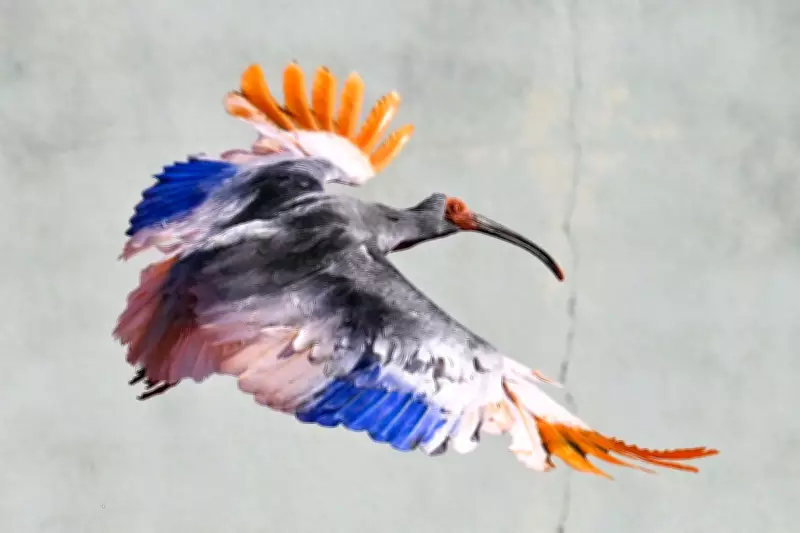
Eight crested ibises have been released into the wild in a north-central Japanese town, marking a significant milestone decades after the birds went extinct in the country. The endangered birds were set free from wooden cages during a ceremony on Sunday in Hakui city, located in the Noto region, where they were last seen in the wild.
Ceremony and Symbolism
The white birds, known as Toki in Japan, are native to East Asia and are admired for their orange-pink hues under their wings and bright red marks around their eyes. Residents cheered as the birds soared into the sky at the moment Crown Prince Akishino, his wife Kiko, and other officials cut a ribbon around the cages. The release was also seen as a good omen for the Noto region, which is still recovering from the deadly 2024 earthquake.
Historical Context
The crested ibis went extinct on Japan's main island of Honshu in the 1970s, threatened by overhunting and environmental degradation. The last remaining Japanese native ibis died in 2003 on Sado Island. However, the species was revived thanks to China's support for breeding. In 1999, artificial breeding using a pair donated from China successfully produced the first Japanese crested ibis chick born in captivity, according to the Environment Ministry.

Conservation Success
Breeding and conservation efforts have since helped the bird population recover. In 2008, ten birds raised at the Sado conservation center were released into the wild on the island, where their population has now increased to around 500, the ministry reports. The eight birds released on Sunday were raised and protected at the same conservation center on Sado Island in Niigata Prefecture. Ten more birds are awaiting release.