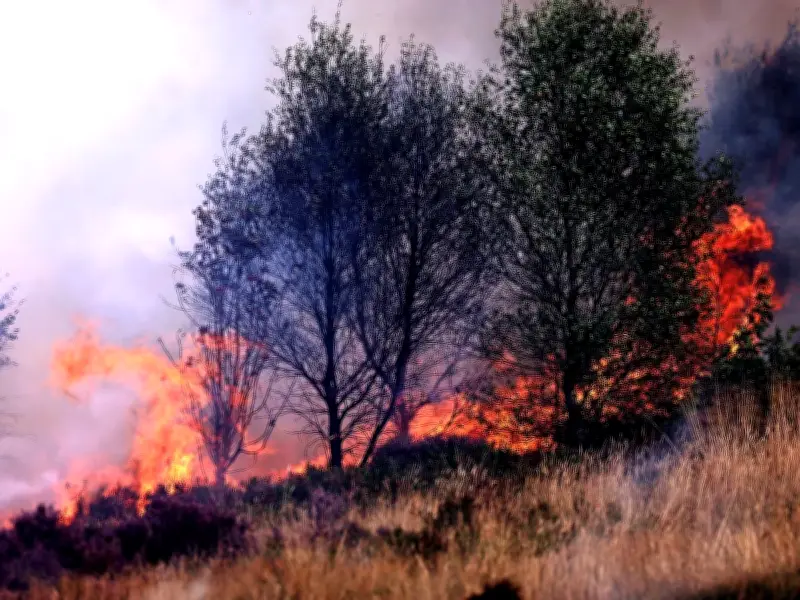
Record-breaking temperatures, drought, and deliberate or accidental acts have combined to send devastating wildfires across a land mass several times the size of Swansea this summer. Hundreds of fires swept through Wales in August alone, with the Army called in as people were evacuated, roads shut, and water drops made from the air.
Once-green mountains, fields, and heathland have been left blackened, and a number of buildings burned. Wildlife caught in the flames has been decimated, with habitats laid to waste in apocalyptic scenes on parched earth.
Unprecedented Scale and Impact
As firefighters worked around the clock, experts say some of the land may take decades, or longer, to recover. In some areas, peat has burned deep into the ground, threatening ecosystems which took millennia to evolve. One long-serving firefighter, not prone to exaggeration, said: "It has been a time of crisis."

Final figures are not available, but data from one senior fire chief shows there have been thousands of grassfires across Wales this year. In July alone, more than 500 wildfires were recorded. For the Mid and West Wales Fire Service area alone, 460 wildfires were reported in August.
Arson and Community Response
Most of this summer's wildfires in Wales appear to have been started deliberately, although some were accidental. Of the more than 3,200 grassfires across Wales between January and August this year, 66% were started deliberately. At the time of writing, 18 people, some as young as 13, have been arrested in connection with deliberately starting separate fires in the South Wales Police area alone in August.
Communities and businesses came out to offer free food, water, and places to rest for emergency crews. Local councils opened sports centres as rest areas for locals unable, or too scared, to get home. Hundreds of soldiers from the Queen's Own Gurkha Logistic Regiment, with headquarters support from 22 Royal Engineers, came to help fight wildfires in Wales in August.
Long-Term Recovery and Research
Peter Greenslade, area manager for Mid and West Wales Fire and Rescue Service (MAWWFRS), said the "enormous" number of fires is the highest ever, and the scale has been more intense and extensive than previous years. Through August, MAWWFRS attended more than 460 wildfires on open land covering 120,000 hectares, equivalent to land twice the size of Swansea or 150,000 football pitches.
Researchers at Bangor University are launching what they describe as "an urgent scientific campaign" to measure the hidden damage caused by this summer's wildfires to UK soils, biodiversity, and ecosystems. The project, led by Professor Davey Jones, is being developed with wildfire response partners including Defra, the Forestry Commission, Natural Resources Wales, Natural England, the National Trust, National Park authorities, Scottish Forestry, and fire and rescue services.
Natural Resources Wales (NRW) said it is too early to fully assess the full scale of the destruction. Andrew Wright, NRW's senior specialist advisor for plant health, said the fires have been devastating for communities, farmers, wildlife, and the landscape. The Welsh Government has announced a wildfire summit to be held in September.