US Ski Resorts Face Crisis as Bikini-Clad Skiers Hit Slopes Amid Record Low Snow
US Ski Resorts in Crisis as Bikini Skiers Hit Slopes

US Ski Resorts Battle Unprecedented Snow Shortage as Warmth Persists

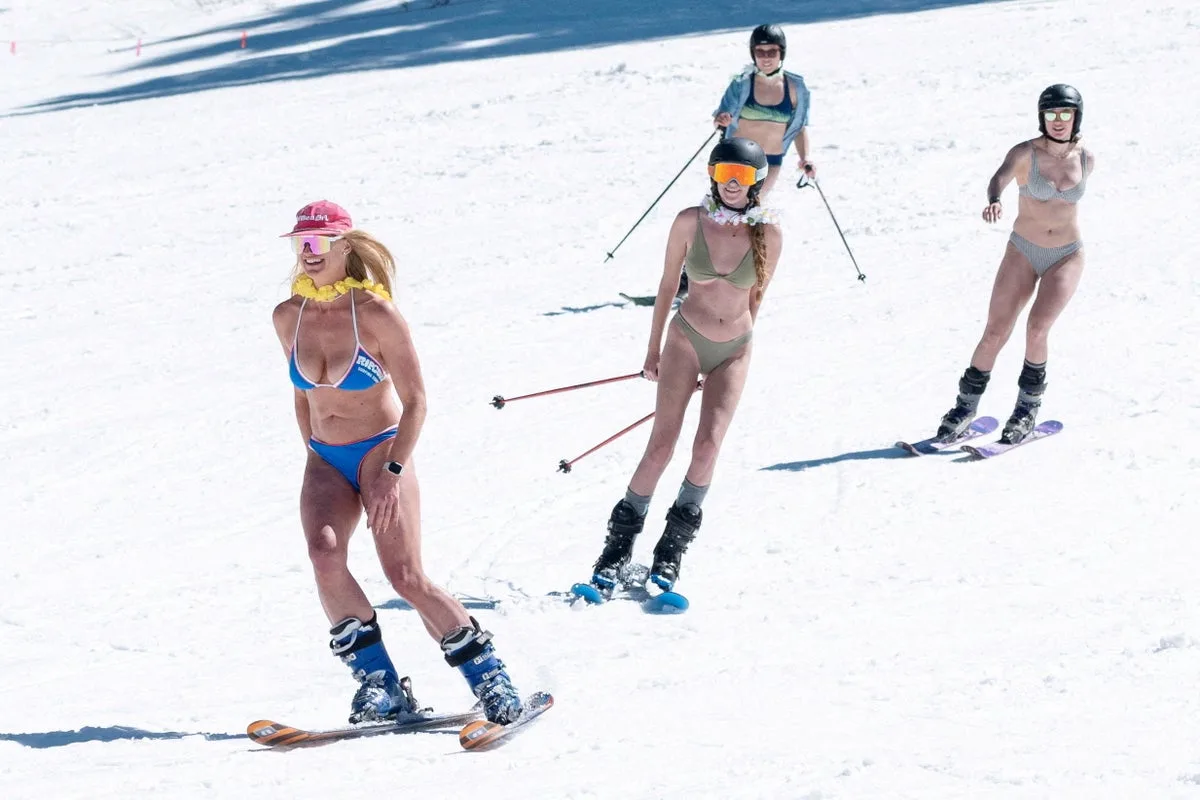
Ski resorts across the American West are confronting the most severe snow drought in decades, with many forced to close early or remain shuttered entirely due to record-low snowfall. The situation has become so dire that skiers are taking to the slopes in bikinis and swimsuits, a stark visual representation of the abnormally warm conditions.

Resorts Resort to Desperate Measures to Stay Open

From New Mexico to Utah and Colorado, ski operators are implementing extreme measures to maintain operations. At Taos Ski Valley in New Mexico, management has resorted to bulldozing snow from mountain areas onto ski runs in a last-ditch effort to keep trails accessible. Meanwhile, in Colorado, iconic destinations like Vail are operating with less than 20 percent of their trails available, with brown dirt patches marring what should be pristine white slopes.

According to a Reuters analysis, more than half of the 120 ski resorts in the U.S. West have either closed prematurely, will close early, or never opened for the 2026 season. This represents a dramatic increase from typical years when only about a dozen resorts might close early due to poor conditions.

Wide Pickt banner — collaborative shopping lists app for Telegram, phone mockup with grocery list

Climate Scientist Points to Long-Term Warming Trend

Climate researcher Daniel Swain, an associate researcher with University of California Agriculture and Natural Resources, confirms that snowpack is on track to be the lowest on record at nearly every western ski destination. "This was a remarkably bad snow year, not just in one basin, but across most of them," Swain stated, attributing the trend directly to long-term climate change. "It's really just been a tale of astonishing warmth throughout the West."

The National Weather Service reported that during the week ending March 26, temperatures in the Western U.S. soared 20-30 degrees Fahrenheit (11-17 Celsius) above normal, breaking daily records in over 150 locations.

Economic Impact on $20 Billion Industry

The dismal season has veteran ski industry professionals questioning the sustainability of the approximately $20 billion U.S. ski and snowboard sector, which supports more than 190,000 jobs. Vail Resorts, which operates 37 North American ski areas including Park City, Vail, Beaver Creek and Keystone, described the year as the "worst-case weather scenario" for many of its properties.

On March 9, the company significantly reduced its fiscal 2026 net income guidance to $144 million to $190 million, representing a 30 percent decrease at the midpoint from its previous December projection of $201 million to $276 million. Chief Executive Rob Katz noted in a statement, "This has been the most challenging winter across the Rockies that we have ever experienced with the lowest snowfall levels in more than 30 years for our Colorado and Utah resorts."

Local Businesses Feel the Pinch

The economic repercussions extend beyond the resorts themselves to surrounding communities. In Silverthorne, Colorado, a town encircled by ski destinations, restaurant owner Allison Buffum reported business declines of 10-15 percent at her establishment Saved by the Wine. "There is no snow on the mountains. It was a pretty horrific winter, the worst since 1976," Buffum lamented, noting that some visitors were sunning on her patio as if it were summer rather than hitting the slopes.

Environmental and Safety Concerns Mount

The lack of snowpack has raised significant environmental concerns beyond the immediate impact on winter tourism. Higher elevations that typically remain snow-covered now have little or no snow, increasing wildfire risks as soil and vegetation dry out earlier than normal. Additionally, the diminished snowpack threatens water supplies to major cities like Phoenix and Las Vegas, which depend on snowmelt feeding the Colorado River.

Skiers Adapt to Unprecedented Conditions

At Park City, Utah, which received just 158 inches (401 cm) of snow this year—less than half its annual average—the atmosphere has transformed dramatically. Abby Freireich, a decade-long visitor from New York, described the scene as "otherworldly, almost like a sci-fi landscape, the terrain, so much of it is closed off or not skiable." Her 11-year-old son Zachary reported having to navigate around rocks and 15-foot-wide (4.57 meters) puddles while skiing.

Pickt after-article banner — collaborative shopping lists app with family illustration

In Breckenridge, Colorado, cross-country skiers took matters into their own hands, volunteering at the Breckenridge Nordic Center to shovel snow from forests onto slushy trails. Despite these efforts, the center closed three weeks early. Volunteer Anton Artemenko described the back-breaking work as "difficult."

Bikini Skiing Becomes Unusual Norm

The most striking visual evidence of the abnormal conditions comes from skiers themselves. At Taos Ski Valley, where 76 inches of snowfall represented less than a third of the annual average, shirtless skiers were seen "water skiing" over large puddles forming at the resort's base. Maylyn Bubala, a 19-year-old Oregon State University student, wore an athletic bikini top to ski in 80-degree (26.6 C) heat just days before the resort closed.

"The rising temperatures, it's pretty insane," said Bubala, who recently wrote a paper on the environmental impact of early snowpack melting. "This is not natural." Her sentiment echoes the growing concern among scientists, industry professionals, and recreational skiers alike that what was once considered an anomaly may become the new normal for winter sports in the American West.




