
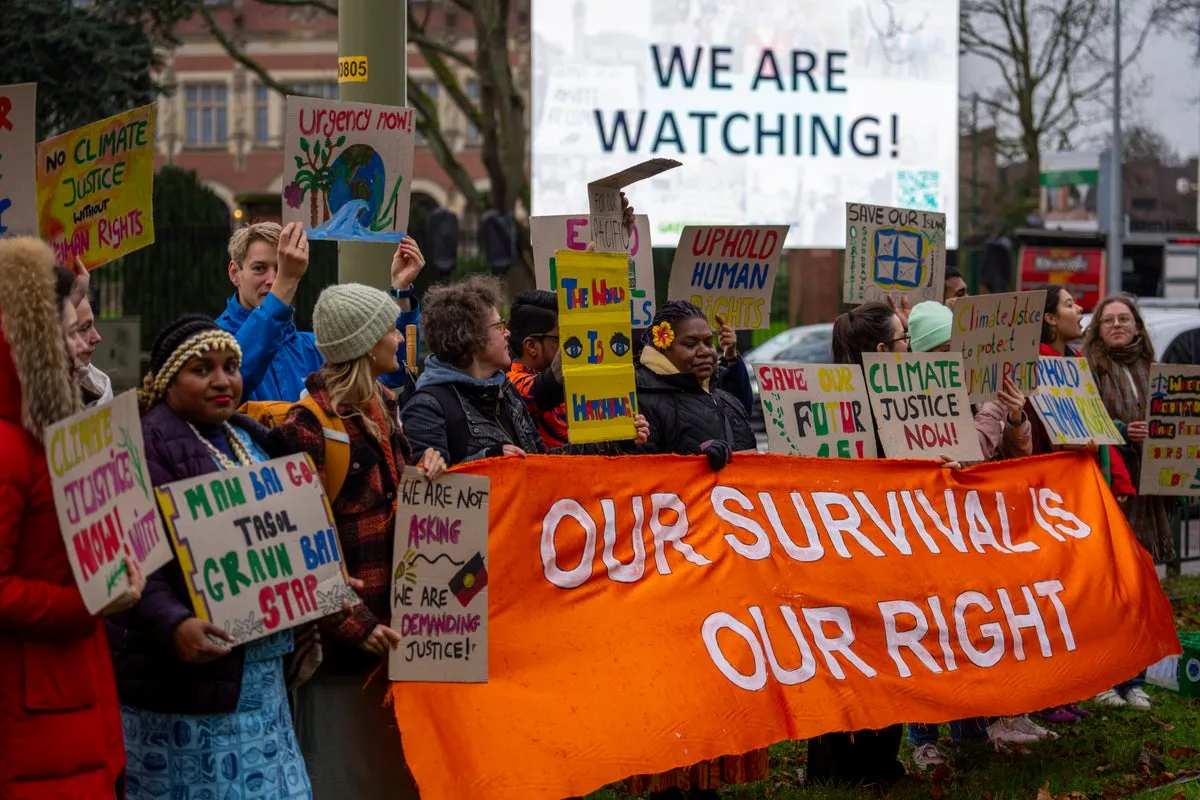
The International Court of Justice (ICJ) has issued a landmark legal opinion stating that countries have binding obligations to tackle climate change under international law, and failure to do so could constitute a 'wrongful act'. The ruling, requested by small island nations threatened by rising sea levels, opens the door for states to sue each other over climate damage.
Experts say the UK, as one of the largest historic emitters of greenhouse gases, could be a target for litigation. The ICJ explicitly stated that climate-destructive conduct includes not only emissions but also policy-making, licensing of fossil fuel projects, and subsidies that drive the climate crisis. This means Britain's continued support for North Sea oil and gas exploration could be challenged in court.
While the ICJ's opinion is not legally binding, it is expected to carry significant weight in domestic and international courts. Joie Chowdhury, senior attorney at the Center for International Environmental Law, called it 'a clear legal blueprint to hold major emitters accountable'. She added that courts around the world already use ICJ rulings as persuasive authority.
Small island nations and African countries, which have contributed the least to global emissions but suffer the most from climate impacts, are most likely to bring cases. Chowdhury noted that the ruling 'has laid the legal pathway' for state-versus-state litigation, though such cases are complex and expensive.
The ICJ opinion is expected to 'supercharge climate litigation', with more than 2,600 climate-related cases already filed globally. Governments that fail to regulate emissions-intensive industries or withdraw from international agreements, such as the United States under Donald Trump, are particularly vulnerable.




