The UK's current record-breaking heatwave has the 'fingerprints of climate change all over it,' a leading climate scientist has warned, while stressing that the government must do much more to adapt to this new reality.
Record Temperatures Shattered
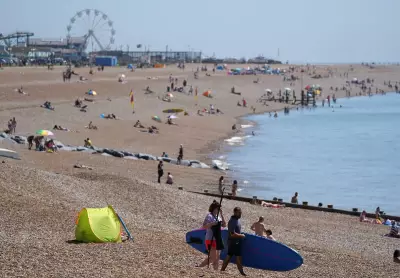
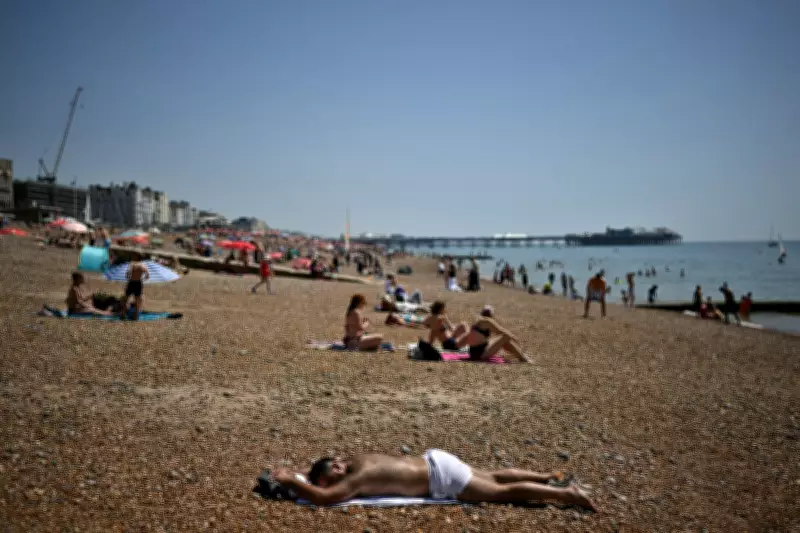
Britain is enduring its fifth consecutive day of soaring temperatures, with 35C recorded at Heathrow Airport on Tuesday, breaking the May temperature record for the second time in two days. Locations from Suffolk to Berkshire and Warwickshire have all set new records, according to the Met Office. The 34.8C recorded in Kew Gardens, London, on Monday smashed the previous May record of 32.8C—set in 1922—by a massive two degrees, a record that was then surpassed on Tuesday.
Blistering UK temperatures meant London was set to be warmer than Lagos, Cairo, or Ho Chi Minh City, according to early forecasts.

Climate Scientist's Warning
Friederike Otto, professor of climate science at Imperial College London, described these 'astonishing' spring temperatures as a clear sign of how the climate crisis is disrupting weather patterns. 'This record-breaking heat has the fingerprints of climate change all over it,' she said. 'Seeing 35C in the UK during spring is absolutely astonishing, but the science is very clear—climate change makes these heatwaves hotter, longer, and far more frequent.'
She added: 'The climate we are living in today is simply not the one we grew up with, and our buildings and infrastructure are woefully unprepared for what's next. Temperature records will continue to tumble until we fundamentally halt global emissions and reach net zero.'
Government Report Highlights Gaps
Professor Otto's warning comes just a week after the UK government was told in a major new report that not nearly enough is being done to adapt to the escalating climate crisis. The findings, from the government advisory body the Climate Change Committee (CCC), include warnings that more than nine in 10 homes are not well insulated enough to keep out the heat, while by 2050, a daily shortfall in water supply of five billion litres is expected.
International climate action since the 2015 Paris Agreement has reduced projected future warming, the CCC said, but the world is still not on track to keep the average global temperature rise below 2C, and warming as high as 4C remains a possibility. Even global warming of 2C by 2050 will mean hotter, longer heatwaves, with temperatures 'regularly' exceeding 40C in parts of the UK.
The global average temperature has so far increased by just over 1.3C since pre-industrial times. When UK temperatures exceeded 40C for the first time in July 2022, an estimated 3,000 people died, Network Rail issued a 'do not travel' warning, and thousands of homes in the north lost power.
Need for Investment
The CCC has said that investment of around £11bn per year is now needed to adapt to the climate crisis, including to control temperatures in hospitals and care homes, shore up supply chains, and increase the resilience of food systems.
'I don't want to rain on anyone's parade if they are enjoying the sun, but we have to realise that what we are experiencing right now is extreme weather,' said Gareth Redmond-King, from the Energy and Climate Intelligence Unit. 'It's very dangerous and it will likely kill people, as we know that excess deaths go up when we have these extreme temperatures.'
Health Alert Issued
Mr Redmond-King's comment comes after the UK Health Security Agency (UKHSA) issued its first amber health alert of 2026 on Friday, warning of significant impacts across health and social care services. The alert is in place until Wednesday.
'It's clearly exceptional when the May temperature record falls not once but twice in two days—and this is what is happening at a global average temperature increase of just 1.3C,' Mr Redmond-King continued. 'As the CCC rightly has pointed out, investing in adaptation is very important. But governments also need to double down on net zero, because there will come a point at which we can no longer adapt, which is why decarbonising has to remain at the forefront of everything.'
The current heatwave is expected to last until Wednesday, after which temperatures will gradually decline, though remain in the high 20s, with dry, sunny spells expected.