
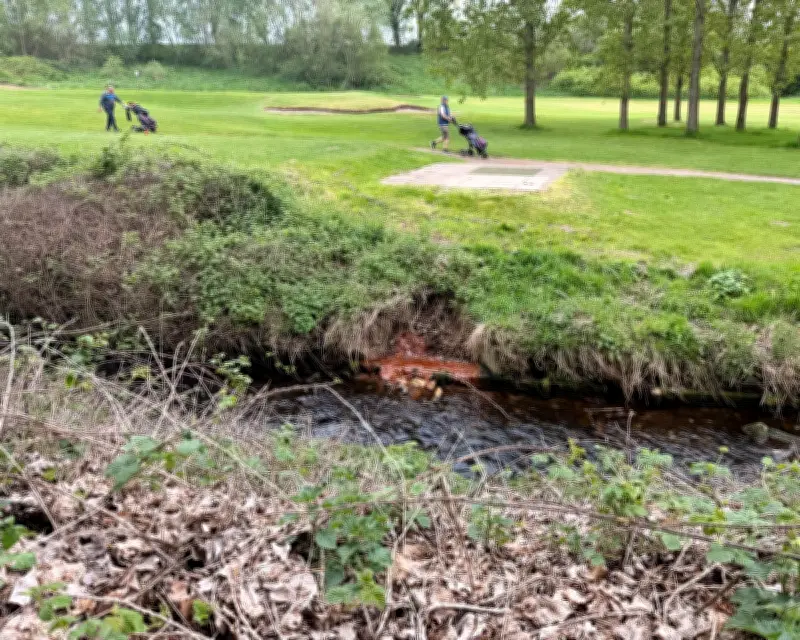
Malkins Bank golf course in Cheshire, a former tip where hazardous chemical waste was indiscriminately dumped, has been deemed suitable for golf and now includes a children's play area, despite contamination expected to last 100 years. The 18-hole course, stretching across a narrow strip of land bordered by dairy pastures and the Trent and Mersey canal, was once used by British golfing legend Ian Woosnam to train young golfers.
Discovery of the Toxic Legacy
Graham Warner, a resident of Sandbach, received a folder of documents from a neighbour that revealed the true extent of contamination beneath the golf course. Tony Minshall, leaseholder from 2011 to 2025, had become increasingly alarmed about the landfill beneath the greens. In 2017, a machine fell into a methane chamber covered only with hardboard and carpet, emitting a horrendous smell. The council eventually capped the chambers, but it took two and a half years.
Minshall was told that remediation of the entire site would cost £1.3bn. He was unaware that the land had been officially classified as contaminated in 2011. During heavy rain in November 2022, foul-smelling substances rose to the surface, killing grass and trees and spilling into the river. A report by Obsidian Environmental found that inadequate landfill capping and drainage allowed rainwater to force leachate to the surface.
Industrial History and Indiscriminate Dumping
The site has a long industrial history, operating as a salt works in the mid-Victorian era, then an alkali works, and later produced ammonium nitrate for bombs during World War I. It became a waste tip in 1950, but indiscriminate tipping began in the 1960s. A handwritten dump log from March 1968 shows over 1,000 tonnes of waste, including waste lime, tannery waste, and drums from companies like ICI and Shell. Purle Group, a regular dumper, was reported to have disposed of polychlorinated biphenyls (PCBs) in Cheshire during the 1970s.
Dave Parry, a former employee, said it was common knowledge that ICI dumped drums of acid at midnight. Night dumping was reported by residents, who complained of "tom cat" and "rotten eggs" smells. Legal wrangling closed the tip, and the council recovered only £12,000 from the owner. A 1973 report by John Long, Cheshire's assistant county planning director, described the 24-hectare site as a heap of thousands of drums containing toxic substances, with two shallow lakes heavily contaminated with chemical waste and oil, some drums likely to explode.
Contamination and Health Concerns
Barrels of hazardous sodium cyanide were thought to be present, and there were concerns about waste leaking into old salt caverns and brine runs, potentially causing subsidence. A handwritten note from 1984 mentioned possible radioactive waste disposal, but radiation surveys in 1985 and 2002 found no additional risk. Despite the toxicity, the council deemed the site's optimum afteruse as a golf course, which opened in 1980 after four years of reclamation.
For 30 years, foul odours and leachate broke through the surface, killing grass. Tests found heavy metals, benzene, and toluene at concentrations classed as serious contamination. In 2011, Cheshire East Council officially designated the land as contaminated after pollution spread through groundwater. Remediation was deemed disproportionately expensive compared to environmental benefit.
Ongoing Risks and Local Outrage
Pipes from the 15th fairway discharge into Birchenwood Brook, with rust-orange soil and an oily sheen, smelling of hydrocarbons and rotten eggs. Warner found fine rust-orange dust in his basement, believing it to be landfill gas. Karen Mason, whose husband played golf there, expressed outrage, saying the council endangered people for financial gain.
Minshall, who leased the land a day after it was designated contaminated, said the council never disclosed this. His company went into liquidation, and he lost his leg in 2021, which he believes is linked to the contamination. Defra records show about 100 historical landfills beneath golf courses in England and Wales.
A Cheshire East Council spokesperson said the site is suitable for its current use, with low risk to human health, and they are addressing drainage issues. The Environment Agency has not logged pollution incidents since June 2020. Prof Kate Spencer, a landfill specialist, advised reappraising the use of the site, as capping may fail over time. Under current legislation, responsibility often falls on the local authority, but Spencer called for mechanisms to hold polluters accountable.
The current leaseholder has added a zip line and bouncy castles for children. In 1973, Long warned that future generations would not forgive such lethal eyesores. The documents, kept by former councillor Vera Platt, have shocked the community, revealing a toxic legacy that will persist for a century.




