
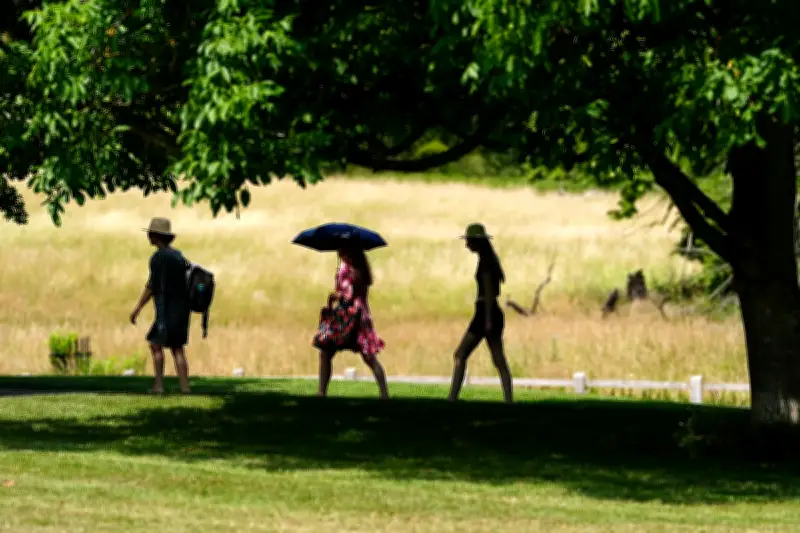
The UK's highest June temperature was surpassed for the third day in a row as the record-breaking heatwave peaked at 37.3C on Friday, according to the Met Office. The provisional temperature was recorded in Santon Downham, Suffolk, exceeding the 36.7C measured in Merryfield, Somerset, on Thursday. These temperatures smashed the long-standing June record from 1976 by more than 1C, a significant margin given that such records were typically broken by only a fraction of a degree in the past.
Climate Change Blamed for Unprecedented Heat
Scientists warned on Friday that the current heatwave would have been virtually impossible 50 years ago, with human-driven climate change fueling more intense and frequent extreme heat events. Met Office chief forecaster Andy Page said: “Today marks the peak of the heatwave in terms of temperatures and the third consecutive day of record-breaking June heat. This exceptional heat has been unprecedented for June and is another marker on how climate change is shifting the dial on temperature extremes in the UK.”
Health and Infrastructure Under Strain
Health chiefs warned of the impact the conditions are having on services, with significantly more life-threatening emergency calls reported. Several hospitals declared critical incidents, including University Hospital Southampton, which canceled planned operations and outpatient appointments. Schools and nurseries were forced to close, with at least 571 schools fully or partially shut across Somerset, Gloucestershire, Herefordshire, Buckinghamshire, Oxfordshire, West Berkshire, and Worcestershire. A hosepipe ban was introduced in Kent amid surging demand.
Transport Disruptions and Closures
Train passengers were urged to avoid non-essential travel across much of England on Friday, with Network Rail advising that services in the Met Office's red and amber zones should be used only if absolutely necessary. Eurostar canceled several trains between London and Paris on Friday evening due to extreme heat on its network. The M5 was closed in both directions between junctions 22 and 23 in Somerset because of a fault with National Grid infrastructure, causing severe delays of up to two hours. Sheffield's tram network was suspended on Friday afternoon due to the heat. The AA reported almost one third (30%) more breakdowns than on a normal Friday, noting that the heat was taking a toll, particularly on older vehicles and those not serviced.
Tourist Attractions and Courts Affected
Some tourist attractions shut early or did not open on Friday. Stonehenge moved its last entry forward to ensure safety, while Marwell Zoo in Hampshire closed completely. Courts were also affected, with cells at Bristol Crown Court closed due to heat, leading defendants to be moved to Bristol Magistrates' Court. The sentencing of six defendants for a firearms conspiracy, including Faisal Razzaq, one of Pc Sharon Beshenivsky's killers, could not proceed at Harrow Crown Court because the dock was too hot.
Weather Warnings and Outlook
The Met Office extended its red warning of extreme heat until 9pm on Friday for London and parts of east and southeast England, including Oxfordshire, Bedfordshire, Hampshire, and Kent—the first time red heat warnings have been issued over three consecutive days. An amber heat warning remained in place for a wider area until midnight, covering the East Midlands, East of England, North West, South West, West Midlands, and Yorkshire and Humber. Met Office chief forecaster Page noted that the UK is seeing a gradual shift in conditions, with southeast England retaining warmth the longest and temperatures peaking in the low 30s on Saturday. Warnings of thunderstorms and heavy rain were issued across most of Scotland, with a yellow warning in place until 3am on Saturday, and another yellow thunderstorm warning for the North East until 9pm on Friday. The heatwave is driven by a heat dome—an area of high pressure trapping heat—settling over western Europe, compounded by human-driven climate change from burning fossil fuels, which is making such extreme heatwaves more frequent and intense.




