A committee of Trump administration officials, colloquially known as "the God Squad," has unanimously voted to override crucial endangered species protections, clearing the path for expanded oil and gas drilling operations in the Gulf of Mexico. This controversial decision, made during a meeting at the Interior Department in Washington, D.C., on Tuesday, 31 March 2026, has sparked immediate outrage from environmental groups who warn it imperils dozens of vulnerable species, including the critically endangered Rice's whale and the Kemp's ridley sea turtle.
Unanimous Vote Sparks Environmental Fury
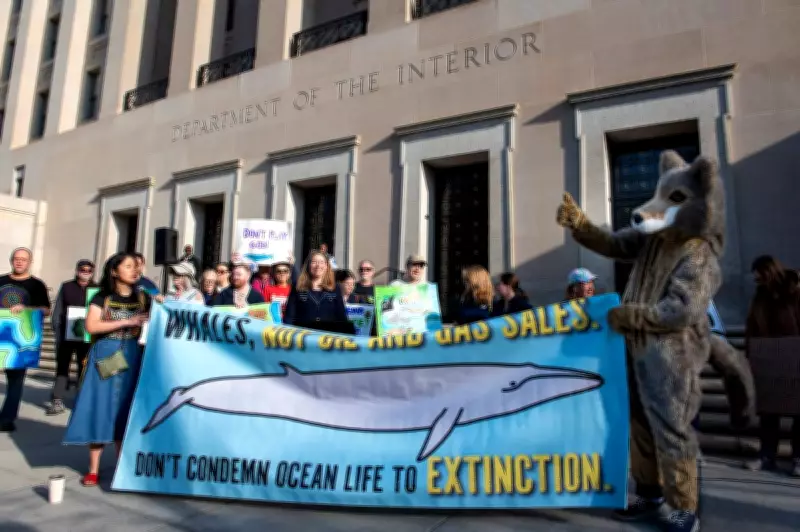
The Endangered Species Committee, which earned its dramatic nickname due to its power to make decisions affecting the very survival of imperiled species, convened and voted to approve an exemption under the Endangered Species Act. This move represents the latest in a series of environmental policy rollbacks witnessed under the Trump administration. Furious demonstrators gathered outside the Interior Department building to protest the decision, highlighting the deep public divide over energy development versus conservation.
National Security vs. Ecological Catastrophe
Defense Secretary Pete Hegseth, who attended the meeting alongside Interior Secretary Doug Burgum and EPA Administrator Lee Zeldin, framed the exemption as "a critical matter of national security." He argued that the United States must ensure a reliable and secure energy supply, not merely for economic reasons like gas prices, but to power the military and protect the nation. Hegseth cited recent hostile actions by Iran near the Strait of Hormuz as evidence of why robust domestic oil production is an imperative.

However, environmental advocates vehemently contested this justification. Andrew Bowman, president and CEO of Defenders of Wildlife, labeled the committee's decision "unprecedented and unlawful." In a strongly worded statement, Bowman asserted, "Invoking national security cannot justify potentially pushing the Rice's whale—or any of our nation's irreplaceable wildlife species—into the abyss of extinction." He argued that true national security involves protecting healthy lands and waters that support both people and wildlife.
Species on the Brink
The Defenders of Wildlife organization warned that this regulatory waiver could harm "dozens of imperiled species." The Gulf of Mexico is home to the Rice's whale, with only about 50 individuals remaining according to the National Oceanic and Atmospheric Administration. The region also hosts the Kemp's ridley sea turtle, the world's smallest and most endangered turtle species. The potential for increased industrial activity, including seismic surveys and drilling, poses significant risks of habitat disruption, ship strikes, and pollution for these and other marine animals.
Industry Perspective and Historical Context
Andrea Woods, a spokesperson for the American Petroleum Institute, offered a contrasting view, telling The Washington Post that the industry has a "long track record of protecting wildlife while developing offshore energy responsibly." She emphasized that American energy leadership depends on balancing reasonable, science-based protections with meeting growing energy demand.
This meeting marked only the fourth time the "God Squad" has convened since its establishment. The committee last met in 1992 to discuss a potential exemption for logging operations, as reported by The New York Times, underscoring the rarity and gravity of such interventions in species protection laws.
A Deepening Political Divide
The decision has intensified the ongoing political battle between the Trump administration's energy-first policies and environmental conservation efforts. While administration officials tout the move as essential for energy independence and security, activists and some legal experts question its lawfulness and long-term ecological consequences. The Interior Department did not immediately respond to requests for comment on the controversy.
As protests continue and legal challenges are anticipated, this action by the "God Squad" sets a significant precedent for how national security arguments are weighed against environmental protections, with potentially irreversible impacts on biodiversity in the Gulf of Mexico.