
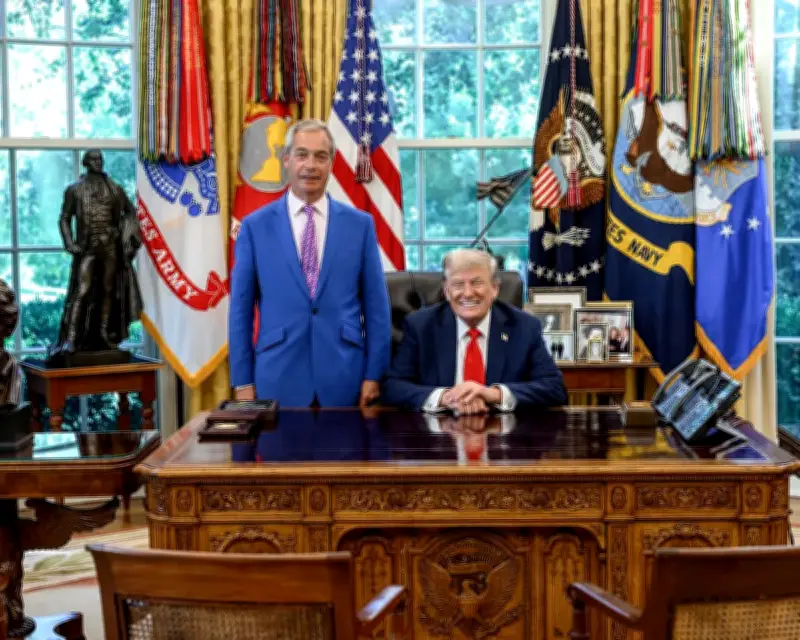
Trump's $2bn Windfall From Presidency
Donald Trump made more than $2bn in the first year of his second term, according to his latest financial disclosure published this week. The money came from Trump hotels, golf courses, cryptocurrency, watches, cologne, Bibles, and more. This marks an unprecedented transformation of the American presidency into a moneymaking enterprise, with Trump departing billions richer than when he entered office in 2017 after decades of bankruptcies and business failures.
Rise of the Political Grifter
Across the West, a new type of leader is emerging: the political grifter. Nigel Farage has traded on his fame to become the best-paid MP at Westminster while maintaining an image as a champion of downtrodden Britons. He takes flights on private jets of a billionaire benefactor, as does Australian populist Pauline Hanson, who has repeatedly breached rules on declaring them. Tutu Alicante, a human rights lawyer and kleptocracy expert, says: "For decades, there was an implicit understanding that using public office for personal enrichment carried political and reputational risks. That restraint appears to be eroding."
Crypto Corruption Allegations
Trump launched his own meme coin upon returning to the White House, making $635m despite many buyers losing money when the price plunged. Democratic Senator Elizabeth Warren denounced "brazen crypto corruption," alleging the ventures are a way to buy political favours. A three-way transaction involving Trump's crypto company World Liberty Financial, the UAE, and a convicted crypto kingpin saw $500m of Emirati money flow to Trump's company, with the UAE gaining access to powerful AI chips and the kingpin receiving a pardon. The White House says: "Neither the president nor his family have ever engaged, or will ever engage, in conflicts of interest."
Farage Under Investigation
Farage faces two investigations into his relationship with crypto tycoon Christopher Harborne, who has given Reform UK and its predecessor two-thirds of their funding. Labour urged the standards watchdog to examine whether Farage broke rules by lobbying the Bank of England to drop a cryptocurrency plan costly to Harborne. The watchdog is already investigating Farage's failure to declare a £5m personal gift from Harborne. Farage said: "It's not the public's business."
Erosion of Ethical Norms
Transparency International's latest survey shows the US, UK, Canada, and France recorded their lowest scores on public perception of corruption since 2012. Duncan Hames, head of policy at Transparency International UK, says: "We're seeing a concentration of wealth and power on a scale unprecedented in modern history. There's a growing risk of state capture through extreme wealth and advanced technologies." Historian Anne Applebaum notes that followers of corrupt leaders "either don't know about corruption … or they don't care, because they see their leaders as 'ours'."
Resilience of Democratic Systems
Tom Keatinge of the Rusi thinktank warns: "We should be looking across the Atlantic and saying: Could our system resist the kind of capture that the Trump administration has achieved in the States?" Trump's loyalists in Congress, the justice department, and watchdogs have cowed institutions that should uphold probity, raising concerns about the future of democratic accountability.




