Trump Administration Overturns Foundational Climate Regulation, Dismantling EPA Authority
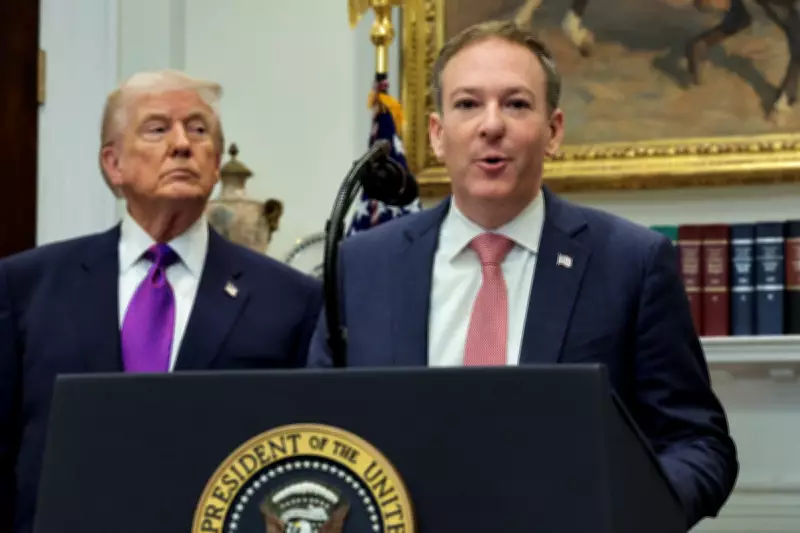
In a sweeping move that fundamentally reshapes American environmental policy, the Trump administration has revoked the landmark 2009 finding that greenhouse gases endanger public health and welfare. This decision, announced on Thursday by President Donald Trump alongside Environmental Protection Agency Administrator Lee Zeldin, effectively removes the legal foundation for nearly all federal climate regulations established over the past fifteen years.
"Disastrous Obama Era Policy" Terminated
Speaking at the White House, President Trump characterized the endangerment finding as "a disastrous Obama era policy that severely damaged the American auto industry and massively drove up prices for American consumers." He asserted that the determination had "no basis in fact" and "no basis in law," while praising fossil fuels for saving millions of lives and lifting billions from poverty worldwide.
The president claimed this action would "eliminate over $1.3 trillion of regulatory cost" and dramatically reduce automobile prices. He specifically targeted what he called "the green new scam," announcing the immediate repeal of the endangerment finding and termination of all additional emission standards imposed on vehicle models and engines from 2012 through 2027 and beyond.

Largest Deregulatory Act in U.S. History
EPA Administrator Lee Zeldin, a former New York congressman, described the move as "the single largest act of deregulation in the history of the United States of America." He denounced the 2009 finding as "the holy grail of federal regulatory overreach" that had enabled what he characterized as a sixteen-year ideological crusade costing trillions of dollars and strangling economic sectors.
"The endangerment finding and the regulations that were based on it didn't just regulate emissions, it regulated and targeted the American dream," Zeldin declared. "Now the endangerment finding is hereby eliminated, as well as all greenhouse gas emission standards that followed. The red tape has been cut."
Zeldin emphasized that automakers would no longer be burdened by measuring, compiling, or reporting greenhouse gas emissions for vehicles and engines, nor would they face pressure to shift their fleets toward electric vehicles.
Consequences for Climate Policy and Public Health
This regulatory reversal effectively erases EPA limits on greenhouse gas pollution across multiple industries, adding to dozens of prior environmental policy rollbacks since Trump returned to power in January 2025. The 2009 finding had served as the legal underpinning for nearly all federal limits on planet-heating emissions under the Clean Air Act, including:
- Vehicle pollution standards
- Methane regulations
- Restrictions on emissions from power plants
- Industrial facility limitations
Without this foundational determination, the EPA's authority to regulate carbon dioxide and other greenhouse gases becomes severely constrained. The move immediately rolls back tailpipe emission limits, allowing automakers to produce vehicles with significantly higher fuel consumption than currently permitted.
Scientific and Activist Response
Climate scientists and environmental activists have issued stark warnings about the consequences of discarding the 2009 ruling. They argue this action will throttle the United States' ability to prevent the worst outcomes of climate change while endangering global populations in service of the administration's energy dominance agenda.
Author and Third Act founder Bill McKibben offered a pointed analogy: "If you're busily committing a crime, it's smart to try and change the law so that it's not technically a crime any more. Big Oil is not content to merely wreck the future, they'd like to alter the past as well."

Dr. Daniel Swain, a climate scientist with the California Institute for Water Resources, noted that inevitable legal challenges could delay implementation for a year or more while courts examine whether the government properly executed the revocation. "If this ultimately comes to pass, the consequences will be stark," Swain warned. "It essentially would halt all federal actions to regulate heat-trapping and climate change-causing greenhouse gases as a pollutant. That would mark a grim milestone, indeed."
Broader Pattern of Environmental Policy Dismantlement
Thursday's announcement represents the latest in a series of actions by Administrator Zeldin to dismantle the federal government's capacity to measure or respond to human-induced climate change. Last year, he announced the agency would shutter its Office of Research and Development, which provides critical expertise for environmental policy formulation, regulation development, and analysis of climate change and pollution dangers.
Over the past fifteen years, the endangerment finding had facilitated significant reductions in climate pollution while protecting American public health through strengthened limits on power plants and enhanced emission standards for trucks and other vehicles. Its elimination marks a profound shift in how the United States addresses one of the most pressing global challenges of our time.