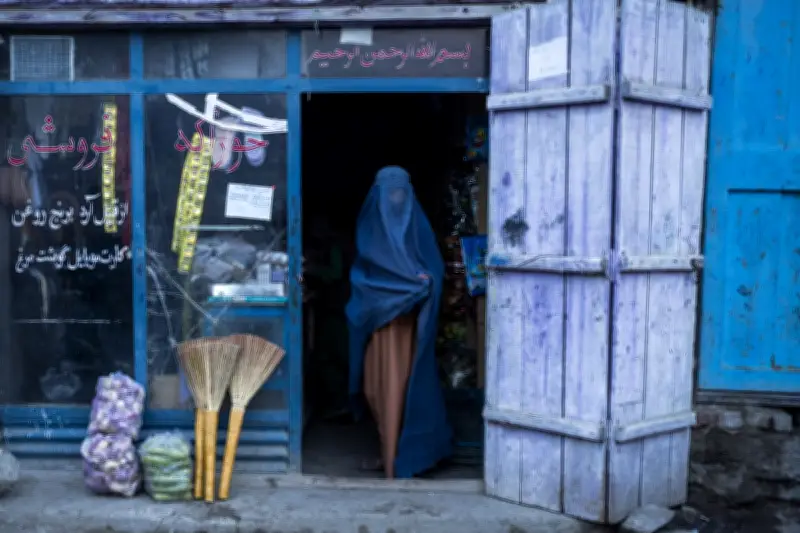
Under a new decree issued by Taliban leader Hibatullah Akhundzada in April 2026, Afghan women have virtually no independent right to end a marriage. The law sets out 12 grounds for judicial separation but requires the husband's consent in all cases, even when abuse or neglect is proven. It also legalizes child marriage, allowing male relatives to marry off children at any age.
Fatima's Story: A Forced Marriage to a Disabled Husband
Fatima, a young woman from northern Afghanistan, was married in summer 2024 to a man she had never met. Her family was told he was shy, but on the wedding day they discovered he had severe intellectual and physical disabilities, unable to eat, wash, or dress himself. After months of cooking, cleaning, and caring for him, Fatima begged her parents to help her seek a divorce. They took her to court, but the judge asked her husband only one question: "Who is this woman?" He replied, "She is my wife." The judge ordered Fatima returned to her in-laws as Taliban soldiers pointed weapons at her parents. Her mother, Shirin, recalled: "My daughter was screaming and crying that she did not want to go with them. But nobody listened."
Legal Framework: No Divorce Without Husband's Consent
The decree explicitly states that judges and arbiters "cannot, solely on the woman's request and without the husband's consent, grant divorce." Even in cases of abuse, neglect, or a missing husband, women must prove their case in court, and the husband's consent remains paramount. For missing husbands, women must wait until the man is presumed dead before separation is possible.
Khul Divorce: Buying Freedom at a High Price
The decree allows khul, a form of divorce where a woman pays her husband to consent to end the marriage, but sets no limit on the amount. Ruqya, 16, was engaged to a 31-year-old relative in Turkey against her will. When her family sought khul, the fiancé's family demanded 800,000 Afghanis (£9,300). Her family sold their home and arranged a marriage for her younger sister to raise money, but still couldn't pay the full amount. Ruqya remains trapped in the marriage. "When I look at my mother and father, I feel like I destroyed them," she said. "My mother says: 'If you had accepted [your marriage], at least we would still have our house.'"
Leila, 24, from northeastern Afghanistan, paid 250,000 Afghanis for khul, forcing her father to sell his car and two milking cows. Sima, 26, from Kabul, ended a one-year engagement after her family paid 400,000 Afghanis.
Abuse and Violence: No Way Out
Habiba, 27, has spent four years trying to escape her abusive husband. After the Taliban takeover, her husband lost his job and became increasingly violent, beating her constantly. She went to police and court, but he refused to appear. When Taliban inspectors visited her home, her husband's family slaughtered a sheep for them and apologized. The inspectors were satisfied, and Habiba was ordered to return or pay 1.6 million Afghanis to her husband. Her father had no money. "I am still here," she said. "I am waiting for this government to fall, or for money to appear. One of those two."
Mina, 22, from Herat, managed to escape an unwanted marriage only after working double shifts in an embroidery workshop in Iran for two years to pay her fiancé's inflated expenses. "I bought my own freedom," she said.
Fatima's Fate: Beaten and Trapped
For Fatima, the abuse has worsened. Family members who visited saw her face badly bruised. A relative said: "They beat her regularly. She said they warned her that if her parents tried for divorce again, they would ask the Taliban to arrest them." Her father last saw her months after the court forced her back. "She held me tightly and begged me to take her with me," he said. "My hands are tied. I don't know how to save my daughter from that situation. She has become very weak, and I am afraid something worse may happen to her."