
The Deadliest Day in British Military History
On July 1, 1916, the British Army suffered its worst single day in history. Fourteen British divisions attacked along an 18-mile front from Gommecourt to Maricourt, aiming to break German lines and seize Bapaume. By nightfall, the British had sustained more than 57,000 casualties, including a staggering 19,000 dead. This grim milestone marks the 110th anniversary of the Battle of the Somme, a battle that has become synonymous with the horror and futility of World War I.
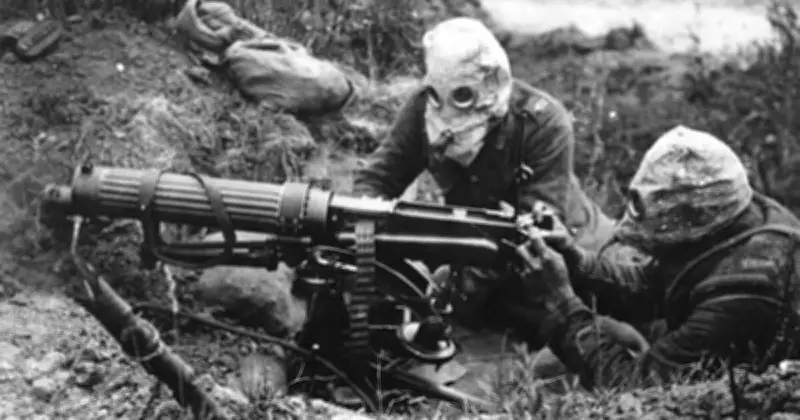
The image of soldiers going "over the top" into machine-gun fire has dominated popular memory. One British officer recalled: "We were supporting another company and were able to see how gallantly they leapt to it. The German machine-guns had not been eliminated, and at once they opened up accurate fire on our parapets. The men simply got up and fell back into the trench, either killed outright or badly wounded."
The New Army and Its Sacrifice
The first day of the Somme is forever linked to the New Army—wartime volunteers who answered Lord Kitchener's call. Kitchener, the Minister of War, foresaw a long conflict and pushed for a massive expansion of the British Army. These volunteers fought en masse for the first time on the Somme, and their heavy casualties plunged small, tightly-knit communities into mourning.
The battle continued in fits and starts until November 1916. By the end, the British had advanced only five to six miles, failing to achieve the first day's objectives. This left lingering questions about the battle's purpose and worth.
Haig's Defense and Historical Debate
Field Marshal Sir Douglas Haig, the British Commander-in-Chief, defended the offensive. He argued it relieved the French Army at Verdun and wore down German strength, taking "a long step forward towards the final victory of the Allied cause." Historians have largely dismissed this reasoning. A.J.P. Taylor famously wrote that "idealism perished" in 1916, stating: "The Somme set the picture by which future generations saw the First World War; brave helpless soldiers; blundering obstinate generals; nothing achieved."
More recently, revisionist historians like William Philpott have called the Somme a "bloody victory" and argued it was the "military turning-point of the war" that helped destroy the German Army. However, scepticism remains, given British losses exceeding 400,000 by the battle's end.
Strategic Disagreements and Tactical Failures
The disaster stemmed from a fundamental disagreement between Haig and General Sir Henry Rawlinson, commander of Fourth Army. Haig wanted a rapid breakthrough to restore a war of movement. Rawlinson, more cautious, advocated "bite and hold"—limited attacks focused on killing Germans. The resulting plan was a compromise: a long preliminary bombardment (as Rawlinson wanted) but with Haig's deep objectives. This diluted artillery power, as guns shelled an enormous front. Although German defences were bombarded for a week, only a few areas were sufficiently pulverised. Most of the 14 divisions advanced into murderous fire at 7.30am.
Haig believed in massing infantry to blast through German lines. Rawlinson understood this was impossible. July 1 proved that British methods were not mature enough. Shrapnel was preferred to high-explosive, failing to demolish deep dug-outs or cut barbed wire. Infantry, armed only with rifles and bayonets, were woefully under-gunned. Tanks, deployed in September, were still raw technology prone to breakdown.
The Enduring Legacy of the Somme
After the Somme, the British Army emerged bloodied and experienced, with greater firepower and equipment. Yet the crucial question—breakthrough versus "bite and hold"—remained unresolved. Haig never lost faith in breakthrough, but Rawlinson's insight that attrition and firepower mattered more proved critical on the Western Front. Wars would no longer be won by single great battles. The Somme's painful legacy is the need for a strategy that hurts the enemy without risking unnecessary manpower.
Nick Lloyd is Professor of Modern Warfare at King's College London and author of six books, including Passchendaele: A New History (2017), The Western Front (2021), and The Eastern Front (2024).




