
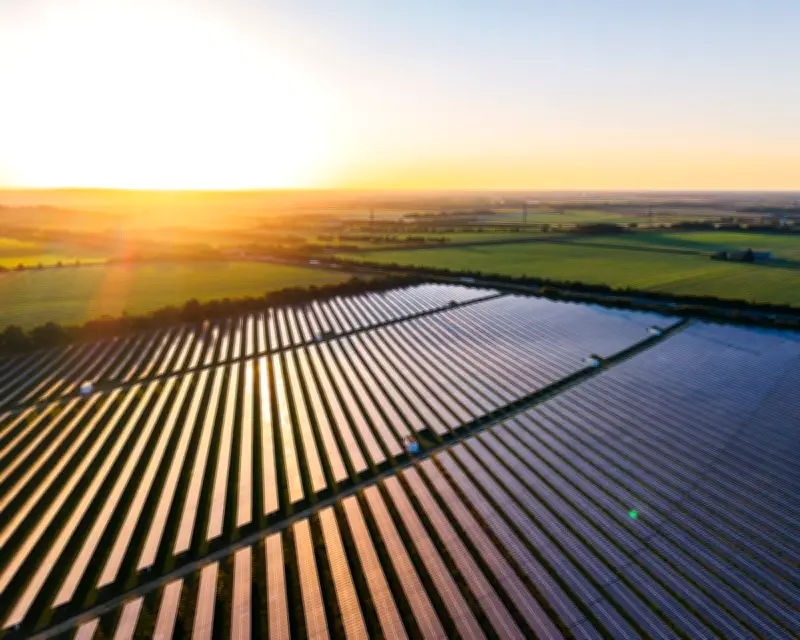
Reader Question Sparks Debate on Solar Farm Location
A reader from Middlesbrough, Chris, has posed a question that has gained traction online: why build solar farms on green spaces when vast car parks could be covered with solar panels instead? The query, submitted to The Guardian's Notes and Queries series, touches on a key tension in renewable energy development—balancing clean energy generation with land conservation.
The Case for Car Park Solar Canopies
Proponents argue that covering car parks with solar panels (known as solar canopies) offers multiple benefits. They generate electricity without competing for agricultural or natural land, provide shade for vehicles (reducing interior heat and fuel evaporation), and can be integrated into existing infrastructure. According to a 2021 study by the US Department of Energy, covering all large-format retail parking lots in the US could generate enough electricity to power nearly 10% of the nation's homes.
Current Adoption and Challenges
While the concept is popular, adoption remains limited. In the UK, solar car parks are rare, with most solar farms still built on rural land. Barriers include higher installation costs compared to ground-mounted systems, structural requirements for supporting panels over large areas, and grid connection issues. However, countries like France and Japan have seen growth in solar canopies, partly driven by policies encouraging dual-use of land.
Environmental and Planning Considerations
Solar farms on green spaces can disrupt ecosystems and change land use, though they can also be designed to support biodiversity. Car parks, already paved, avoid these issues. Yet, not all car parks are suitable: orientation, shading from buildings, and structural load capacity matter. Planning policy in the UK is evolving; some local authorities now encourage solar canopies in new developments.
Expert Responses and Public Opinion
Dr. Rebecca Johnson, a renewable energy researcher at the University of Exeter, notes: "Car parks are an underutilized resource. They cover significant areas in urban and suburban settings, and solar canopies can make a meaningful contribution to local energy needs without the land-use conflicts associated with greenfield solar farms." The internet meme Chris references has sparked broader public interest, with many calling for policy changes to incentivize such installations.
Future Outlook
As solar panel efficiency improves and costs decline, car park solar may become more viable. Some retailers like IKEA and Walmart have already installed solar canopies in select locations. Readers are invited to submit their own answers or new questions to nq@theguardian.com, with a selection published next Sunday.




