
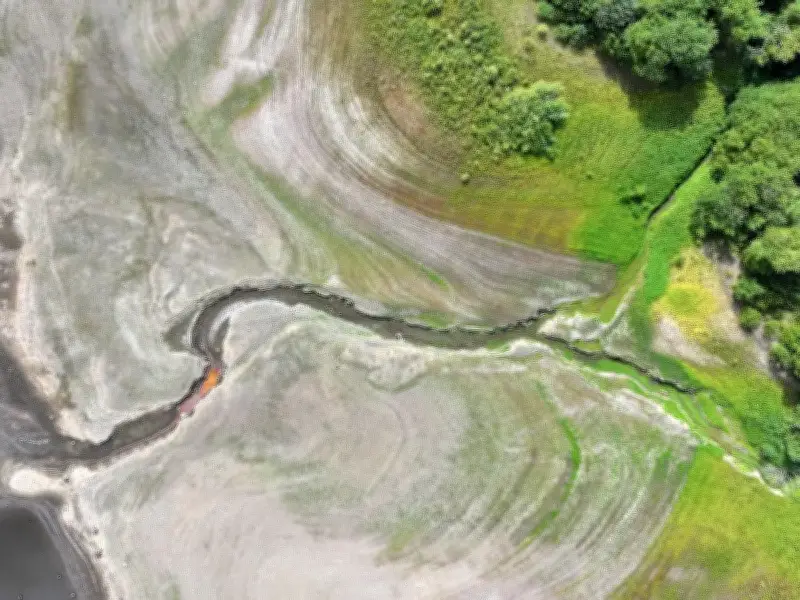
Severe drought has been declared in parts of six English counties as the country's water crisis continues to worsen. The announcement impacts parts of Cornwall, Devon, Dorset, Somerset, East Sussex and West Sussex, where authorities are working to safeguard water supplies following months of unusually dry conditions.
The South East of England and South West of England experienced their driest April to September in over a century, leaving several reservoirs at dangerously low levels. Two reservoirs serving hundreds of thousands of customers are raising severe concerns. Ardingly reservoir in West Sussex stands at just 19% capacity, while Wimbleball in Somerset has dropped to 16%.
Government reassures customers
The Government has assured customers that water will continue to flow, but water companies have been instructed to ramp up monitoring and brace for further strain on supplies. Yorkshire also entered drought status last week, meaning the majority of England is now impacted, although the newly declared severe drought only applies to parts of the six counties.
Officials have urged people to use less water to protect supplies, rivers and wildlife.
What is a drought?
A drought occurs when insufficient rainfall fails to replenish water levels in rivers, reservoirs and underground sources. Some droughts develop following a particularly hot, dry summer, while others emerge gradually when rainfall remains below average across multiple seasons.
The impact of drought shows in different ways. Some examples being farmers may find it increasingly difficult to grow crops or raise livestock, wildlife can be adversely affected as river levels drop, and water companies may struggle to keep reservoirs adequately stocked. During a drought officials monitor conditions using indicators such as rainfall, river flows, groundwater levels, and stored water supplies.
A severe drought is the most critical stage, declared when shortages are significantly disrupting daily life and the environment, with effects that can continue long after dry conditions have ended.
Which areas are in severe drought?
The declaration covers parts of Cornwall, Devon, Dorset, Somerset, East Sussex and West Sussex. While not every location within these counties has been designated severe drought status, officials are especially concerned about reservoirs serving certain communities.
Ardingly supplies around 95,000 properties in Haywards Heath, Uckfield and surrounding areas while Wimbleball provides water to around 300,000 customers across parts of Devon, Somerset, and Dorset. The Environment Agency also flagged several smaller reservoirs serving homes in Devon and Cornwall as cause for concern.
Across England, drought now covers Yorkshire and areas in the centre, south and east of the country. But the North East and North West remain under prolonged dry weather status, rather than drought.
Will people's water supplies be affected?
The Government has assured customers that their water supplies will remain uninterrupted. Officials stated that the severe drought declaration would enable water companies and regulators to take immediate action to safeguard supplies before any disruption occurs.
Companies have been instructed to monitor river and reservoir levels on a daily basis and conduct more rigorous water quality checks. The Environment Agency will also ramp up inspections of businesses that draw water from natural sources to ensure they stay within their permitted limits.
In two of the worst-affected areas, permits have been issued to reduce the water released from reservoirs into nearby rivers. South East Water can hold back an additional three million litres a day at Ardingly, while South West Water can retain an additional nine million litres a day at Wimbleball. The measures are designed at keeping more water available for public supply.
Environment Secretary Dame Angela Eagle said: “This level of drought is something we have not experienced for decades, so this Government is stepping up our support and planning.”
Environment Agency chief executive Philip Duffy said: "Recovery depends on both rainfall and how much water we use. We cannot change the weather, but water companies can act now. We expect them to follow their drought plans and take the steps needed to secure public water supplies."
He added: "We are also asking everyone to use less water. That will leave more in our rivers and the environment, helping farmers and protecting wildlife and nature."




