Scotland's Emissions Progress Praised but Future Plans Draw Concern
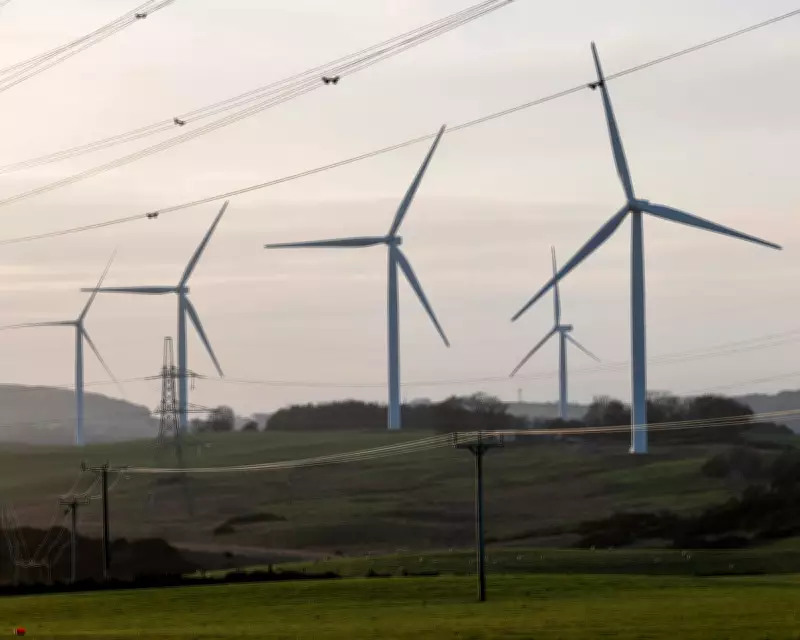
Scotland has achieved a significant reduction in greenhouse gas emissions, cutting them by 51.3% since 1990, primarily through the closure of coal-fired power stations and the expansion of windfarm infrastructure. However, campaigners and the UK Climate Change Committee (CCC) have raised alarms about the credibility of the nation's future emissions strategy, labelling it as overly reliant on unproven technologies.
Watchdog Highlights Flashing Amber Lights in Net Zero Strategy
Nigel Topping, chair of the UK CCC, described the Scottish government's medium- and long-term proposals to reach net zero by 2045 as having flashing amber lights regarding their quality and seriousness. While the committee welcomed the replacement of unachievable annual targets with five-year carbon budgets in November last year, mirroring the UK-wide system, concerns persist about the realism of later phases.
The CCC estimates that Scotland has realistic plans for 91% of the emissions cuts needed by 2030, but this confidence drops sharply for subsequent periods. For the second carbon budget up to 2035, credible plans cover only 64% of required reductions, and for the third budget up to 2040, the figure falls to 58%, with these targets facing significant risks or insufficient plans.

Key Areas of Vulnerability in Decarbonisation Efforts
The committee identified several critical areas where Scotland's strategy is lacking:
- Decarbonising buildings: Progress on installing heat pumps and other low-carbon heating systems is slow, with estimates suggesting a need to triple current installation rates to meet 2030 targets.
- Reliance on unproven technologies: The plan heavily depends on carbon capture and storage and direct air capture machines, which are not yet commercially viable at scale.
- Peatland restoration: While recent efforts have improved, experts warn that Scotland may miss its 2030 target for restoring degraded peatland, a major carbon emitter, due to funding shortfalls.
Jamie Livingston of Oxfam Scotland criticised the approach, stating it is too reliant on science fiction and lacks clarity on funding sources, calling it a high-stakes climate gamble.
Mixed Progress Amid Political and Environmental Pressures
Scotland has made notable strides in some areas, such as electric vehicle adoption and peatland restoration, but challenges remain. Gillian Martin, the Scottish net zero secretary, responded to the CCC report by committing to use its feedback for future action plans, though she avoided addressing specific criticisms.
With Scotland contributing less than a tenth of the UK's onshore emissions, its devolved government has positioned itself as a climate policy leader, yet 58% of its emissions fall under Scottish, not UK, policy jurisdiction. Lang Banks of WWF Scotland emphasised that delayed action exacerbates the climate crisis and postpones benefits like lower energy bills and healthier environments.
As the UK Labour government's net zero strategy may accelerate reductions, the CCC warns that Scotland must bolster its own plans to avoid falling short of its ambitious 2045 target, ensuring a sustainable and credible path forward.