The Growing Environmental Threat from Earth's Crowded Orbit
In a dramatic shift over just a few decades, Earth's orbit has transformed from a largely empty expanse into a congested zone teeming with human-made objects. This rapid expansion, driven by the modern space race, is now raising serious environmental concerns that could impact our planet's atmosphere and future space activities.
From Exploration to Occupation: A New Era in Space
For most of human history, space remained an unreachable frontier. However, in a single lifetime, it has become a bustling arena of activity. Today, more than 14,000 satellites orbit Earth, providing essential services like navigation, internet access, and weather forecasting. Meanwhile, major world powers such as the United States, China, and Russia are setting ambitious plans to return humans to the moon, aiming for permanent settlements and resource mining.
This week, a series of investigations highlights our changing relationship with space, moving from pure exploration to active occupation. Interviews with lunar pioneers, data from astronomers tracking tens of thousands of satellites, and assessments of UN agency roles reveal a politically charged dash back into space. While this era excites scientists and business owners, it also demands a pause to consider our responsibilities and the potential consequences.

Environmental Impacts and the Danger of Space Debris
Environmental worries are already emerging in the 21st-century space age. A study found that approximately 10% of particles in the stratosphere contain metals from rocket launches and other space activities. Researchers fear this could alter atmospheric chemistry and harm the ozone layer, which protects Earth from harmful radiation. A recent UN report emphasized the urgent need for sustainable practices to manage orbital congestion and atmospheric impacts.
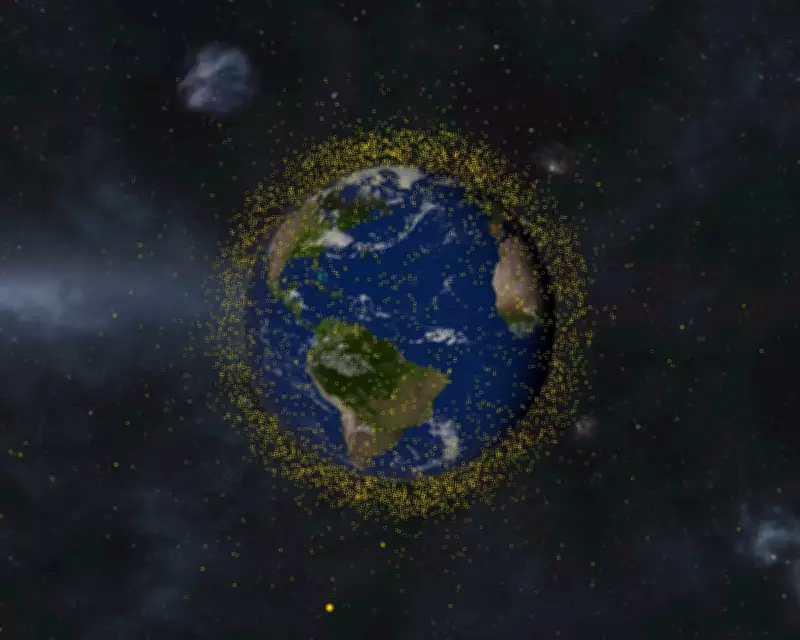
One of the most striking ways to grasp our impact is through visualizations of human-made objects in orbit. An immersive interactive format, known as "scrollytelling," allows viewers to see Earth's orbit becoming increasingly crowded over the decades. Guardian visuals editor Ashley Kirk, who led this project, noted the challenge of sourcing reliable data, requiring figures on both current and defunct satellites. Renowned astronomer Jonathan McDowell cross-checked the data to ensure accuracy.
The surge in orbital activity has created significant collision risks. Space debris, including discarded rocket stages and remnants of old satellites, adds to the danger. Notable incidents include a 2007 Chinese anti-satellite weapon test that created a hazardous debris cloud and a 2009 collision between a US and Russian satellite that produced nearly 2,000 pieces of shrapnel. Tens of thousands of tiny metal fragments now travel at high velocities, raising fears of a domino effect where collisions could turn Earth's orbit into a dangerous minefield.
Reliance on Satellites and the Need for Action
Society heavily depends on satellites for everyday functions, from Google Maps navigation to monitoring deforestation and climate change. Frederick O'Brien, a journalist and software developer at the Guardian, spent weeks creating the interactive visualization to highlight this issue. Ashley Kirk warns that unchecked growth could disrupt critical services like the internet, underscoring the complexity of managing thousands of satellites with varying heights, speeds, and trajectories.
As the space race accelerates, balancing innovation with environmental stewardship becomes crucial. The rapid expansion in orbit risks not only technological disruptions but also long-term ecological damage, calling for global cooperation and sustainable practices to safeguard our planet's future.