Satellite Images Reveal Mining's Devastating Global Footprint in Key Biodiversity Areas
In 2010, Indonesia's Weda Bay was a pristine landscape of rainforest and coral reefs, home to the uncontacted Hongana Manyawa tribe. Today, it hosts one of the world's largest nickel mines, producing nearly 20% of global nickel output. Satellite imagery from Planet Labs starkly contrasts the area's transformation, showing vast deforestation and industrial expansion by 2025.
Global Analysis Uncovers Widespread Mining in Biodiversity Hotspots
Research conducted for the Guardian by academic experts has identified more than 3,267 operational mining sites within key biodiversity areas (KBAs), accounting for almost 5% of the mining sector's global footprint. China, Brazil, Argentina, and Mexico lead in surface mining within these ecologically critical zones, which are vital for planetary health and species survival.
Victor Maus, a researcher at Vienna University of Economics and Business, highlights a significant knowledge gap: "We have a huge gap on the global assessments of the footprint of mining. It is much bigger than we think. Most of what is published about mines is for businesses and attracting investors. There's not much about their impacts. It has somehow escaped the eye of the international community."

Environmental Impacts and Irreversible Damage
The mining boom, driven by demand for green energy minerals, is causing severe ecological harm:
- Deforestation: In Weda Bay, large forest areas have been cleared for nickel extraction, with similar patterns observed in the Amazon for gold mining.
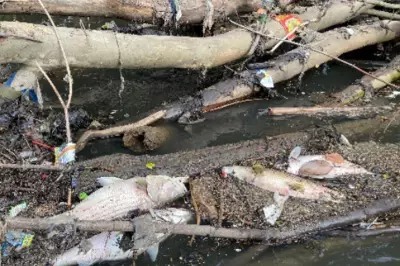
- Pollution: Industrial runoff has contaminated rivers and oceans, while poor waste storage leads to acid and heavy metal pollution.
- Habitat Destruction: Unique species, such as the standardwing bird of paradise in Halmahera, face extinction as their habitats are obliterated.
A recent study estimates that over 4,500 animal species are threatened by mining activities, including the bent-toed gecko in Malaysia and Africa's great apes, with one-third at risk from mining-related dangers.
Case Studies from Around the World
The trend extends beyond Indonesia:
- Laos: The Sepon copper and gold mine has destroyed and polluted surrounding habitats over its operational lifetime.
- Brazil: Illegal gold mining in the Kayapó Indigenous territory has ravaged Amazon rainforest, with satellite images showing extensive clearing between 2010 and 2025.
Tim Werner, a senior lecturer at the University of Melbourne, warns: "There are some places where mining should simply be off the table. Areas such as Raja Ampat in Indonesia are among the most beautiful and biologically rich places on Earth, yet they are at risk of being totally decimated by mining for critical metals. At some point, the benefits of extracting minerals are outweighed by the irreparable loss of places like these."
Future Projections and Urgent Calls for Action
With demand for critical minerals projected to be 16 times higher by 2050 compared to 2020 levels, mining is increasingly encroaching on biodiversity areas. Werner advocates for establishing no-go zones and prioritizing extraction in less sensitive landscapes, even if it incurs higher costs.
This analysis, based on satellite data from Planet Labs and mapping from the KBA Partnership, underscores the urgent need for global dialogue on sustainable mining practices to protect Earth's last wilderness areas.