Historic Roman Hamlet Faces 'Industrialisation' from 100,000-Panel Solar Farm
A historic Roman hamlet filled with Grade II listed homes is in grave danger of being 'industrialised' by the planned introduction of a massive solar farm featuring 'up to 100,000 panels'. Potters Crouch, a designated conservation area nestled in the Hertfordshire countryside, risks being 'completely wrecked' and transformed into an 'island surrounded by a sea of solar panels' due to a proposed 107-hectare development on open countryside.
Centuries of Heritage Under Threat
The 600-year-old hamlet, which comprises just ten houses and a traditional pub, lies merely a mile from the ancient Roman Britain city of Verulamium. Furious residents now fear their cherished 'sanctuary of greenery' will be consumed by nearby urban sprawl as the area undergoes significant transformation. The development plans include the construction of twenty-seven inverter and transformer buildings, extensive boundary fencing, and numerous CCTV poles, fundamentally altering the rural character.
Locals also raise serious safety concerns regarding the nearby Plaistows Airfield. They argue the airstrip will be forced to shut down, with fields covered in solar panels leaving no safe space for aircraft to land. Additionally, dangerous reflections from the panels could shine directly into pilots' eyes, creating hazardous conditions.

Developer Claims Versus Community Outcry
Exagen, the company behind the Beechtree Junction Solar Farm proposal, asserts that the project will generate sufficient electricity to power approximately 13,000 homes for four decades. They maintain the site has been 'carefully selected to minimise environmental impact'. However, residents of Potters Crouch and surrounding towns and villages submitted hundreds of formal objections during the consultation period as they anxiously await the planning application decision.
The community claims the land has been incorrectly reclassified as grey belt since December 2024 and has mounted a vigorous campaign to reject the development. Dozens of protest posters have appeared throughout surrounding areas, signalling widespread local opposition.
Residents Voice Their Dismay
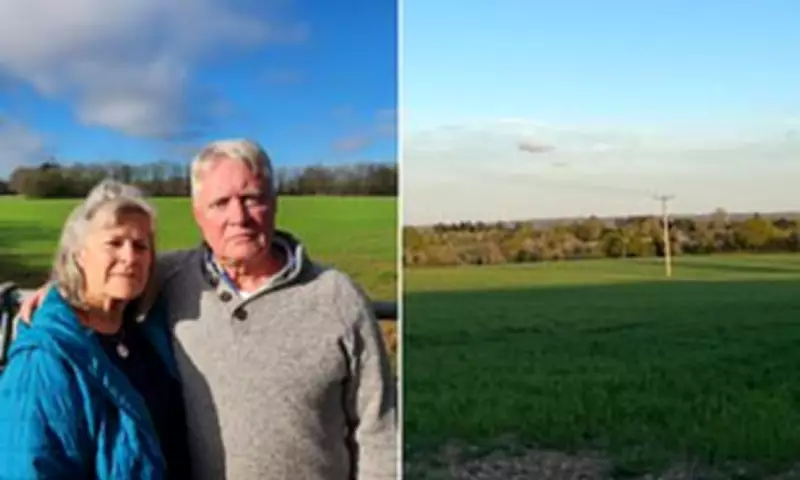
Andy Morris, a 70-year-old retired sales manager who has lived in the hamlet for thirteen years, fears his property will lose its 'beautiful countryside view' as it becomes 'absolutely and completely surrounded' by solar panels. His wife, Gilly Morris, a retired specialist education support worker, expressed profound concern to the Daily Mail.
'It will be horrendous if the solar farm goes through. It will use an incredible amount of machinery to build it,' she stated. 'We have a little sanctuary of greenery and need it to be saved. Once it is accepted and the land is built on, there will be nothing holding back from more development. Soon we will become part of Watford.'
Mrs. Morris highlighted practical dangers, noting that construction would involve lorries piling down tiny lanes, damaging historic hedges and creating hazards for cyclists, walkers, joggers, and horse riders. She described the visual impact as devastating, with 10-foot panels visible from the top floor of their home, replacing fields and hedges with industrial banks of panels.
'It will be a very unpleasant view - the area is designated an area of conservation and of outstanding natural beauty,' she added, emphasising the threat to the local microlight airfield. 'It would be very dangerous for people to try and land on a field with solar panels.'
Regarding the principle of solar energy, she clarified: 'In principle, we agree with solar panels but we see them when we drive on motorways. They should be on motorways not near homes and near infrastructure. They belong near warehouses and on newbuilds.'
Long-Term Consequences and Local Campaign
Exagen describes the farm as 'temporary' with a projected lifespan of forty years, estimating construction would take approximately six months. They claim 'any effects arising from this would be short-term and reversible upon completion.' However, residents remain deeply sceptical.

'There's been quite a campaign to reject it,' Mr. Morris reported. 'Posters hung up and hundreds of objections. But we went to a meeting with Exagen and were told it was almost a done deal. They said "don't even bother objecting as it's a done deal".' He poignantly added, 'We moved here for the countryside and the lovely view but it will be ruined. The company said the solar panels have a life expectancy of 40 years, but I'm 70.'
Christopher Simpson, an engineering consultant and thirty-year resident of Potters Crouch, delivered a stark warning about permanence. 'They're claiming that at the end of the 40 years the land will be reverted back to agriculture, and it's a complete and absolute lie,' he told the Mail. 'There will be thousands of tons of concrete, cables, steel all in the land, and nobody is ever going to take those out. It’s not a question of blighting this beautiful countryside for 40 years, but losing it forever.'
He described the potential visual impact as catastrophic: 'We live in a beautiful hamlet surrounded by beautiful countryside, and if the proposals were to be implemented every way we looked, instead of green fields, it would be solar panels.' Mr. Simpson also criticised the construction logistics, noting that transporting 60,000 tons of material down single-track medieval lanes would 'completely wreck all of these beautiful old lanes surrounded by trees and hedges.'
He suggested alternative locations, stating: 'Green energy is something to be welcomed when there is an opportunity. There are old gravel pits, there are areas of derelict land within two or three kilometres of here, where they could equally well build these solar panels.'
Official Positions and Planning Process
The local Parish council has formally 'urged' the planning authority to refuse permission. They argue the farm would 'constitute inappropriate Green Belt development with no very special circumstances' and 'cause substantial harm to the Potters Crouch Conservation Area and its settings'.
A spokesperson for Exagen defended the proposal, stating the development site has been 'carefully selected to minimise environmental impact; located next to the M1, A414, and multiple high voltage electricity distribution lines, and outside of major environmental designations.' They added: 'The site has an undulating landscape, enclosed by mature woodland blocks which will help minimise any visual impact of the scheme. All existing footpaths at the site will be retained, new permissive paths will be created for public access, and the design is significantly set back from local residences. The development is temporary, reversible, and sited on lower-grade farmland.'
Chris Traill, Strategic Director for Community and Place Delivery for St Albans City and District Council, provided an update on the process: 'The planning application is being considered following a consultation period when a number of concerns were raised. All objections and supportive comments will be carefully considered before the final decision is made. All planning applications are dealt with according to a statutory process and planning law.'
The community of Potters Crouch now awaits a final decision that will determine whether their historic landscape is preserved or transformed by one of the region's largest proposed solar installations.