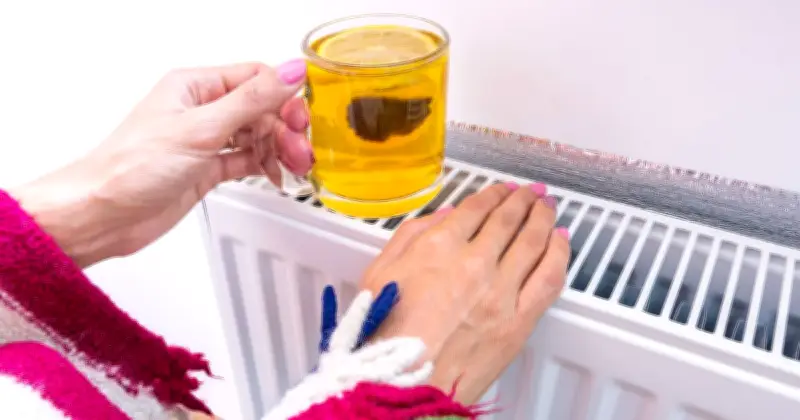
Placing a simple sheet of foil behind radiators fixed to external walls can reduce heat loss by over 50%, according to engineers at boiler installation company BOXT.
With the energy price cap rising by 3.6% at the start of this month, UK households are watching their spending more closely. Despite government schemes to lessen the effects of rising wholesale oil and gas prices, energy bills have reached high levels, prompting many to seek ways to make their homes more efficient.
How radiator foil works
Radiator foil, also called heat reflector foil, is a slim reflective layer usually made from aluminium with an insulating backing. It is placed directly behind the radiator, ideally between the radiator and an uninsulated wall, so it can redirect heat back into the room.
The idea is that instead of allowing heat to escape into the walls, the foil sends radiant heat back into the home. BOXT engineers said: "For radiators fixed onto external walls, it can benefit to buy some radiator foil to prevent heat loss to the outside world."
Evidence of savings
BOXT argues that "these work" because when a radiator is fixed to an external wall, especially under a window, it "exudes heat from the front and the back". They added: "In turn, you could be losing around 50% of your heat from the radiator to the external wall, which is not ideal."
The Energy Saving Trust agrees, claiming that "radiator foil can reduce heat loss through walls and help to save £18 a year on energy bills". A study by the University of Salford found that reflective foil could save around 2.9% of space heating gas consumption on a typical UK winter day, depending on insulation and radiator position. The same study found heat loss through external walls reduced by 54%, with optimal reductions of 66% during heating periods.
Radiator reflector foil can be bought online for between £6 and £20 per roll.
Other radiator efficiency tips
Don't cover radiators: remove any objects on or underneath them, such as clothes or furniture. Radiators work on the principle that warm air rises by natural convection, so any objects interfering with this process reduce efficiency.
Bleed your radiators: if a radiator is warm at the bottom and cooler at the top, it likely needs bleeding. This process lets trapped air escape from the heating system and takes no more than five minutes.
Clean your radiators: dust buildup can affect airflow and reduce the amount of hot air produced. For hard-to-reach parts, a hairdryer can push dust buildup through.