Pakistan's Grassroots Solar Revolution Mitigates Energy Crisis Fallout
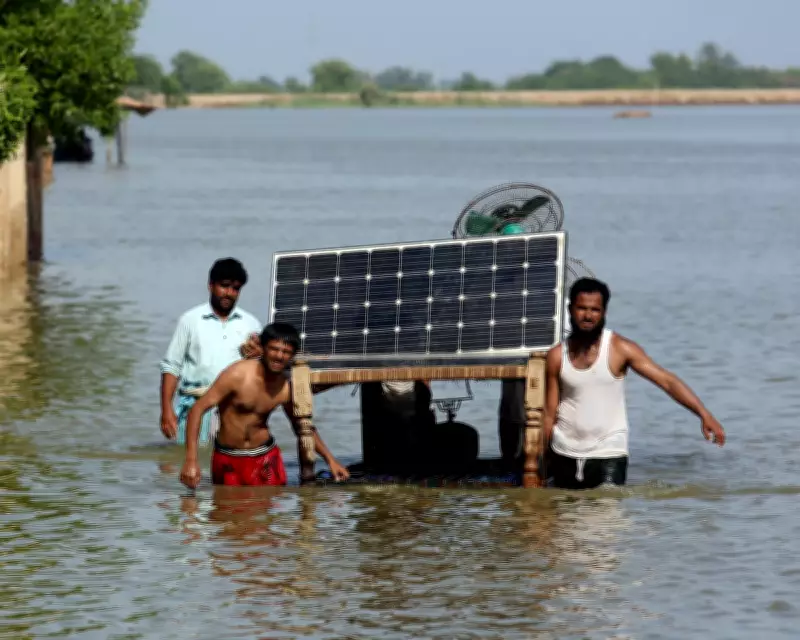
In September 2022, residents of Jaffarabad, Pakistan, were seen salvaging belongings, including a solar panel, from their flooded home—a poignant symbol of resilience that now reflects a broader national trend. As liquefied natural gas (LNG) prices skyrocketed following Russia's invasion of Ukraine, Pakistan faced severe electricity shortages, exacerbated by heatwaves and gas supply issues. However, a remarkable shift toward solar energy has emerged, driven by citizens seeking reliable and affordable power alternatives.
The Rise of Rooftop Solar Adoption
Falling costs of solar panels and government incentives for feeding excess power back into the grid have made rooftop solar an increasingly attractive option for many Pakistanis. Nabiya Imran, an associate at the thinktank Renewables First, explains that those who could afford the initial investment recognized the long-term benefits over paying high bills for an unreliable grid. This realization sparked a stunning surge in solar deployment across the country.
Aerial photographs of Lahore vividly illustrate the scale of this bottom-up rollout. Nationwide, solar's share of electricity generation increased fivefold between December 2021 and December 2025, according to data from Ember. Renewables First estimates that by 2024, solar contributed approximately one-fifth of Pakistan's grid-supplied electricity, marking a significant transformation in the energy landscape.

Cushioning Against Global Disruptions
As the conflict in Iran disrupts key oil and gas trade routes through the Strait of Hormuz, energy analysts highlight that Pakistan's solar expansion has insulated its power sector from the worst effects of market turmoil. Imran notes that while impacts are still felt, distributed solar has provided a cushioning effect, preventing more severe shortages. This boom has reduced daytime gas demand for electricity, leading Pakistan to divert cargoes from a long-term Qatar supply agreement even before the Iran war escalated.
LNG continues to account for about a fifth of Pakistan's power mix, primarily meeting evening peak demands. Analysis by Renewables First and the Centre for Research on Energy and Clean Air indicates that as of February 2026, Pakistan's solar surge helped avoid roughly $12 billion in oil and gas imports. Haneea Isaad, an energy finance specialist at the Institute for Energy Economics and Financial Analysis, describes distributed solar as a blessing for Pakistan, offering a hedge against fossil fuel dependence.
Ongoing Challenges and Future Prospects
Despite these gains, Pakistan remains vulnerable to economic disruptions as the Iran war blocks daily crude oil shipments, described by the International Energy Agency as the largest supply disruption in history. Over 90% of Pakistan's LNG and oil imports pass through the Strait of Hormuz, with fossil fuel imports consuming more than 10% of GDP in 2024 alone. Soaring oil prices have increased pump costs by about 20%, impacting transport and fueling inflation, while LNG market issues affect the fertilizer sector.
In response, the government has implemented measures such as closing schools for two weeks and having half of public sector employees work from home to curb fuel use. Power Minister Awais Leghari acknowledges the "people-led solar revolution" and investments in nuclear, hydropower, and domestic coal have reduced vulnerability, but warns that prolonged crises could lead to summer shortages when air conditioning demand peaks.
Imran emphasizes that further investments in electric vehicles, grid updates, and battery storage for excess solar power are crucial to reducing fossil fuel reliance. She believes the crisis may motivate more adoption of rooftop solar and storage, framing the energy transition as a matter of energy security, not just climate action.

Broader Implications for Asia
The Middle East conflict exposes the region to higher prices and shortages, with 80% of Hormuz-transited oil destined for Asia. Countries like Bangladesh, Myanmar, and the Philippines have introduced fuel rationing, while India faces cooking gas shortages. Ramnath Iyer of IEEFA argues that faster renewable adoption could have mitigated these issues, but many Asian nations invested heavily in LNG infrastructure, with India, Bangladesh, and Pakistan planning $107 billion in terminals and pipelines.
Iyer points out that solar energy and storage are already cost-competitive with gas in most Asian countries, offering a win-win in availability and expense. Examples include Vietnam's solar expansion reducing import costs and Thailand's solar and battery targets potentially saving $1.8 billion by 2037. In the Philippines, where pump prices rose 40%, rooftop solar with storage could alleviate costs in off-grid areas reliant on diesel.
Dinita Setyawati of Ember describes this as a critical juncture for Asia, where renewables, grid improvements, and storage form a "holy trinity" solution to energy dilemmas. Pakistan's experience serves as a compelling case study for the region, demonstrating how grassroots initiatives can drive meaningful change in the face of global crises.