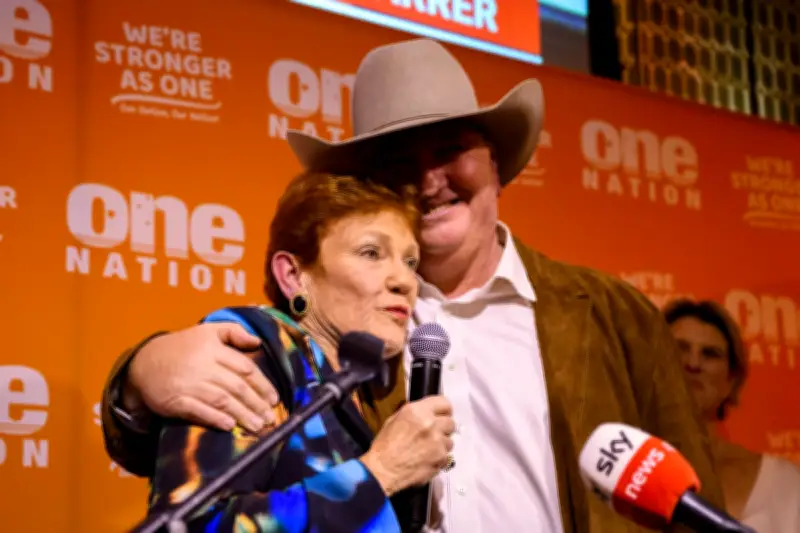
One Nation is actively seeking support from Australia's Christian community, but its anti-immigration platform may clash with the consciences of many believers, particularly those from migrant backgrounds. The party's recruitment of former deputy prime minister Barnaby Joyce, who addressed an anti-abortion rally in Sydney in early June, signals a strategic push to win over churchgoers.
Christian voting patterns and One Nation's appeal
Christianity remains Australia's largest religion, with about 44% of the population identifying as Christian, and roughly one in five attending church regularly, according to the National Church Life Survey (NCLS). Historically, churchgoers have leaned towards the Coalition, but their votes can shift based on issues such as abortion, marriage, religious schools, social services, immigration, climate change, and refugees. One Nation's strong anti-abortion rhetoric may attract some Christians, but its broader platform, centred on anti-immigration policies, could deter others.
Simon Smart, executive director of the Centre for Public Christianity, noted that the party's stance on immigration and refugees poses a dilemma for Christians whose faith calls them to welcome strangers. "Those Christians who are drawn to the rhetoric of Pauline Hanson may have good reason to pause and reconsider," he said.
Immigration and the Christian conscience
One Nation leader Pauline Hanson has advocated for a "monocultural" Australia and warned against a "growing language problem" linked to immigration. However, the NCLS reports that more than one in three church attenders in Australia were born overseas, and about a quarter speak a language other than English at home. Smart argued that this diversity clashes with Hanson's vision: "The Christian vision is of communion and community between people of every tribe, nation and tongue; there’s a richness in the diversity of humanity that doesn’t seem to sit well with that monoculture idea."
Hanson's net approval ratings currently surpass those of Prime Minister Anthony Albanese and Opposition Leader Angus Taylor, with One Nation drawing support from disillusioned Coalition and Labor voters. Among Christians, the party threatens to peel off evangelicals from the Coalition and traditional working-class Catholics from Labor.
Impact on marginal seats and the 'Bible belt'
John Black, a former Labor senator and founder of Australian Development Strategies, noted that Australia's "Bible belt" is concentrated in the suburban peripheries of major cities, which are densely populated and often in marginal seats. While "mortgage belt" issues typically dominate these areas, religious voters can sway tight elections if mobilised as a bloc.
One Nation's lack of an obvious Christian voice may hinder its appeal, according to John Warhurst, emeritus professor of political science at the Australian National University. "If One Nation is to have an impact among Christians, it would have to be through their policy program, and the general vibe that they’re representing believers," he said, drawing a parallel to Donald Trump's support among certain Christian groups despite his persona.
'Judeo-Christian' values and exclusionary rhetoric
One Nation's platform includes returning Australia to "Judeo-Christian" values and refusing entry to migrants from nations deemed incompatible with Australian values. Hanson has previously questioned the existence of "good Muslims," a remark for which she was censured in the Senate. Jarrod McKenna, mobilisation strategist at Christian humanitarian agency Act for Peace, criticised the use of "Judeo-Christian" terminology, saying politicians rarely use it to reference Jesus' teachings on loving one's neighbour or welcoming strangers. "If anything, the stranger is used as a scapegoat," he said.
The rise of One Nation coincides with housing and cost-of-living pressures, which Hanson has attributed to immigration-driven demand, ignoring factors like chronic under-supply and investor-friendly tax policies. McKenna urged a focus on kindness and practical values such as a "fair go" to counter divisive rhetoric: "All that One Nation’s scapegoating does is cause us to bleed the best of who we are rather than actually address the problems."