The War Over Omagh's Gold: A £21bn Mine Plan Tearing a Community Apart
On Monday, a public inquiry will reopen, nine years after a mining company proposed extracting gold from the Sperrins in County Tyrone, sparking a toxic local battle that has deeply divided this rural community.
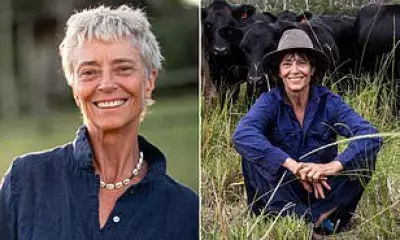
When Fidelma O’Kane retired over a decade ago from her career as a social worker and lecturer, she envisioned a peaceful life of travel, wine, chocolate, and books in the quiet hills of rural County Tyrone, where she has lived almost all her life. Instead, an idle remark from a neighbour about a mining company's plan to drill for long-rumoured gold reserves in the Sperrins set her on an all-consuming mission. "She was all excited about it," O’Kane said, "but when I told my husband, he said to me: 'Goldmining. That’s bad news.'"
Below the hills where O’Kane and her husband, Cormac McAleer, a retired community worker, now sit in their kitchen sharing tea and toast, lies one of the richest unexploited seams of gold in the world, worth at least £21bn. Alarmed by their research into global goldmining, the couple began rallying with other locals committed to blocking the proposed mine. "From when we get up in the morning to when we go to bed at night, we are focused on this," says O’Kane, who can discuss topics from wastewater discharge to UN treaties without pause. "Our sons have even said: 'Mum and Dad, can you not talk about something else?'"

Community Division and High Stakes
To opponents like O’Kane and McAleer, mining for gold in this area of outstanding natural beauty risks desecrating a landscape with deep cultural roots, polluting wildlife-filled rivers, and harming children's health. In contrast, Dalradian Gold, a US-owned mining company, argues the development could bring hundreds of jobs, a large tax windfall, and significant riches, with the site also containing silver, copper, and critical minerals like antimony and tellurium.
Dalradian, owned by a New York investment firm, claims the mine will be clean, carbon neutral, and support a £1bn supply chain. Some locals, such as Gerry Kelly, a 56-year-old mechanic living a mile from the site, support the plan. "Most people want a quiet life," he says, "but they would all grab a good high-paying job on their doorstep if it was available."
This has led to a decade of bitter division in tiny rural townlands, where former friends no longer speak, and both sides report instances of intimidation and death threats. On Monday 13 April, the public inquiry into Dalradian's application to extract 3.5m ounces of gold over 20 to 25 years near Greencastle will reopen in Omagh, aiming to resolve the conflict.
Protests and Economic Arguments
The delay in reaching this point stems from dogged opposition campaigning, the proximity of the Irish border, and Northern Ireland's devolved planning system. Dalradian has spent over £250m on the project without guarantee of approval, driven by the potential riches: parts of the seam carry 200g to 300g of gold per tonne, with annual extraction worth nearly £500m at current prices.
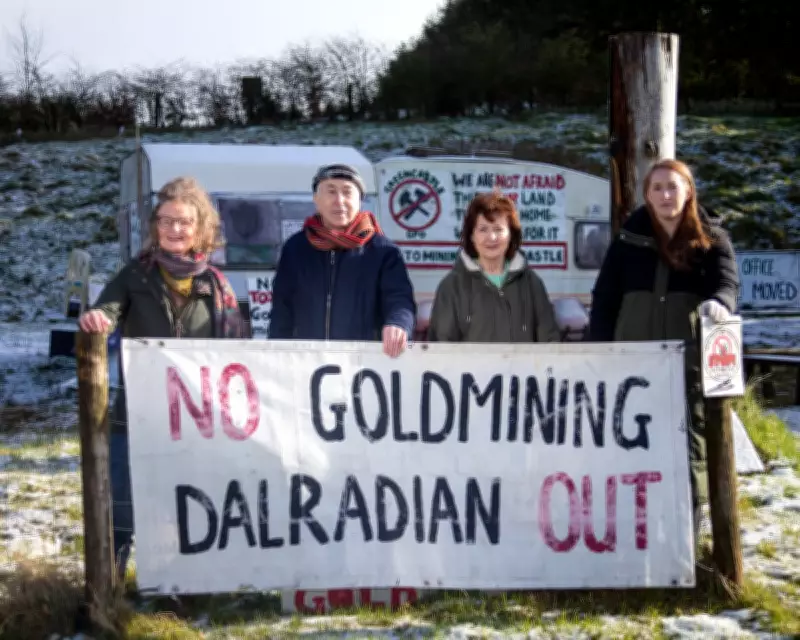
Opponents, viewing this as a David and Goliath fight, have mobilized through groups like Save our Sperrins. They've held public meetings, used scale models to illustrate waste rock piles, placed cameras in rivers to document wildlife like otters and freshwater pearl mussels, and staged a caravan occupation dubbed the "Greencastle People's Office." Marella Fyffe, 67, who gave up her yoga teaching job to campaign full-time, says, "It's a fight for the heart of humanity... our values are our language, our home, our community."
Pro-mine voices, however, argue that most locals support the mine but fear backlash. Kelly chairs The Silent Majority, claiming, "There's definitely a majority of people locally in support." Anti-mine campaigners like Sinéad Ní Mhearnóg, 37, dispute this, pointing to over 50,000 letters of objection, though pro-mine groups question the authenticity of some signatures.

Inquiry and Future Prospects
Dalradian asserts the Curraghinalt mine will "set new standards in the industry" as Europe's first carbon neutral mine, using electric and biofuel vehicles and carbon offsetting, with no health risks. The company states it conducts rigorous river monitoring and will create 1,000 jobs, contribute £3bn in taxes, and generate £9bn for the economy, with revenues shared with the crown estate.
The public inquiry, overseen by Northern Ireland's Planning Appeals Commission, will run until early June, with recommendations going to Stormont ministers. Anti-mine campaigners have crowdfunded for experts to give evidence, preparing for a possible judicial review if the decision goes against them. O’Kane vows, "We literally will have to lie on the ground and put our bodies in front of the machines" to protect the environment and health.