Olympic Skiers Sound Alarm Over Accelerating Glacier Retreat
During the Winter Olympic Games, prominent skiers including Team USA legends Lindsey Vonn and Mikaela Shiffrin, alongside Italy's Federica Brignone, have voiced profound concern about the rapid disappearance of the world's glaciers. The Olympic host city of Cortina d'Ampezzo provides a stark backdrop for these warnings, where once-visible glaciers have dramatically shrunk to mere remnants high in the Dolomite peaks.
A Fitting Stage for Climate Concerns
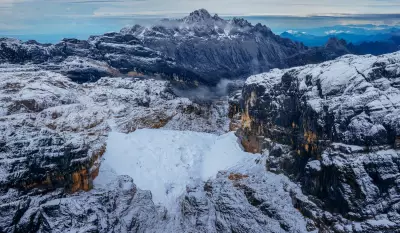
Cortina's location underscores the urgency of the issue. Glaciers that were previously visible from the town have receded dramatically, now reduced to small ice patches at high elevations. To witness a major glacier, Olympians and spectators must undertake a lengthy journey along winding mountain roads to the Marmolada glacier, which itself is melting at an alarming rate.
The world's elite skiers rely on glaciers for high-quality training snow, making their sport particularly vulnerable to a warming planet. Lindsey Vonn, who began skiing on Austrian glaciers at age nine, delivered a sobering assessment. "Most of the glaciers that I used to ski on are pretty much gone," the 41-year-old champion stated during a pre-race press conference in Cortina. "So that's very real and it's very apparent to us."

Front-Row View to Monumental Changes
Mikaela Shiffrin emphasized that snow sports athletes have a unique perspective on climate transformation. "We get a real front-row view" to the monumental changes occurring on the world's highest peaks, she explained. Shiffrin expressed hope that strong voices and policy changes could secure a future for winter sports, while acknowledging current uncertainties.
Italian glaciologist Antonella Senese provided alarming data: Italy has lost over 200 square kilometers of glacier area since the late 1950s. "We are observing a continuous and uninterrupted decrease in glacier area and volume," Senese noted. "In the last one to two decades, this reduction has clearly accelerated."
Italian Glaciers in Rapid Decline
Around Cortina, glaciers on Cristallo and Sorapiss mountains have shrunk by approximately one-third since the 1959-1962 inventory. Federica Brignone, speaking after winning her second gold medal at her home Olympics, observed that skiing has become "totally different" from her youth. Living in Valle d'Aosta, she witnesses glaciers retreating to higher elevations annually.
Brignone's concern extends beyond skiing to planetary health. "There we have a lot of glaciers, but they are going up and up, every year, more and more," she told reporters. Her perspective highlights how mountain communities experience climate impacts more directly than many lowland populations.
The Goodbye Glaciers Project
To raise awareness, the University of Innsbruck created the Goodbye Glaciers Project, illustrating how different warming levels affect ice retention on selected glaciers worldwide. Patrick Schmitt, a doctoral student involved with the project, noted that Cristallo and Sorapiss glaciers no longer meet the minimum volume threshold for inclusion.
Glacier loss carries severe consequences beyond winter sports:
- Threatens vital water sources for communities
- Increases mountain hazards and avalanche risks
- Contributes significantly to global sea level rise
The Marmolada Glacier Crisis
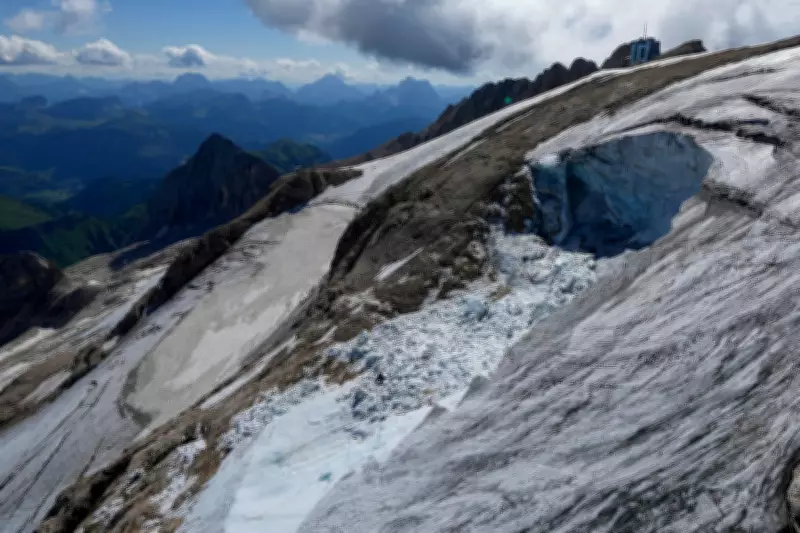
Approximately 50 kilometers from Cortina lies the Marmolada glacier, Italy's largest Dolomite glacier. In July 2022, an apartment building-sized chunk detached, triggering a deadly avalanche that killed 11 hikers. The University of Padua reported in 2023 that the glacier had halved in size over 25 years.
According to the Goodbye Glaciers Project, the Marmolada could mostly disappear by 2034 if global warming reaches 2.7°C. However, limiting warming to 1.5°C could extend its life by six years and preserve approximately 100 Alpine glaciers. "Cutting greenhouse gas emissions now will reduce future ice loss and soften the impacts on people and nature," Schmitt emphasized. "The choices we make in this decade will decide how much ice remains."

Global Ice Loss and Winter Sports Future
Globally, over 7 trillion tons of ice have vanished since 2000. This massive loss threatens the very future of Winter Olympics, with potential host locations projected to shrink substantially in coming decades. The concern extends beyond star athletes to the broader skiing community.
Israeli competitor Noa Szollos noted that Cortina's glaciers reflect worldwide conditions. Finnish skier Silja Koskinen reported being unable to train on certain glaciers due to dangerous crevices, rocks, and flowing water. Team USA's AJ Hurt described annual reductions in October training snow at Austrian glaciers, while Norwegian skier Nikolai Schirmer leads efforts to end fossil fuel sponsorship of winter sports.
Team USA skier River Radamus captured the collective sentiment: "It's always present in our mind that we're on a dangerous trend unless we do something right." As stewards of outdoor winter sports, athletes increasingly see themselves on the frontlines of environmental defense, their voices amplifying scientific warnings about our planet's rapidly changing cryosphere.