Oil Exploration Drives Population Boom in Isolated Amazon City
The promise of offshore oil drilling is reshaping life in Oiapoque, a remote city in Brazil's impoverished Amapa state, where thousands of migrants are arriving seeking work opportunities. Exploratory drilling by state-run Petrobras in the Equatorial Margin near the Amazon River's mouth has triggered a surge of hopeful newcomers, despite unresolved environmental questions and inadequate urban infrastructure.
Migrants Await Economic Transformation Amid Uncertainty
Reginaldo Nunes Fonseca, who relocated from Maranhao after seeing television reports about the oil licensing, exemplifies the migration trend. "I thought, well, that's good — the city is going to grow, there will be a lot of job opportunities," he said, explaining his decision to move. "So I started calling friends and said: 'I'm going there because here I'm unemployed and not doing anything.'" Fonseca now lives in a newly cleared area called Nova Conquista, where rainforest stood just a year ago, waiting for economic benefits that may or may not materialize.
Oiapoque's traditional economy has relied on fishing, illegal gold mining, and cross-border trade with French Guiana. The oil prospect represents potential transformation for one of Brazil's poorest states, but it highlights the developing world's dilemma: balancing climate commitments with economic development through fossil fuel revenue.

Environmental Concerns and Legal Challenges
President Luiz Inácio Lula da Silva faces conflicting pressures between his environmental promises and development needs. "We don't want to pollute a single millimeter of water, but no one can stop us from lifting Amapa out of poverty if there is oil here," Lula declared during a visit to Amapa. Environmental and Indigenous groups have filed lawsuits to halt exploration, arguing inadequate consultation, underestimated spill risks, and insufficient climate impact assessments.
Federal prosecutors have requested Brazil's environmental agency IBAMA annul the license, citing insufficient studies and concealed environmental impacts. No ruling has been issued, but Petrobras began exploratory drilling in October, with operations expected to last approximately five months.
Urban Strain and Infrastructure Deficiencies
The population influx is straining Oiapoque's already precarious infrastructure. City councilman Tiago Vieira Araújo noted "significant population growth" over the past eighteen months, with seven new neighborhoods emerging and accompanying social problems. According to Brazilian Institute of Geography and Statistics data, less than 2% of households have adequate sewage systems, and only 0.2% are on properly structured streets.
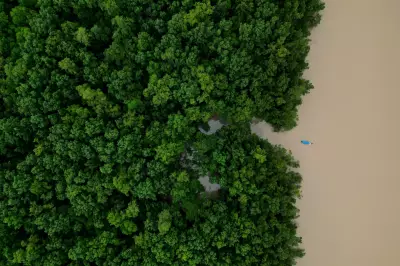
New settlements, locally called "invasions," feature makeshift homes erected on cleared public rainforest land. "We know it's not right to clear the forest. Everyone knows it's wrong," acknowledged Fonseca. "But space is limited."
Dubai Comparisons and Royalty Projections
Some local advocates envision Oiapoque becoming an "Amazonian Dubai" fueled by oil revenues. Lawyer and former councilman Yuri Alesi, running for vice mayor, points to Dubai's desert transformation through oil wealth. Preliminary estimates suggest the Equatorial Margin could hold up to 10 billion barrels of oil, potentially worth about $719.7 billion.
Alesi projects royalties could generate roughly $19 million monthly for Oiapoque—equivalent to the city's entire annual economic output. However, nearby Amazon cities with oil history offer cautionary tales. Coari, where Petrobras has operated since the 1980s, remains among Brazil's poorest municipalities, with 72% of residents in extreme poverty.
Indigenous Concerns and Spill Risks
Indigenous communities express particular concern about environmental threats. Renata Lod, representing Oiapoque's Indigenous council, criticized Petrobras' promises: "Petrobras arrived with strong political backing, promising progress as if we would go to sleep one way and wake up like Dubai. But what we have actually seen is completely disorganized population growth, invasions of Indigenous lands."

Lod highlighted overcrowded schools, an overburdened hospital, and fears about oil spills in wetland ecosystems. "How do you clean a wetland? Once oil enters the rivers, there's no way to remove it," she warned. Petrobras reported a drilling-fluid leak in January that briefly halted operations, resulting in a $470,500 fine from IBAMA.
Historical Boom-Bust Cycles
Nearby mining towns demonstrate the risks of resource-dependent development. Pedra Branca experienced an iron ore boom between 2007-2014 that attracted migrants like Selma Soares, who opened a grocery store. After a fatal port collapse disrupted production and operations suspended, "people who had shopped with us for years struggled to eat," Soares recalled.
Now relocated to Oiapoque with her family, Soares operates a small supermarket as new arrivals await drilling benefits. "People are waiting for drilling to begin," she observed. "They believe everything will improve."
City councilman Araújo summarized the complex situation: "People here see Petrobras as an economic remedy. But even a remedy has side effects. And we're already experiencing the side effects before seeing any of the benefits."