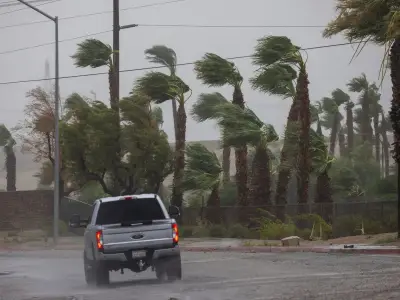
A recent study concluding that New Orleans has reached a 'point of no return' due to the climate crisis, requiring eventual retreat, has sparked fierce local opposition. Helena Moreno, the city's mayor, dismissed the study as 'more focused on generating publicity and clickbait headlines' than offering solutions, pointing out that Miami faces flooding and San Francisco wildfires without being declared lost causes. Gordon Dove, head of Louisiana's coastal restoration agency, called it 'the most ridiculous study I have ever seen,' targeting lead researcher Torbjörn Törnqvist.
Local Reactions and Defiance
Some residents posted defiant videos near levees with captions like 'STOP TELLING US TO MOVE,' while others decried climate denial by state and federal governments. However, Törnqvist, a Tulane University expert on the Mississippi Delta, noted more constructive reactions from those who contacted him after reading the study in the Guardian. 'Of course it's upsetting to hear this, but cities like New Orleans have an expiration date,' he said, warning that the city will become 'like Venice, a few islands in a lagoon.' The cancellation of a $3bn project to revive the coastline by Governor Jeff Landry, a Republican, is seen as a further 'death penalty' for New Orleans.
Gradual Threat and Relocation Challenges
The study stresses that encirclement by rising seas will be gradual, taking generations. Protected by billions of dollars in levees, pumps, and flood gates, New Orleans does not face immediate evacuation. But sea level rise combined with land subsidence and erosion could move the Louisiana coastline up to 62 miles (100km) inland within a century. Relocating a city of New Orleans's size is unprecedented in the US, which lacks a national strategy for climate-displaced populations. Smaller resettlements in Alaska have faced problems, with the Trump administration cutting programs that help communities escape climate fallout.

Insurance Costs and Population Decline
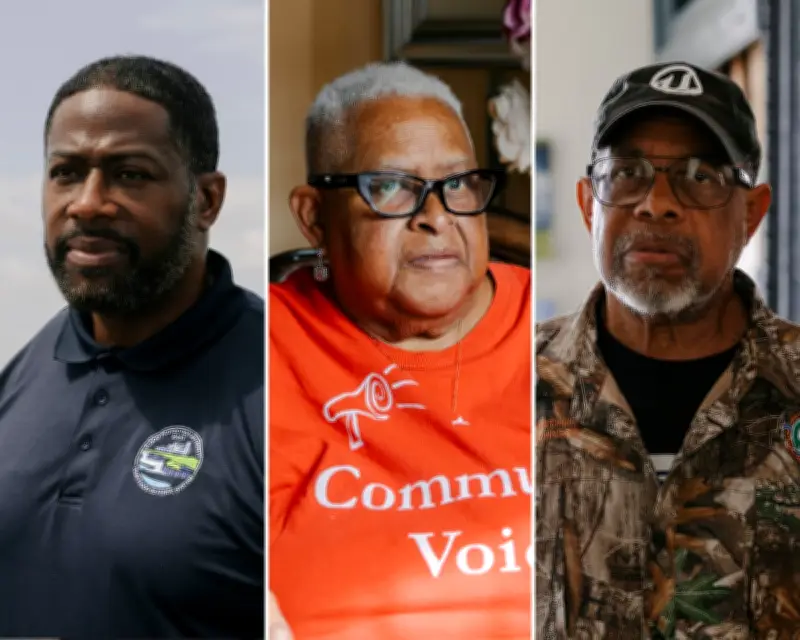
New Orleans is already losing people, shrinking in four of the last five years to just over 360,000 residents, partly due to some of the highest home insurance rates in the country. Steve Picou, a musician and environmental planner, moved to Opelousas, Louisiana, after his annual insurance jumped from $900 to $9,000 over two decades. 'Towns are going to have the opportunity to be receiver communities and they need to start thinking about that now,' he said. A coalition of community groups has traveled to Vicksburg and Natchez, Mississippi, to assess potential escape routes. Debra Campbell, chair of A Community Voice, said, 'We're only going to leave if we're forced to leave due to hurricanes, flooding and the heavy industrialization of our neighborhoods.'
Climate Risk and Adaptation Costs
According to data from Cotality, a property intelligence company, New Orleans has the most severe hazard risk rating of 100, based on floods, storms, and other perils—about 25 points higher than Natchez and Vicksburg. Howard Botts, Cotality's chief scientist, said, 'It's the city with the highest hazard risk in the country.' The federal government has already spent $15bn on flood protections after Hurricane Katrina. AR Siders, an expert in coastal relocation at the University of Delaware, warned that staying dry will require new infrastructure and higher insurance premiums. 'Something big has to change and people in New Orleans will have to choose to become like Venice or have 30ft levees and not see the coast,' she said.
Defenses and Determination
The Lake Borgne Surge Barrier, a 1.8-mile-long concrete and steel structure known as the 'great wall of New Orleans,' has performed well since Katrina, withstanding hurricanes like Ida in 2021. Jeff Williams, regional director of the Southeast Louisiana Flood Protection Authority, said, 'I don't believe it's a lost cause – it's a question of investment.' However, the levees are sinking, requiring another $1bn to add height. Williams noted, 'We talk risk reduction,' emphasizing the Sisyphean challenge of living below sea level. Arthur Johnson, CEO of the Lower Nine Center, stressed, 'We need investment. If you talk about leaving, it can be an excuse to not have economic development.'