Mount Arthur's Quiet Truth: Nature as Our Kin, Not Our Enemy
Mount Arthur's Quiet Truth: Nature as Our Kin

Mount Arthur's Quiet Truth: Nature as Our Kin, Not Our Enemy

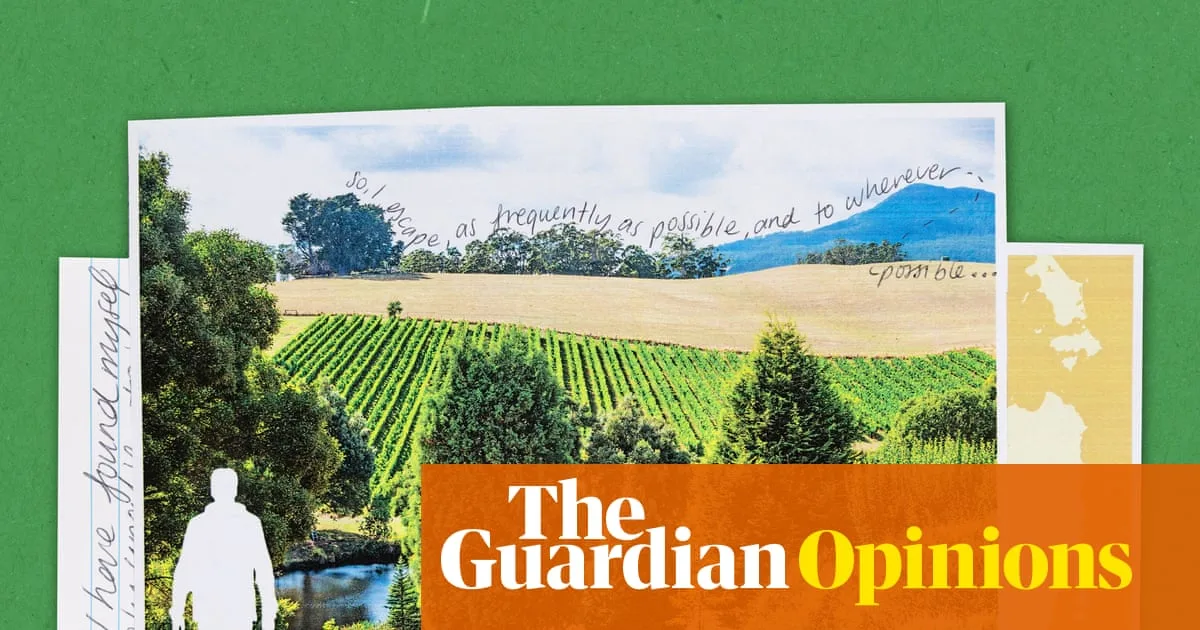
In a world dominated by digital noise and urban sprawl, Joseph Earp finds solace in the serene landscapes of Mount Arthur, a tucked-away spot in Tasmania's north. He writes, 'These days, when I run to a place like Mount Arthur and I immerse myself in nature – the greenery and abundance that isn't our enemy, but our kin – I know I'm not ducking out of 'real life'.' This perspective marks a profound shift from his earlier years, when he viewed nature as a dull distraction from the vibrant arts of city living.

A Personal Transformation from Urban to Natural

Earp recalls a time when he echoed the sentiments of poet Frank O'Hara, believing that true culture and excitement resided solely in urban environments like New York. He treated nature with a polite indifference, seeing it as a boring uncle to be briefly indulged. However, this attitude has undergone a complete reversal. Now, he perceives contemporary urban life as a complex machine geared towards destruction and distraction, which he argues are ultimately the same thing. This cellular-level change has driven him to escape to places like Mount Arthur as frequently as possible.

The Rousing Peace of Mount Arthur

Mount Arthur offers an astonishing natural beauty that Earp describes as almost overwhelming. The closest town, Lilydale, sits gently in the mountain's shadow, with fields undulating unpredictably like occasional bars of music in a symphony of silence. Birds gather at twilight, fog rolls off hills, and sheep stare with a passing interest that reminds visitors to stay humble. Earp emphasizes that he does not want to label this remote calm as 'quaint' or 'sleepy.' Instead, he finds the effect of nature to be ultimately rousing, quickening him and his partner into life during their visits.

Wide Pickt banner — collaborative shopping lists app for Telegram, phone mockup with grocery list

Nature as a Wake-Up Call to Reality

Such spots, Earp argues, expel the sense of unreality generated by sitting in an office for eight hours a day. They wake us up and make certain truths impossible to ignore. From the distance of green hills and clear skies, the colossal cruelty and stupidity of politicians become startlingly clear. In Tasmania and across Australia, he observes that those in power have handed control to corporations intent on creating a lonely world of human-made things. Yet, in places like Mount Arthur, awash with a quiet that soaks into the skin, it becomes clear that all life happens in wide open spaces.

Challenging the Illusions of Modern Life

Earp contends that the real extremist position is the belief that modern urban life nourishes or keeps us safe. In reality, he describes our existence as a gluggy simulacrum filled with horrors like Microsoft Teams, Instagram reels, and the endless crowding noise of the digital world. Trapped in this ersatz urban environment, our heads fogged up, we might see a mine expansion as sad but not as an urgent, unfolding crime. By immersing in nature, Earp knows he is not escaping real life but embracing it, where everything else feels fake.

On a quiet morning at Mount Arthur, as clouds break over the mountains, he finds truth in the trees swaying, birdsong, and the next clean breath. Joseph Earp, a critic, painter, and novelist, invites readers to reconsider their relationship with nature, urging them to see it not as an enemy but as kin in a world increasingly dominated by artificial distractions.

Pickt after-article banner — collaborative shopping lists app with family illustration



