
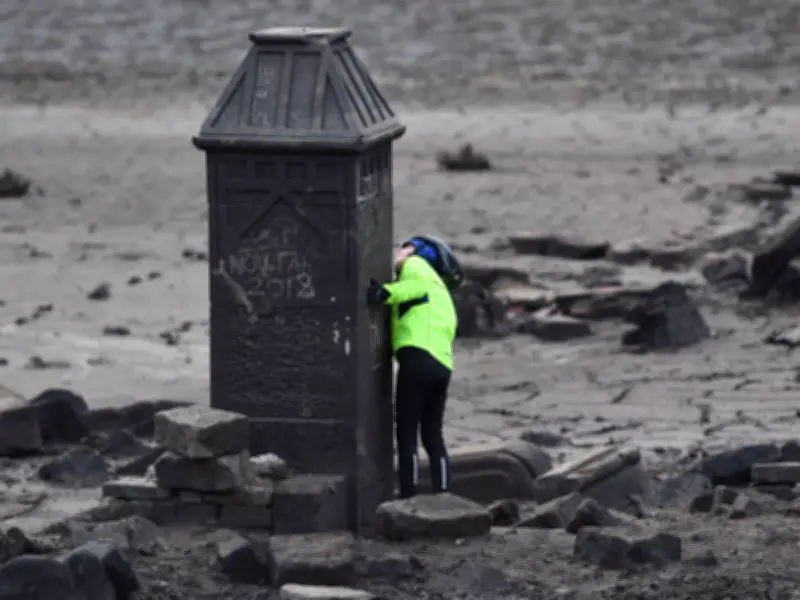
During prolonged hot weather and drought, the bones of long-lost villages around Greater Manchester can reappear from depleted reservoirs, offering a rare glimpse into the past. These submerged settlements, sometimes called 'ghost villages,' were forcibly cleared in the early 20th century to make way for reservoirs supplying water to the growing urban population.
Mardale Green and Measand
In the 1930s, the Lake District villages of Mardale Green and Measand were submerged to create the Haweswater reservoir, one of England's largest reservoirs, designed to supply Manchester with drinking water for a hundred years. The Haweswater dam construction began in 1929 after Parliament passed an Act granting Manchester Corporation permission. The decision sparked public outcry, as the site was home to farming communities. Hundreds of residents were forced to leave, 97 bodies were exhumed and reburied in Shap, and landmarks like the Dun Bull Inn were demolished. During severe droughts, the water level drops enough to reveal dry stone walls and an old bridge, allowing visitors to walk among the ruins.
Derwent and Ashopton
Ladybower Reservoir, built in the Upper Derwent Valley between 1935 and 1943, was the largest in the UK at the time. Its construction came at the cost of the villages of Ashopton and Derwent, demolished in 1943 to provide water for the East Midlands. The Derwent Valley Water Board's decision outraged locals, who were relocated to Bamford. Bodies were exhumed, and the church held its final service. The church spire of St John and St James remained visible for over a year before being demolished. During heatwaves in 1976, 1989, 1995, 2003, and 2018, low water levels exposed cottage doorways, walls, hearths, and pump houses.
Greenbooth
Greenbooth, a historic village in Norden, was flooded in the early 1960s to create the last of four reservoirs in the Naden Valley. The Heywood and Middleton Water Board's proposals in the mid-1950s led to the village's demise. Greenbooth, built around a weaving mill established by James Butterworth in the 1840s, had no church or pub and its population had been shrinking. By the time of demolition, 46 houses remained, 20 of which were derelict. The reservoir, 40 metres high and 300 metres long, was completed in 1963 and officially opened in August 1965.
Watergrove
In the 1920s, Rochdale Council decided to build a reservoir by flooding the valley north of Wardle, where Watergrove had existed for nearly 700 years. By the 19th century, it was a thriving community, but the population dropped below 200 by the 1920s depression. Rochdale's water shortage was critical—in 1920, the town bought 300,000 gallons of water daily from Bacup, and during the 1934 drought, over one million gallons a day from Oldham. Parliament approved the reservoir, and work began in June 1930. Some villagers resented the decision; one wrote in Lancashire dialect to the chief engineer suggesting people use less water. Today, remnants of the village resurface during droughts, and the area is popular for watersports and walking.




