
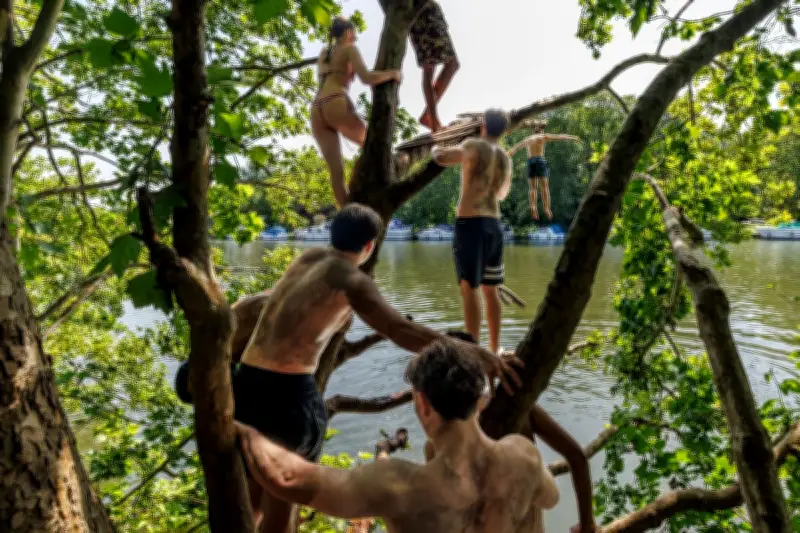
Hannah Talbot, a 33-year-old audio producer, cycles to a reservoir near her north London flat at least twice a week, describing the water as "the lifeblood of London." Yet each heatwave brings dread alongside relief. The popularity of wild swimming in the capital has exploded, with hundreds flocking to a newly designated stretch of the Thames at Teddington and new freshwater sites opening across London. But the boom has exposed the limits of a city deeply conflicted about how people should use its waterways. Teenagers drown jumping into rivers, sewage alerts force swimmers to check pollution maps, and wildlife campaigners warn of fragile ecosystems being overwhelmed. On Hampstead Heath, swimmers have been accused of disturbing nesting swans and cygnets during one of the hottest weeks of the year.
Swimming Spots Scarce as Demand Surges
Talbot loves the idea of more Londoners getting into the water but worries the city has not built enough safe places to swim. "Trying to get a swim spot in London is like looking for hen's teeth as soon as the sun comes out and it makes me sad," she says. "If there were more safe places to swim, there would be less pressure on all the lidos, lakes and reservoirs." According to Swim England, open-water swimming has more than doubled over the past decade, with more than four million adults now swimming in lakes, rivers and the sea each year. The issue has become increasingly political. Last year Sadiq Khan backed ambitions to make London a "swimmable city" by 2034, with City Hall identifying potential new bathing sites on the Thames and in east London waterways.
What Makes a City 'Swimmable'?
The ambiguity around the phrase "swimmable" is part of the problem. For some, it means a river clean enough to jump in on a hot day; for others, it refers to tightly managed designated spots. "There's swimmable and then there's head-under swimmable," says Flora Blathwayt, founder of Washed Up Cards, who organises beach cleans across the capital. She swims everywhere from Hampstead Ponds to the Serpentine, but only ever with her head out. Most Thames swimmers take a similar approach. Marlene Lawrence, founder of the Teddington branch of cold-water swimming group The Bluetits, found at least 200 people swimming in her dip spot on the Thames one hot Friday last month. The stretch between Ham and Teddington has been nicknamed "Costa del Ham" for its crowds of after-work swimmers.
Decline of Public Pools Fuels Wild Swimming
London's wild swimming boom is inseparable from the wider decline of public swimming infrastructure. A study by Victorian Plumbing found 67 indoor public pools across the capital have closed since 2015. Alan, a podcast producer from Melbourne living in Hackney, says he was shocked by how few open-air swimming pools there are — just a couple of dozen, down from 70 in the 1950s. In Australia, pools are considered basic public services and he believes the UK should treat them similarly. The UN recently warned that a Super El Niño event could make 2027 the hottest year on record, adding to concerns that heatwaves will become more common in European cities.
Risks of Unregulated Wild Swimming
Many informal bathing sites are not designed or monitored for large-scale recreational use. Sewage overflows can expose swimmers to bacteria and pollutants, particularly in urban catchments like the Thames Basin. The London Fire Brigade reports that 103 people have tragically drowned in non-suicide-related circumstances over the past five years. Education is a key part of the solution, says Lawrence. "Lots of people turn up to our section of the river and say, 'Great, but where's the beach?'" She ensures she teaches all new members about checking the temperature, river flow, and possible sewage spills before they join a Bluetits session.
Social Justice and Access to Blue Spaces
Dr Miriam Burke, CEO of East London Waterworks Park, a campaign to turn a 14-acre plot in Waltham Forest into a community-owned biodiverse park with wild swimming ponds, says: "Access to clean, swimmable water in London still divides along demographic lines, and that's a structural problem, not a cultural one." She argues the solution is infrastructure and funding to support wild swimming safely, equitably, and sustainably. London architect Chris Romer-Lee, co-founder of Swimmable Cities & Future Lidos, believes Britain still treats swimming as a lifestyle luxury rather than a public health necessity. "How are we going to ensure the less well-off manage the expected increases in heat within our cities?" he asks. If London fails to adapt its waterways for a hotter future, "there will be more tragic drownings, more people dying from heat related illnesses, more people leaving our cities and poorer wellbeing."
Learning from European Cities
Kirsty Davies from Surfers Against Sewage says Londoners need to look to other European cities. Paris invested €1.6bn in cleaning the Seine ahead of the 2024 Olympics and has opened designated river swimming sites and floating pools. Copenhagen has embedded harbour baths across the city. Romer-Lee believes London does not need to transform the Thames to become swimmable. It needs a mix of designated bathing areas, floating pools and accessible waterfronts — similar to models in Paris, Copenhagen and Berlin. "Just because the central London section of the river is tidal, fast-moving and a busy commercial waterway doesn't mean we can't safely have floating pools," he says. Ben Seal of Paddle UK adds: "A truly water-connected city is one where water is not treated as a hazard to be fenced off." Khan was told it would take 25 years to turn air quality around in London and he managed it in eight — Romer-Lee is confident the same can be done for polluted waterways. Wild swimming events like the new 3km race King of the Thames in Hampton Court show the cultural momentum is there. The question is whether London's infrastructure, politics and waterways can evolve quickly enough to meet it safely.




