Israeli Strikes on Tehran Oil Depots Ignite Prolonged Toxic Fires
Satellite imagery has confirmed that toxic fires caused by Israeli bombings on multiple oil depots in Tehran continued to burn for days after the initial strikes on 7 March. The attacks have triggered a severe public health emergency, with millions of residents in the Iranian capital exposed to dangerous pollutants.
City Blanketed in Hazardous Smoke and 'Black Rain'
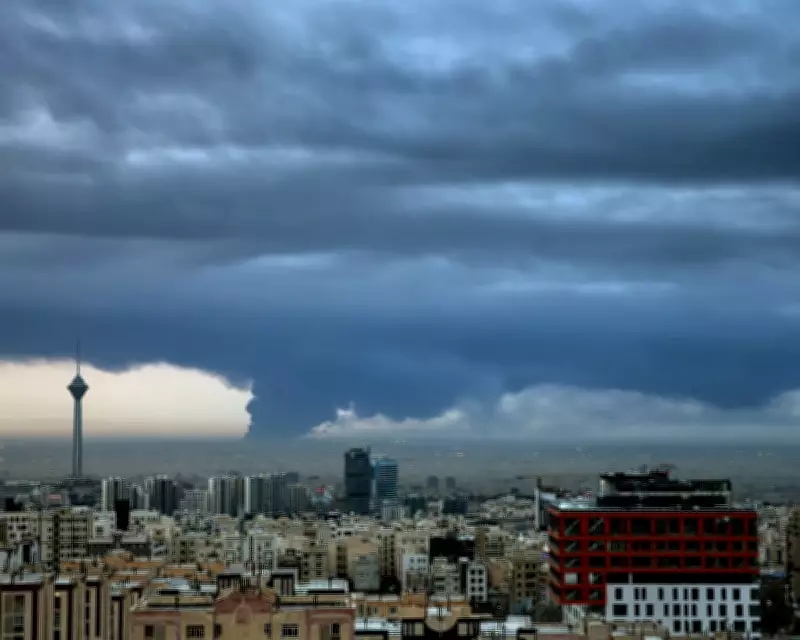
Clouds of smoke from the bombings at four fuel facilities blanketed Tehran with a toxic mix of soot, oil particles, and sulphur dioxide. Hours later, a passing storm showered the city with poisonous, oil-filled rain described by residents as 'black rain'. The Shahran oil depot in the north-west emitted a thick column of smoke, while the Aqdasieh depot in the north-east, Tehran refinery in the south, and Shahid Dolati facility in the west were also hit.
Satellite images from two days after the strikes showed the Shahran depot and Tehran refinery were still burning. Another image taken by the European Space Agency satellite ten days after the attacks revealed the Aqdasieh oil depot was still visibly smouldering with smoke and flames.

Residents Report Immediate Health Symptoms
Tehran residents have reported headaches, eye and skin irritation, and significant breathing difficulties. Experts warn these symptoms could be just the beginning, with long-term risks including cardiovascular disease, cognitive impairment, DNA damage, and cancer.
Akshay Deoras, a research scientist at the University of Reading, explained that symptoms reported by residents are consistent with oil fires that produce sulphur and nitrogen compounds. These compounds can form acids when they dissolve in rainwater, creating the 'black rain' phenomenon observed in Tehran.
Long-Term Environmental and Health Consequences
The United Nations Environment Programme has warned that heavy smoke from burning oil is being directly inhaled by people in Iran, including young children, raising serious concerns about long-term impacts on both human and environmental health. Andrea Sella, a professor of inorganic chemistry at University College London, stated there is no question that smoke from such fires is very harmful, anticipating a lingering legacy of respiratory and other illnesses.
Iran has described the attacks as 'ecocide', referring to wanton acts of environmental destruction. The World Health Organization head, Tedros Adhanom Ghebreyesus, has said the attack risks contaminating food, water, and air, with hazards that can have severe health impacts especially on vulnerable populations.
Widespread Contamination Across the Capital
Residents report that particles released by the explosions have accumulated on cars, roads, and roofs across Tehran. One resident told The Guardian that an outdoor pool used as an emergency water source turned black after the fallout from the strikes, and streets became black and slippery.
Iranian doctors have been sharing information on the dangers of acid rain, advising residents to avoid staying outside, dispose of polluted clothes, use N95 masks, and avoid standing under trees. The chronic air pollution in Tehran, long exacerbated by the use of low-quality heating oil called 'mazut', has been dramatically worsened by these recent events.
Broader Regional Environmental Damage
The environmental damage extends beyond Tehran. Iran has attacked the UAE's biggest port and oil storage facility in Fujairah, with satellite images showing large smoke plumes over the sea. US-Israeli strikes on ships have led to oil spills in the sea, while an Israeli strike hit an Iranian production facility for the world's largest natural gas field.
UNEP noted that experience from other conflicts shows large oil fires and spills can cause extensive environmental contamination and pose significant health risks from exposure to smoke, particulates, and toxic emissions. Pollution from uncontrolled fires may enter soil and water, leach into groundwater, and be absorbed by crops, contaminating food supplies.