
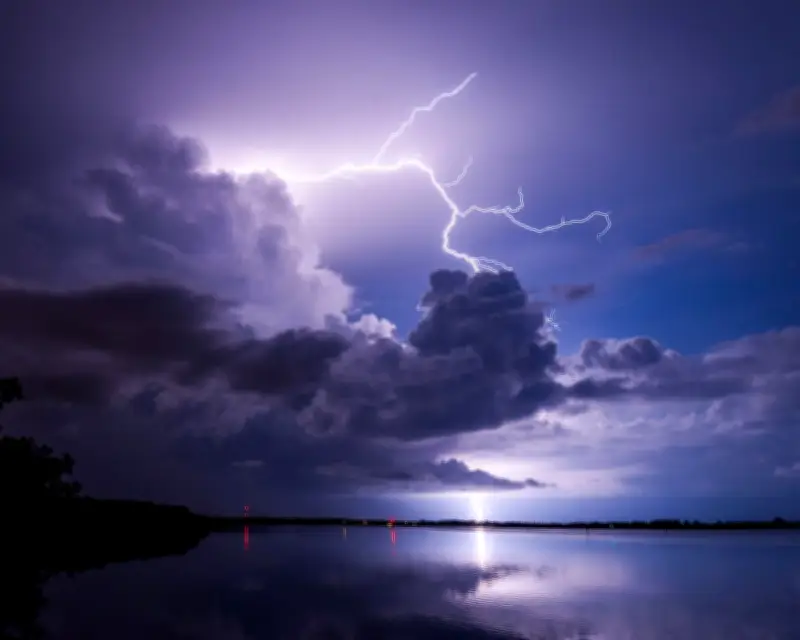
A bolt of lightning heats the air almost instantly to as high as 30,000C, causing explosive expansion and a supersonic shock wave that becomes thunder. What that thunder sounds like to a listener depends largely on where they are.
Nearby Thunder: Snap, Crack, and Boom
Nearby lightning produces a distinctive snap or crack, or a startling explosive boom. Large, complex lightning with multiple segments generates a peal of thunder, a series of booms of different pitches as the sound from each of the segments reaches you in turn.
Distant Thunder: Low-Frequency Rumble
Distant thunder is very different. The atmosphere muffles sound, and higher frequencies are absorbed more effectively. As distance increases, the high-pitched sounds are taken out, leaving only a low-frequency rumble. This tends to continue for much longer than the peal that generated it, as the thunder bounces off clouds and hills, echoing and re-echoing repeatedly.
Even these low-frequency sounds are absorbed by about 10 miles of air, but the lightning still may be visible from much further away. Especially at sea or on open plains, an observer can watch a distant thunderstorm flickering repeatedly with no audible sound. This gave rise to the false idea of “heat lightning”, so called because it was most often seen on summer evenings and was supposedly silent. In fact, this is just normal lightning, too distant to be heard.




