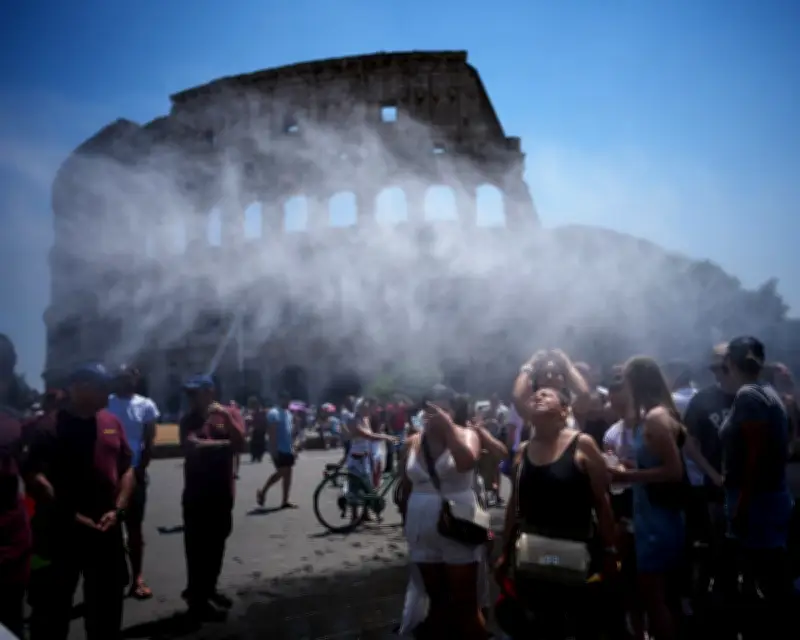
More than 150 million Europeans experienced temperatures exceeding 35°C (95°F) during last week's heatwave, with several areas surpassing 40°C. This extreme weather event, unprecedented for June, has raised questions about its impact on climate action and political dynamics.
Death Toll and Health Impacts
Spain recorded over 100 heat-related excess deaths per day since Wednesday, while French authorities reported at least 1,000 additional deaths between 24 and 27 June, a figure expected to rise. Among the victims were four toddlers, including a three-year-old boy in a Paris suburb who died after becoming trapped in a car.
In the UK, the London ambulance service experienced its busiest day ever for serious callouts on Wednesday, with 642 responses to cardiac arrests, stopped breathing, and life-threatening injuries. This record was broken two days later, with more 999 calls than during the Covid-19 pandemic.
Unprecedented Temperatures
The heatwave pushed the UK's June temperature record to 37.3°C. Germany, Czechia, Poland, and Hungary reached over 40°C on Sunday. Bautzen in eastern Saxony set a German record for the highest overnight minimum temperature at 29.4°C. The London Heathrow weather station recorded four consecutive tropical nights, defined as nights when temperatures do not fall below 20°C.
Political Paradox
According to Ajit Niranjan, the Guardian's Europe environment correspondent, extreme weather events can sometimes boost far-right parties that deny climate science. "They spin the extreme weather as a failure of government policy, arguing that focusing on climate change was part of the initial problem, and it is more about mismanagement," Niranjan said. This was seen after the 2021 Ahr valley floods in Germany and the 2024 Valencia floods, where both climate change and poor governance contributed to the disasters.
Air Conditioning Debate
Social media amplified divisions over air conditioning. Patrick Collison, CEO of Stripe, used AI to argue that Europe should embrace air conditioning. In France, the far-right National Rally announced a major plan for AC, capitalizing on green progressives' resistance. However, Niranjan noted that actual restrictions on AC are minimal in Europe, and the debate is overstated internationally.
Protecting Vulnerable Populations
The World Health Organization reported nearly 200,000 heat-related deaths in Europe over the past four years, many preventable. Niranjan emphasized the importance of checking on elderly neighbors and providing simple aid like icy water. "The small things really matter," he said. "Pop over with a glass of icy water or an ice-cream. None of this will make a difference to the big picture on the climate crisis, but it is ridiculously hot, and people are dying without many of us realizing."