Innovative Harbour Mud Scheme Restores Eroding Saltmarsh in Lymington
Dredged mud from a harbour on England's south coast is being deployed in an innovative scheme to restore surrounding saltmarsh, offering a potential blueprint for protecting coastal communities and wildlife nationwide.
The Critical Situation at Lymington Harbour
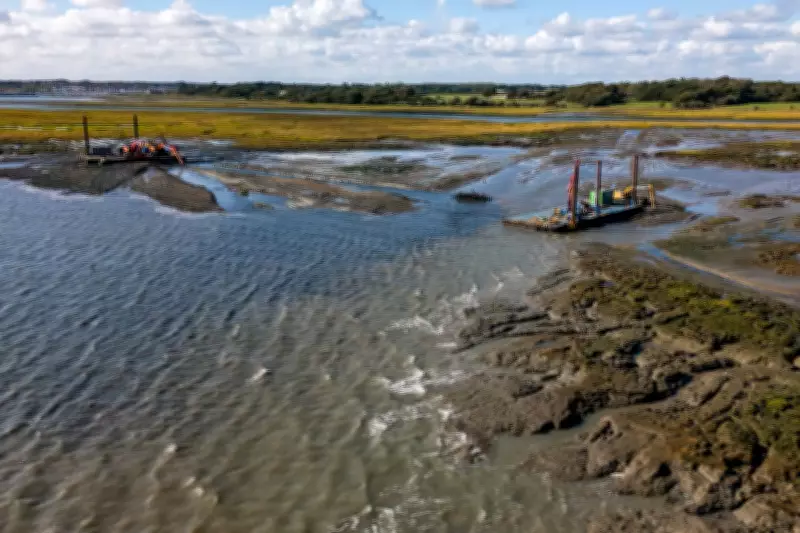
The team behind the project to restore the eroding saltmarsh that shields Lymington Harbour in Hampshire hopes this "remarkable" recovery of natural habitat can be replicated across the country. This initiative aims to conserve coastal areas increasingly vulnerable to rising sea levels and intensified storm activity driven by climate change.
Lymington Harbour represents a vital economic hub, featuring a ferry connection to the Isle of Wight, 1,600 leisure moorings, and approximately 20,000 visiting yachts annually. The harbour contributes tens of millions of pounds to the local economy each year.

However, its precious saltmarsh is eroding at an alarming rate of two to three metres per year. This degradation threatens to leave the harbour exposed and economically unviable, jeopardising both the local economy and marine ecosystems.
A Novel Approach to Restoration
While previous efforts involved building rocky breakwaters and dumping dredged mud in front of the saltmarsh, a new partnership led by Lymington Harbour Commissioners and Land & Water Group is trialling more sophisticated methods. The current approach focuses on placing dredged sediment at precisely the right height to enable plants to recolonise and naturally restore the habitat.
The scheme enjoys support from the Crown Estate, which owns the majority of the foreshore, seabed, and tidal riverbed at Lymington Harbour, including the saltmarsh undergoing restoration.
Ryan Willegers, chief executive of Lymington Harbour Commissioners, explained that the harbour has witnessed saltmarsh decline since around 1920, mirroring trends seen in many other UK coastal areas. "At the beginning of this century we started to get very concerned that if it carried on, we would be in a situation where the saltmarsh that protects the harbour, most of it wouldn't exist," he stated. "Without the saltmarsh a lot of the harbour would be exposed and no longer viable to support the economy."
Broader Ecological Significance
James Maclean, chief executive of Land & Water, emphasised that saltmarshes serve not only as crucial coastal defences but also support approximately 80% of marine species found in inshore waters. Failure to protect these habitats from rising sea levels could lead to the potential "collapse" of marine ecosystems.
"They are a really important part of the UK coastal story," Maclean asserted.
Simultaneously, around 20 million tonnes of nutrient-rich sediment dredged from UK harbours and ports annually is almost entirely discarded offshore. The project team is therefore testing various technologies and collaborating with multiple regulatory bodies to facilitate the use of this sediment in nearshore restoration projects.
Technical Implementation and Early Success
The restoration employs technology inspired by Victorian steam drag boxes, described by Willegers as a "giant scoopy sled" with a hydraulic winch attached to a 28-tonne excavator. This equipment is used to rebuild the saltmarsh structure.
During the trial's first year in 2024, funded by the Environment Agency, approximately 800 cubic metres of mud was placed at the optimal height for habitat regeneration in the least exposed area possible. When the team returned twelve months later, they discovered "really good quality saltmarsh growing in that location," according to Willegers.
In the subsequent year, with funding from the Crown Estate, the scheme involved transporting sediment over much shorter distances. This efficiency allowed the team to move two and a half times more sediment in just one-third of the time previously required.
"Saltmarsh won't grow until the spring, we had to get through this winter and hope it's still there at the right level, then if it makes it through to the spring we are fully expecting it to colonise and have some very good saltmarsh," Willegers explained, noting that the material has remained in place so far.

Nature's Remarkable Resilience
Maclean detailed that sediment must possess the correct chemical and physical composition and be raised to the target height. Once these conditions are met, nature takes over through wind-blown and bird-carried seeds, with pioneer species typically appearing within a single year.
"Everybody involved has been dumbfounded by how quickly in 2024 the material colonised. It's remarkable how over one winter, it's turned into a really quite exciting habitat. So we know if we get that target height, nature will take over," he observed.
Institutional Support and Future Replication
The Crown Estate is backing the scheme both to protect its assets and to align with its "guiding nature principles" approach, which prioritises restoration, protection, and sustainable investment in nature within its marine estate.
Caroline Price, head of nature and environment at the Crown Estate, noted that more traditional saltmarsh restoration methods tend to be slow and expensive. The organisation sought to explore how sediment removed to maintain harbour operations could be repurposed effectively.
"We've been keen, alongside Land & Water, the Environment Agency and others to look at whether there were more innovative, lower cost, more scalable ways to bring these two things together," Price stated.
"It's important that we can have the sort of innovative projects, like what's happening at Lymington, to help us understand the art of the possible and how we can move forward and change and then replicate that elsewhere," she added, expressing hope that this model could be applied to other threatened saltmarshes around the UK coastline.