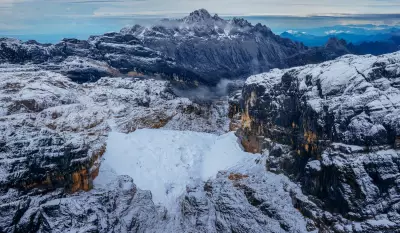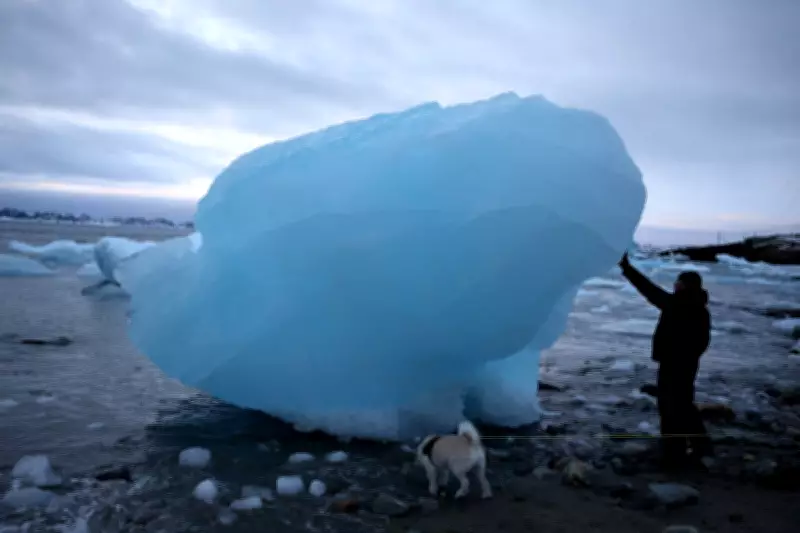
Greenland, the vast Arctic territory that once captured the attention of former US President Donald Trump, is confronting a profound and immediate climatic threat that could reshape its economic foundations. The island has just experienced its warmest January on record, with temperatures soaring at a rate four times quicker than the global average, according to data from the Danish Meteorological Institute.
Unprecedented Temperature Spike
Preliminary readings from the institute's station in Nuuk, Greenland's capital, revealed an average temperature of +0.2°C (32.4°F) for January. This figure stands in stark contrast to the historical average of -7.7°C recorded between 1991 and 2020. Jacob Hoyer, head of the National Centre for Climate Research, emphasised the severity of the situation, stating: "Climate change is already clearly visible on Greenland. From the records we can see that it is warming four times faster than the mean temperature hike in the world."
Economic Pillars Under Pressure
This rapid warming is directly impacting Greenland's core economic sectors. The fishing industry, which accounted for 23% of the island's gross domestic product in 2023 and provides 15% of all jobs, faces significant uncertainty. Catches of shrimp, halibut, and cod—Greenland's biggest exports—are now threatened by warming ocean waters that could alter marine ecosystems.

Hoyer explained the potential consequences: "The waters around Greenland are also warming up, and that can change the ecosystem and the fishery business. It will most likely have an impact," though he noted it remains too early to predict exact outcomes.
Transport and Tourism Disruption
The changing climate is already causing practical difficulties. Reduced and thinner sea ice along coastal areas makes traditional winter transport methods increasingly challenging. This environmental shift is also disrupting tourism, a vital sector for local businesses.
Casper Moller, who operates a tour company, described the immediate challenges: "The lack of snow and ice makes these difficult by snowmobile or skis. So, what we are doing at this moment is just crossing our fingers that we will reach more snow quite soon."
Strategic Minerals and Geopolitical Context
While the warming climate presents challenges, it could paradoxically create opportunities in Greenland's mining sector. The territory contains substantial deposits of strategic minerals, with a 2023 Danish survey identifying 25 of the 34 minerals classified as "critical raw materials" by the European Commission.
Historically, mining ventures have been hampered by bureaucratic hurdles, extreme weather conditions, and opposition from indigenous communities. However, Hoyer suggested that "the flip side of the warming climate could be that such ventures become more profitable as extraction and shipping become less costly."
Political Sovereignty Asserted
This environmental and economic transformation occurs against a backdrop of renewed assertions of political autonomy. Greenland's Prime Minister has firmly stated that "only Greenland and Denmark can decide its future," directly addressing previous geopolitical interest from the United States.
Former President Trump had previously expressed security-driven desires for US ownership of the autonomous Danish territory, though he eventually retreated from threats of forceful acquisition. This historical context adds layers of complexity to Greenland's current predicament, as it navigates both climatic transformation and persistent international attention.
The convergence of record temperatures, economic vulnerability, and strategic mineral resources places Greenland at a critical juncture. How it adapts to these warming trends will determine not just its economic future, but its position in an increasingly contested Arctic region.