
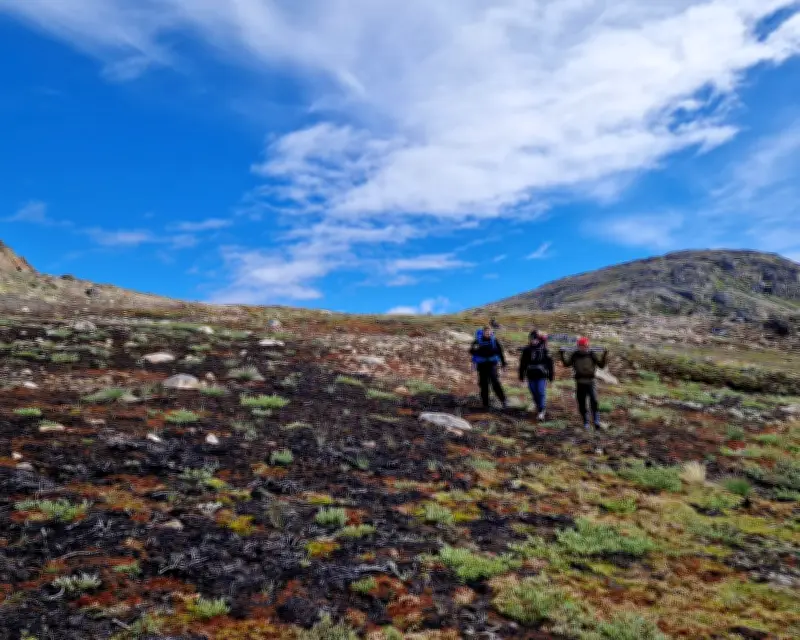
Scientists have expressed alarm after two wildfires erupted in Greenland within a week earlier this month, a rare and early occurrence for the Arctic island. Satellite imagery showed fires burning near Sisimiut, Greenland's second-largest town and a popular tourism hub, on 14 and 15 June, followed by a second blaze in Kujalleq on the island's southern tip on 17 June.
While most of Greenland is covered by ice sheets and glaciers, significant ice-free tundra regions exist where wildfires are becoming more common but remain unusual, especially so early in the summer. Dr. Mark Parrington, a senior scientist at the Copernicus Atmosphere Monitoring Service, noted that vegetation fires at high northern latitudes typically occur in July and August. "For two fires to break out this early in the summer is particularly unusual," he said.
Early Fire Season Linked to Dry Conditions
Sonja Diaz, a scientist at the University of Helsinki's Environmental Change Research Unit who studied the 2019 Greenland wildfire, said the timing felt "quite wild." She explained that wet conditions and snow usually prevent fire ignition and spread, requiring warm and dry weather. Inunnguaq Eigil Lundblad, emergency manager for Qeqqata municipality (which includes Sisimiut), said the fires there started after "someone used fire recklessly" combined with low winter snow and little rainfall, leaving the soil very dry. Miki Sikemsen, emergency manager for Kujalleq municipality, reported that the area had been unusually dry since May, with no significant rainfall, making vegetation highly flammable.
Rising Fire Frequency in Greenland
Pelle Tejsner, an associate professor at the University of Greenland, warned that the dry soil means "more fires could be expected." A study of fires in ice-free western Greenland detected no blazes from 1995 to 2007 but recorded 21 events between 2008 and 2020, including major fires in 2017 and 2019. Climate breakdown has heated the Arctic four times faster than the global average. Parrington said Copernicus data showed "anomalously high" air temperatures that could make vegetation more flammable, though fires still need an ignition source.
Carbon Emissions from Tundra Fires
Fires burning peaty soil in Arctic tundra can release large amounts of carbon, accelerating climate change. Sonja Diaz's research, currently under peer review, suggests that carbon released per square meter from Greenland wildfires is much higher than previously reported for other tundra fires, and that the carbon is old—locked in the ground for hundreds to thousands of years. Lucas Diaz, a Brazilian environmental engineer at Vrije Universiteit Amsterdam who also studied the 2019 fires, noted that people often think of Greenland as only ice, but ice-free tundra regions can ignite and burn. The researchers' project, funded by the Research Council of Finland, aims to gather data to improve global fire models, which are not trained on Arctic fires.
Fire weather is becoming more common due to fossil fuel pollution and nature destruction, which have heated the planet by 1.3°C. Lucas Diaz cautioned, "That does not mean every year it will get worse and we'll have more and more fires every year. But what we see is that the overall conditions that create a fire-prone environment are increasing."




