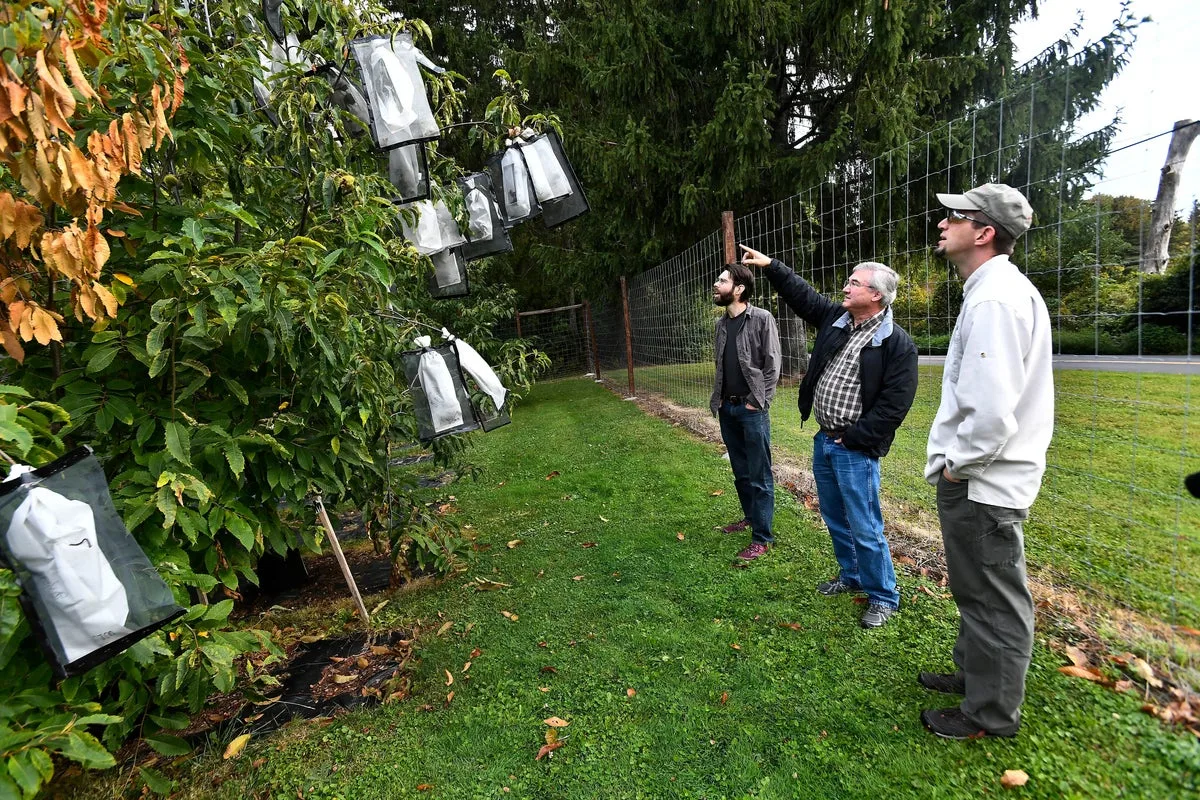
Genetic Testing Accelerates American Chestnut Restoration, Study Finds
Genetic Testing Speeds American Chestnut Restoration

Genetic Breakthrough Offers Hope for American Chestnut Revival

Billions of American chestnut trees once dominated the eastern United States, towering over forests and producing nuts so abundant they were shipped by train. Immortalised in the Christmas carol "chestnuts roasting on an open fire," this iconic species faced functional extinction by the 1950s due to a deadly fungal blight and root rot.

A groundbreaking study published in the journal Science on Thursday provides renewed optimism for its restoration. Researchers have discovered that genetic testing of individual trees can pinpoint those most likely to resist disease and achieve significant height, dramatically accelerating the breeding process for future generations.

Speeding Up Restoration Efforts

By reducing the generational gap, scientists aim to produce large numbers of disease-resistant trees capable of competing in Eastern forests within decades. "What's new here is the engine we're creating for restoration," explained Jared Westbrook, lead author and director of science at The American Chestnut Foundation.

Wide Pickt banner — collaborative shopping lists app for Telegram, phone mockup with grocery list

The American chestnut, often dubbed the "redwood of the East," grew rapidly to over 100 feet, yielded nutritious nuts, and provided durable lumber. However, it lacked defences against introduced blight and root rot, unlike the Chinese chestnut, which evolved resistance but is less competitive in U.S. ecosystems.

Overcoming Genetic Complexities

For years, scientists have sought to combine the American chestnut's desirable traits with the Chinese chestnut's disease resistance. This has proven challenging because these traits are scattered across multiple genomic locations. "It's a very complex trait, and you can't just select on one thing without negative linked effects," noted John Lovell, senior author and researcher at the HudsonAlpha Genome Sequencing Center.

The study sequenced genomes of various chestnut types, identifying genetic markers linked to ideal characteristics. This enables breeding of trees with approximately 70% to 85% American chestnut DNA while enhancing resilience. Genetic testing allows selection of superior offspring years before natural growth would reveal their potential, accelerating progress.

Debates Over Biotech and Identity

Steven Strauss, a professor of forest biotechnology at Oregon State University, praised the study for identifying promising genes but advocated for gene editing as a faster, more precise method. He highlighted regulatory hurdles, stating, "People just won't consider biotech because it is on the other side of this social, legal barrier," which he views as shortsighted.

The research raises existential questions about the tree's identity. Donald Edward Davis, author of an environmental history on the American chestnut, emphasised its unique evolutionary role as a keystone species supporting wildlife like squirrels and black bears. He expressed concern that hybrids might not match the original's majesty or ecological effectiveness, favouring a greater reliance on surviving wild trees.

Lovell countered that reintroducing genetic diversity is essential to avoid a genetic bottleneck. "If we only select American chestnut genes, we'll end up with too small of a pool, leading to future extinction," he argued.

The study marks a significant step toward reviving a cherished part of America's natural heritage, blending traditional breeding with advanced genetics to restore forests for generations to come.

Pickt after-article banner — collaborative shopping lists app with family illustration



