
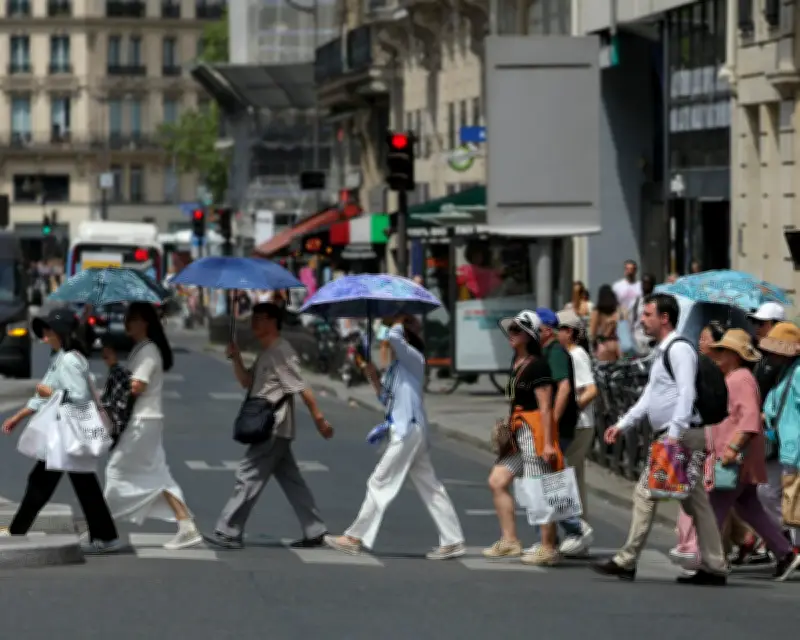
Forty people have drowned while swimming in unsupervised areas across France in recent days, Prime Minister Sébastien Lecornu announced on Tuesday, as an exceptional early summer heatwave continues to break records across much of Europe.
Record-breaking heat and tragic drownings
“There is a tragic scourge of drownings,” Lecornu said. “The latest figures we’ve received are 40 deaths since 18 June. Most of the victims are young people.” Lecornu was preparing to chair a crisis meeting with ministers to address the heatwave, which has left parts of western France bracing for temperatures of up to 43°C (109°F). “We’re experiencing an episode of exceptional intensity,” he added. “Every day and every night, local and national temperature records are being broken.”
France’s national weather service, Météo-France, placed 54 departments under a red heatwave alert, describing the heat as “oppressive and exhausting.” It noted that overnight temperatures were the hottest since record-keeping began in 1947. On Tuesday, France’s national heat index—an average of day and night-time highs measured at 30 weather stations—reached a record 21.6°C, surpassing the previous record of 21.4°C set on 25 July 2019.
Impact on transport and schools
Officials in the greater Paris region advised people to work from home and avoid rail journeys. “The transport network comes under severe strain in periods of extreme heat … railways cannot withstand temperatures above 50 degrees,” said Valérie Pécresse, head of the Île-de-France region. The heat forced the closure of about 1,350 schools on Monday and was linked to the deaths of two young children in their family car. Forecasts suggest the heatwave will continue until the end of the week, with Météo-France warning of “further record-breaking temperatures, including some that could surpass all previous records, regardless of the time of year.”
Broader European heatwave
The sweltering temperatures across Europe are caused by what Clair Barnes, a climate scientist at Imperial College London, described as a bulging mass of hot air drawing warm air from north Africa. “It’s very slow moving and it means there’s kind of no wind, no breeze for respite,” Barnes told Reuters. In England, some schools closed early on Tuesday as the UK braced for temperatures up to 40°C, prompting the Met Office to issue its second ever red heat warning.
United Nations Secretary-General António Guterres addressed a London Climate Action Week event, saying: “London isn’t just calling. It’s cooking.” He urged global action to limit warming, stating: “A climate crisis is pushing us deeper towards higher temperatures and closer to catastrophic tipping points, and an energy crisis is exposing the folly of a world hooked on hydrocarbons.”
Italy and Spain under red alerts
In Italy, the health minister declared a red heatwave alert in 15 cities including Milan and Rome. In Germany, officials reported a spike in swimming accidents over the weekend, leading to five deaths. Nearly all of Spain was under a heat alert on Tuesday, with red warnings of “extraordinary danger” issued for areas around Córdoba, Bilbao, and parts of Cantabria. On Monday, 101 of Spain’s 828 weather stations recorded temperatures of 40°C or higher, and at about 30 stations, temperatures remained above 25°C overnight. In the south-eastern province of Almería, temperatures did not dip below 30°C for three consecutive nights, with local media reporting “more than 72 hours above 30 degrees Celsius” and “a hellish night of temperatures above 30°C and highs exceeding 40°C.”




