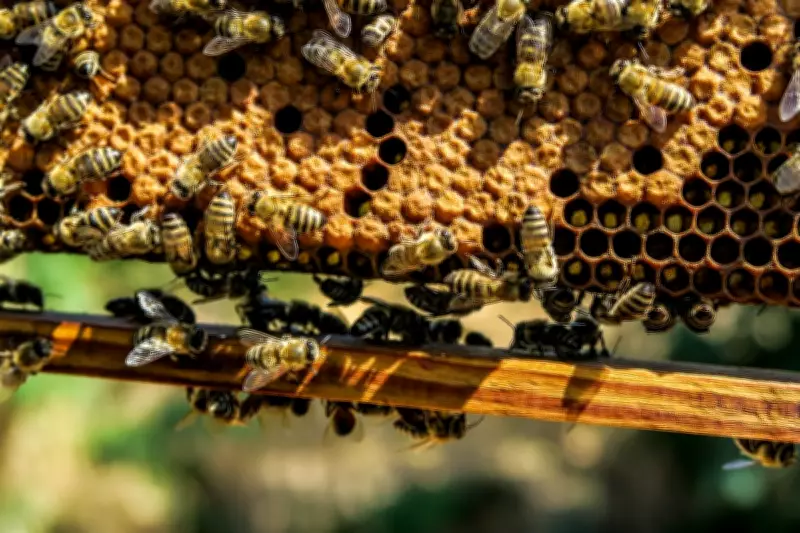
Australian researchers have issued a stark warning about the alarming impact of toxic "forever chemicals" on honeybee colonies, with significant implications for global food security and human health. A new study reveals that perfluorooctanesulfonate (PFOS), a persistent environmental contaminant, can accumulate in bee populations and transfer to their honey, potentially disrupting ecosystems and agricultural systems worldwide.
PFOS Exposure Alters Bee Physiology and Development
Scientists monitored European honeybee colonies (Apis mellifera) in Australia and discovered that prolonged exposure to PFOS chemicals changes the expression of key proteins responsible for cellular function in these crucial pollinators. The research, published in the journal Environmental Science & Technology, found PFOS present in the body tissue of juvenile bees, which showed significantly lower body weight compared to control bees without PFOS exposure.
"PFOS was detected in the body tissue of the new generation of juvenile bees, and these showed a lower body weight than the control bees without PFOS exposure," explained study author Carolyn Sonter. "A lower body weight indicates a smaller bee with smaller glands, including the hypopharyngeal gland, which produces royal jelly to feed the next generation of bees."

Royal Jelly Quality at Risk
Researchers suspect PFOS contamination may specifically affect the quality of royal jelly, the nutrient-dense liquid that worker bees produce to feed larvae and develop future queens. If royal jelly quality diminishes due to chemical exposure, subsequent bee generations could suffer developmental impairments, compromising the health and longevity of entire colonies.
"If its quality is reduced, future generations can be adversely affected, compromising the health and longevity of the entire bee colony," Dr. Sonter emphasized. This disruption to bee reproduction and development mechanisms represents a critical threat to pollinator populations that form the foundation of agricultural systems globally.
Food Security Implications and Pollination Crisis
The study warns that widespread PFOS exposure could gradually decrease honeybee populations, negatively affecting crop pollination on a massive scale. With most agricultural crops relying on bee pollination, reduced bee health and numbers could severely impact food production systems.
"Any threat to bees threatens food security," Dr. Sonter stated unequivocally. "Most agricultural crops rely on bees for pollination, and without them, production of foods like berries, fruit, and most vegetables would be severely reduced."
Persistent Environmental Contamination
Despite PFOS being banned in many regions worldwide, legacy contamination continues to pose significant threats to bee populations. These persistent chemicals, used historically in stain-resistant fabrics, non-stick cookware, firefighting foams, and electronics, do not break down easily in the environment and continue to circulate through ecosystems.
Bees encounter PFOS through multiple exposure pathways, including contaminated dust, water sources, paint on bee hives, crop protection products, and pollen from plants growing in polluted soil and water. "The legacy of PFOS is permanent, at least in our lifetime," Dr. Sonter noted, highlighting the enduring nature of this environmental challenge.
Protective Measures and Research Gaps
The research team recommends practical steps to reduce PFAS (per- and polyfluoroalkyl substances) risks to bees, particularly in domestic settings. "One way to reduce PFAS risks to bees at home is to avoid using crop protection products that contain PFAS in gardens – many do!" Dr. Sonter advised.
Scientists plan further investigations to better understand field exposure pathways for bees and develop more comprehensive protective strategies. "Even though bees are such an important insect, they're poorly researched and understood when it comes to threats from environmental contaminants," Dr. Sonter acknowledged, calling for increased scientific attention to pollinator health.

This research adds to growing evidence about PFOS health risks, which previous studies have linked to high cholesterol, liver enzyme changes, and accelerated aging in humans. The bee study underscores how environmental contaminants can move through food chains, potentially affecting both ecosystem health and human wellbeing through contaminated honey and reduced pollination services.