
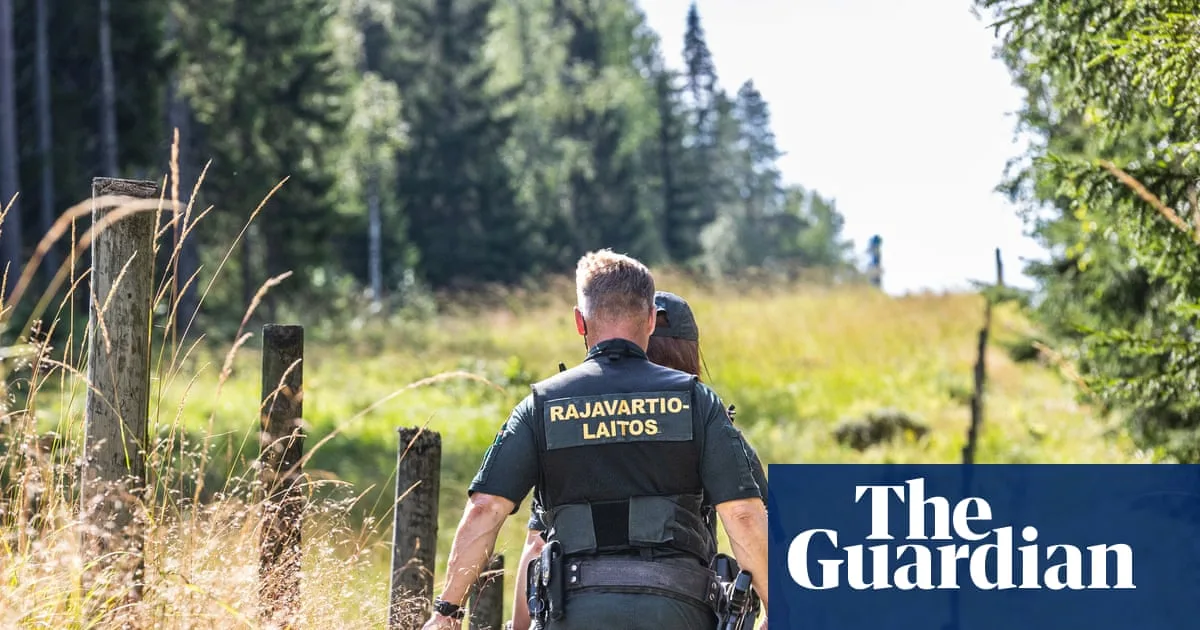
Countries should consider rewilding their land borders as a deterrent to invasion, according to Jessika Roswall, the European Union's commissioner for the environment. In an interview with the Guardian, Roswall highlighted the examples of Poland and Finland, which have transformed border areas near Russia or its allies into 'more hostile' terrain to make crossing difficult.
'Investing in nature and using nature as a natural border control is necessary, and actually increases biodiversity. It's a win-win,' Roswall said. She noted that restoring wetlands also provides a natural barrier, making it hard for tanks to traverse. Roswall urged nations to treat nature as a defence asset and consider the national security implications of environmental degradation.
Roswall emphasised that a thriving natural environment is crucial for food and water security, both essential for national security. She pointed to Ukraine, where water infrastructure is under attack, as an example of why investing in and protecting such infrastructure is vital. She also argued that protecting towns from flooding through nature-based solutions like sponge cities should be seen as a security issue.
On water quality, Roswall warned that Europe faces a crisis due to scarcity, pollution, and pressure on resources. 'We are at a junction where we really need to focus on water,' she said, calling for collaborative efforts to address both scarcity and quality. She declined to comment on whether the UK should nationalise its water industry, stating the main objective is affordable water for all.
Roswall also pushed for stronger controls on 'forever chemicals' (PFAS), which pose risks to human health through water and soil contamination. She aims to provide guidance this year and suggested that polluters, including pharmaceutical and cosmetic industries, should pay for cleanups, though public money may be needed for contaminated hotspots.
Despite post-Brexit divergence, Roswall downplayed tensions between the UK and EU on environmental standards, noting shared objectives with UK Environment Secretary Emma Reynolds. She insisted the EU is not backtracking on its green agenda, saying, 'We are doing it green and clean. We are focusing on implementing [environmental standards].'




