El Niño Phenomenon May Trigger Record Global Temperatures by 2027
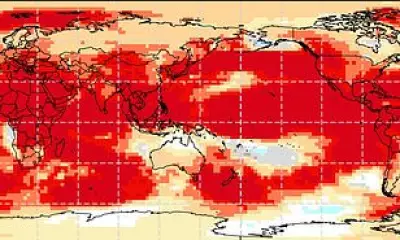
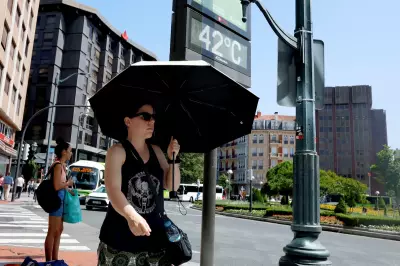
Weather agencies and climate experts are raising alarms over the possibility of an El Niño forming in the Pacific Ocean later this year, a development that could propel global temperatures to all-time record highs by 2027. This warning comes as the past three years have already ranked as the top three warmest on record, underscoring the escalating impact of climate change.
Understanding El Niño and Its Global Implications
El Niño is a climatic phenomenon characterized by the accumulation of warmer-than-average waters in the eastern equatorial Pacific, extending to the American coastline. Typically, this event is associated with unusually hot weather and can significantly boost global temperatures. In regions like Australia, it often leads to drier and hotter conditions, exacerbating environmental challenges.
The cycle of ocean temperatures in the Pacific, known as the El Niño Southern Oscillation (ENSO), is intricately linked to extreme climate events worldwide. When El Niño occurs, it tends to amplify global warming trends, making it a critical factor in climate predictions.

Scientific Predictions and Uncertainties
Both the US National Oceanic and Atmospheric Administration (NOAA) and Australia's Bureau of Meteorology have indicated that some climate models forecast an El Niño event. However, they caution that these predictions come with considerable uncertainties due to the complex nature of oceanic and atmospheric interactions.
Dr Andrew Watkins, a climate scientist at Monash University and former head of long-range forecasts at the Bureau of Meteorology, explained, "We have a lot of warm water stored up in the western tropical Pacific. Typically, when the trade winds ease, that will slosh back to the east and warm up the areas off South America." He noted that models suggest this could happen during the Australian autumn, aligning with typical patterns, but it remains too early to confirm if El Niño will fully develop.
Associate Professor Andrea Taschetto, an ENSO expert at the University of New South Wales, highlighted the current transition from a La Niña phase, where warmer waters are closer to Australia, to a more neutral or El Niño state. She described the chances of El Niño developing between June and August as roughly 50/50, akin to "tossing a coin," emphasizing the unpredictability involved.
Potential Impact on Global Temperatures
Dr Zeke Hausfather, a research scientist at the independent Berkeley Earth group, provided insights into the timing and effects of a potential El Niño. He stated, "If El Niño develops later this year, it will likely peak around November to January and primarily impact 2027 global surface temperatures, rather than 2026." Based on this, he predicts that 2027 could set a new record for global temperatures if a moderate to strong El Niño event occurs.
Dr Hausfather pointed out that a previous El Niño from mid-2023 to April 2024 added approximately 0.12°C to global temperatures in 2024, illustrating how such events can intensify warming trends. Dr Watkins concurred, noting that if El Niño does develop, its strongest impact on global temperatures would likely be felt in 2027. He remarked, "I would be hesitant to bet against a hottest year on record," but also cautioned that global heating from fossil fuel emissions is now so dominant that it might override year-to-year variability, potentially leading to warmer temperatures even without a strong El Niño.
Broader Climate Context and Concerns
The discussion around El Niño occurs against a backdrop of accelerating climate change, driven largely by human activities such as burning fossil fuels. Experts warn that this underlying trend is making extreme weather events more frequent and severe, with El Niño episodes serving as additional catalysts for temperature spikes.
Dr Watkins reflected on the current state of climate science, saying, "I don't think we are surprised by anything any more. You might not need a strong El Niño to get these warmer temperatures." This sentiment underscores the urgency of addressing climate change through mitigation and adaptation strategies to curb future temperature rises and their associated risks.

As scientists continue to monitor Pacific Ocean conditions, the potential for an El Niño event in the coming years remains a key focus for climate research and policy-making, highlighting the need for global cooperation in tackling environmental challenges.