
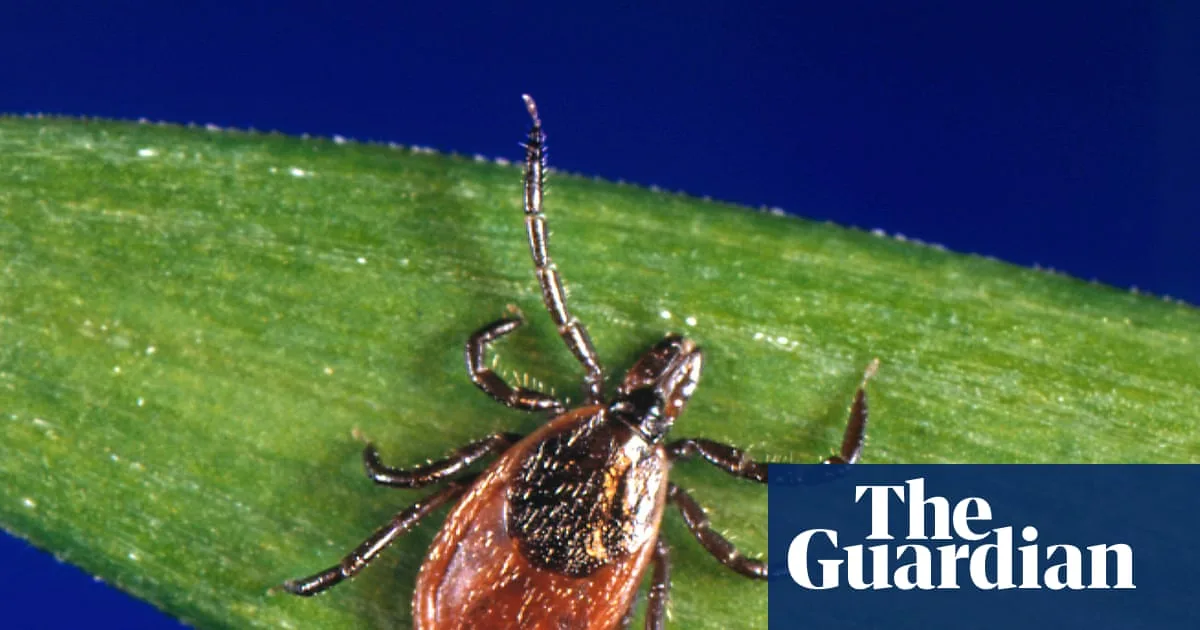
The US north-east is experiencing a record tick season, with the Fordham Tick Index reaching its highest risk level for the week of 20 June. Scientists attribute the surge to climate change, which has expanded tick habitats and increased their numbers.
Blacklegged ticks, the primary carriers of Lyme disease, are appearing in higher numbers this year. Data from universities and the US federal government show an increase in reported ticks, those carrying Lyme disease, and emergency room visits for tick bites. The range of Lyme disease has expanded significantly since 1995, with large clusters now in north-eastern and midwestern states.
Thomas Daniels, a vector ecologist at Fordham University, said climate change likely contributed to the expansion, as ticks become active above 40°F. Despite the heightened risk, experts advise caution rather than panic. “I love being outdoors, and I don’t recommend that people not go out if the weather’s nice, but you have to be prudent in taking some precautions,” Daniels said.
The number of nymph blacklegged tick encounters submitted to TickSpotters has been above the seasonal weekly average over the last decade, though numbers have started to decrease in recent weeks. In May and June, the US saw the highest number of emergency room visits for tick bites since 2019, according to the CDC. However, not all bites lead to Lyme disease, which can cause rash, fever, chills, fatigue, and muscle aches.
Other tick-borne illnesses include alpha-gal syndrome, anaplasmosis, and Rocky Mountain spotted fever. Dr Shalom Sokolow, an emergency physician, advises being “prudent and proactive” in preventing tick bites and removing ticks quickly. Thomas Mather of the University of Rhode Island encourages people to submit photos of ticks to the Tick Encounter Resource Center to assess risk, noting that unnecessary antibiotic treatment can disrupt the gut microbiome.




