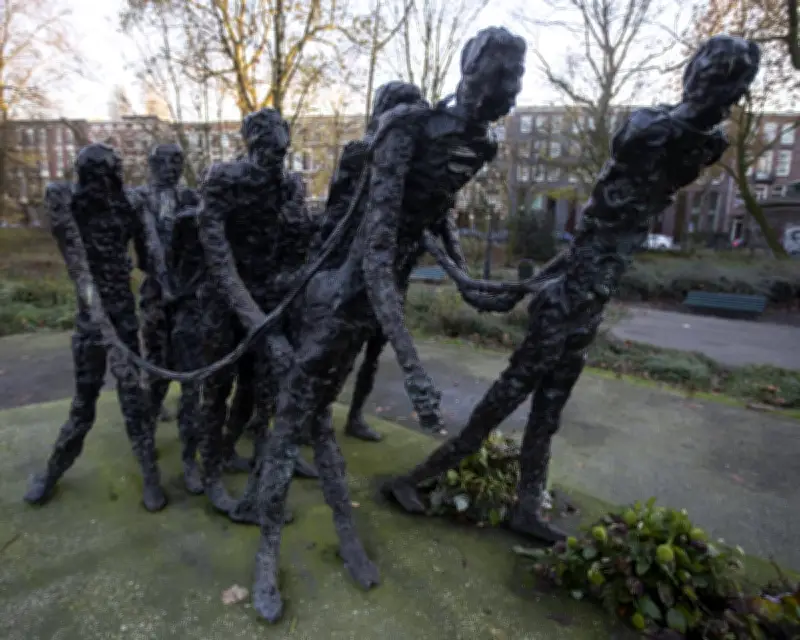
At least 3.3 million people were enslaved by the Netherlands during the transatlantic slave trade, according to new research by Dutch investigative journalist Leendert van der Valk. This figure is more than five times the 600,000 widely cited in history books and used in official apologies by King Willem-Alexander and former Prime Minister Mark Rutte.
Official Apologies Based on Underestimated Numbers
King Willem-Alexander apologized three years ago for the Netherlands' role in the transatlantic slave trade, referencing over 600,000 people brought from Africa on Dutch ships. In 2022, then-Prime Minister Mark Rutte also cited that figure when apologizing for "the past actions of the Dutch state." Van der Valk's book, Forgotten Places, Forgotten People – an Atlas of the Dutch History of Slavery, argues that the correct number is between 3.3 and 5.3 million.
Why the 600,000 Figure Is Incomplete
Van der Valk says the 600,000 figure fails to account for all regions where the Dutch colonized or enslaved people, the full period of involvement, those born into slavery, and Indigenous peoples enslaved in colonized territories. Peggy Brandon, a Surinamese-born cultural leader and curator of the Netherlands' National Museum of Slavery, emphasized the importance of accurate numbers. "What upsets me is that we never talk about the people who lived generation after generation within that system of enslavement," she said. "We don't talk about the people who sometimes killed their young children because they didn't want them to grow up in enslavement."
Humanizing the Victims
Brandon noted that getting the numbers right is about humanizing those dehumanized by Europeans to justify their treatment. "It's going back to the fact that these were human beings. And every person has a right to be seen and to be known," she said.
Research Methodology
Van der Valk's calculations rely on research from Radboud University, including demographic studies. Matthias van Rossum, a colonialism professor at Radboud and the International Institute of Social History, said the new figures "rightfully shift the question from its narrow focus on the numbers of enslaved people displaced directly through long-distance slave trade to including those enslaved who were born in slavery or enslaved in other ways in regional contexts."
Expanded Geographic and Temporal Scope
Van der Valk's calculation includes countries like South Africa, India, and Sri Lanka, which were Dutch colonies or slave trade sites before being taken over by England. It also covers parts of the Caribbean not previously included, such as Guyana and Tobago, which he said "were very important Dutch possessions until the official transition to England in 1814." He argues the period should start from 1595 instead of 1630, and end in 1914 when Dutch enslavement ended in parts of Indonesia, rather than 1863 when slavery was abolished in the Netherlands.
Rough Estimate but a First Step
Coen van Galen, an associate professor in colonial history at Radboud, described Van der Valk's calculation as a "rough estimate" but said it "provides for the first time an indication of the total number of victims of slavery in all Dutch colonies combined." He added that similar calculations could be done for other colonial empires, giving a more comprehensive global picture.
Calls for Action Following Apologies
Van der Valk's book comes as people in Dutch territories and the black community in the Netherlands call on Prime Minister Rob Jetten to follow up on official apologies with concrete action. This follows the UN's adoption of a landmark resolution in March declaring the trafficking of enslaved Africans as the gravest crime against humanity.