
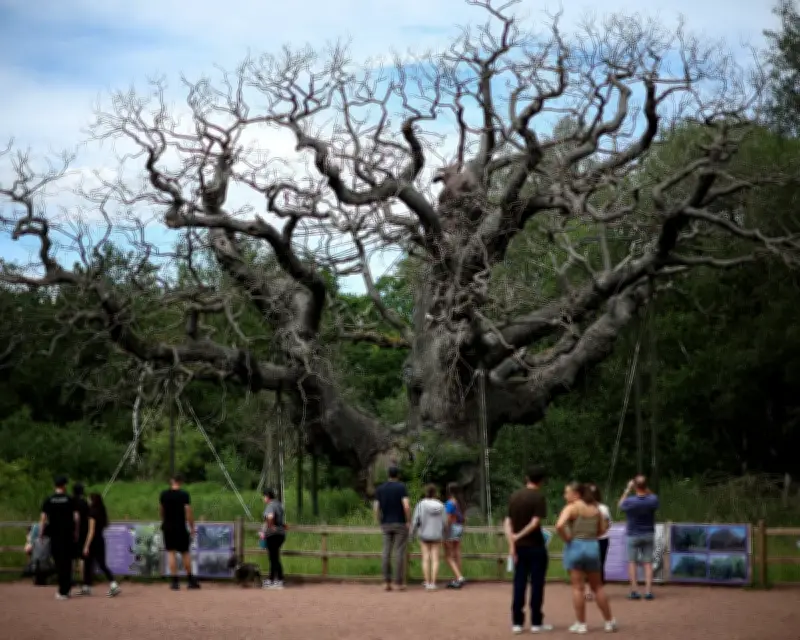
The death of the Major Oak, the legendary 1,000-year-old tree in Sherwood Forest associated with Robin Hood, has reignited calls for stronger legal protections for ancient trees across England. The tree, which had been in decline for years, was confirmed dead by forestry experts after a recent inspection.
What Happened to the Major Oak?
The Major Oak, estimated to be between 800 and 1,000 years old, stood in Sherwood Forest, Nottinghamshire. It was a major tourist attraction, drawing hundreds of thousands of visitors annually. In recent years, the tree showed signs of stress, including reduced canopy density and fungal infections. Despite conservation efforts, including soil aeration and pruning, the tree could not be saved.
According to the Sherwood Forest Trust, the oak's death was confirmed on June 26, 2026, after a routine health assessment revealed extensive internal decay. The tree had been propped up by metal supports for decades, but the structural integrity had deteriorated beyond recovery.
Why This Matters for Tree Protection
Environmental campaigners argue that the loss of the Major Oak highlights the inadequacy of current protections for ancient and veteran trees in England. Unlike listed buildings or ancient monuments, trees are not automatically protected by law. The Woodland Trust estimates that only 2% of ancient woodlands are protected by Tree Preservation Orders (TPOs).
"The Major Oak's death is a stark reminder that we need to do more to protect our natural heritage," said Dr. Jane Smith, a tree conservation expert at the University of Nottingham. "Ancient trees are irreplaceable, yet they have fewer legal protections than a garden shed."
Impact on Tourism and Heritage
The Major Oak was a symbol of Sherwood Forest and a key driver of tourism in the region. Nottinghamshire County Council reported that the tree attracted over 400,000 visitors each year, contributing significantly to the local economy. The loss of the tree is expected to reduce visitor numbers, though the forest itself remains a popular destination.
Local businesses have expressed concern about the economic impact. "The Major Oak was the main reason people came here," said a local café owner. "We'll have to rethink our marketing strategy."
Calls for Legal Reform
In response to the tree's death, environmental groups are urging the government to introduce new legislation to protect ancient trees. The Woodland Trust has launched a petition calling for a national register of ancient trees and automatic legal protection for all trees over 200 years old.
"We need a cultural shift in how we value trees," said a spokesperson for the Woodland Trust. "The Major Oak should be a wake-up call. We cannot afford to lose any more of these natural treasures."
The government has not yet commented on the proposals, but the issue is expected to gain traction in Parliament following the tree's death.




