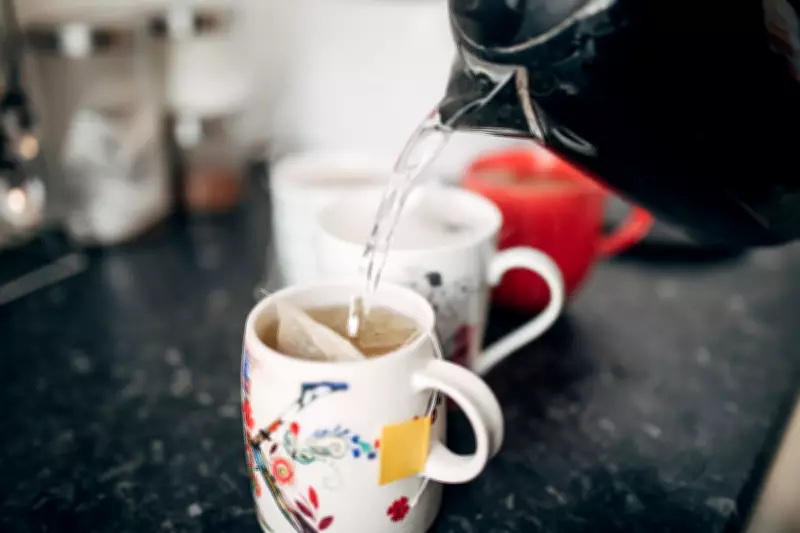
Warning climate change could threaten Britain’s beloved cup of tea. Disruptions to harvests caused by the changing climate are likely to cause price spikes, according to a new report from Christian Aid.
Climate Change Alters Tea Taste
The familiar comfort of a British cuppa is under threat, with campaigners warning that climate change could soon deliver a more bitter flavour to the nation’s beloved brew. A new report from aid agency Christian Aid reveals that rising global temperatures and increasingly extreme weather patterns are set to fundamentally alter the taste of tea.
Key tea-producing regions, including Kenya, India, and Sri Lanka, are experiencing conditions that could lead to harsher, less consistent flavours. Even growers in the UK are struggling to maintain the desired taste profiles due to the changing climate. These disruptions to harvests are also predicted to trigger price spikes, increased costs, and unreliable supplies of the staple drink.

Impact on Smallholder Farmers
Christian Aid highlights that the most severe impact falls upon smallholder farmers and tea producers in these countries. They are not only battling the direct effects of climate change but also grappling with issues such as the rising price of fertiliser and fuel.
The charity is urging immediate action to support these vulnerable farmers. This includes developing more resilient tea plants, enhancing irrigation systems, and planting shade trees to protect bushes. Furthermore, they advocate for fair pricing, dedicated funding to help producers adapt to climate change, and robust protections for workers across the industry.
Ideal Growing Conditions at Risk
The report warns that tea production relies on stable temperature and rainfall conditions, which are now shifting in producer nations, with optimal growth within a relatively narrow temperature range of between 13C and 30C and with adequate but not excessive rainfall.
Dr Neha Mittal, senior climate services scientist at the Met Office and visiting scientist at the University of Leeds, said: “Tea brands depend on delivering a stable and recognisable flavour profile. As climate variability increases, achieving that consistency becomes more challenging.”
Bitter Taste Ahead
Tea flavours and quality depend on a balance of compounds such as catechins, amino acids and polyphenols, according to the report, but higher temperatures increase the production of more astringent compounds while reducing sweetness, leading to a more bitter taste.
Erratic rainfall can dilute compounds that give tea its depth and character, while extreme weather from droughts to floods and worsening crop pests in warmer conditions can also put pressure on the plants, leading to lower yields, lower quality and more bitter crops, the report says.
“The result is a simple but unsettling prospect – the familiar taste of the British cuppa, smooth, balanced, reliable, is becoming harder to guarantee,” it warns.
Expert Warnings
Claire Nasike Akello, climate adaptation and resilience lead at Christian Aid, said: “For generations, consumers have taken for granted that a cup of tea will taste the same, day in, day out. But that consistency depends on a stable climate, and that stability is now breaking down.
“What we are seeing is the beginning of a shift towards a harsher brew, with the risk that Britain’s favourite drink becomes more bitter, more expensive and less reliable.”
And she warned that farmers who had done least to cause climate change were being pushed further onto the frontline of the crisis, with fewer resources to adapt.
“Protecting the future of tea means investing in people as well as crops – through fair pricing, targeted adaptation finance and stronger support for farmers and workers,” she urged.
Farmer Perspectives
Reuben Korir, a small-scale tea farmer from Kericho County in Kenya, said that when the weather was very dry or unpredictable, the quality of the tea changed.
“The leaves are smaller, and we believe the taste is not as good as it used to be during more stable seasons,” he said. “Rains no longer come when expected, and dry periods last longer. Harvests are not predictable anymore, and neither is the income.”
Even in the UK, the changing climate is a problem for tea producers, they say.

Lucy George, who runs Peterston Tea, a small tea farm in South Wales and one of the first commercial tea farms in the UK, said: “Seasons are less predictable with warmer winters, sudden late frosts, and irregular rainfall patterns.”
For the farm, warmer periods could accelerate growth, while erratic rainfall or cold snaps could slow growth and affect leaf structure.
“The balance that gives tea its depth – sugars, amino acids, polyphenols – is closely tied to stable growing conditions. When that stability is lost, consistency becomes much harder to achieve,” she said.