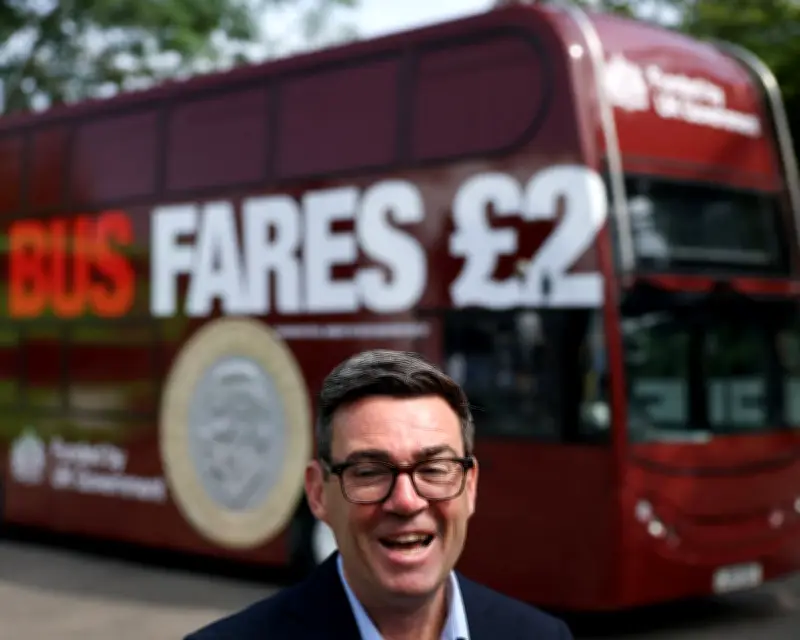
Charities have warned that the world's most vulnerable people will be put at risk by Prime Minister Andy Burnham's decision to use the aid budget to pay for cheaper bus fares in England. Burnham announced on Wednesday that the fare cap would be reduced from £3 to £2 per journey for next year, funded mainly by changing international climate donations into repayable loans.
The switch allows the government to borrow more against those loans without violating its borrowing rules, but experts say it will leave people in the poorest parts of the world more vulnerable to the effects of the climate crisis. The announcement came after the government indicated that the new aid minister, Kirsty McNeill, would not attend cabinet as her predecessors had done, raising concerns about a downgraded commitment to international development.
Reactions from charities and politicians
Joanne O'Neill, co-director of advocacy at ActionAid UK, said: "The prime minister's fare cap scheme is a welcome initiative but his funding proposal throws global south countries under the bus, penalising those most impacted by a climate crisis they did not create." She added that delivering international climate finance as loans instead of grants pushes countries deeper into debt and forces them to divert funding from essential public services, disproportionately affecting women and girls.
Liberal Democrat international development spokesperson Monica Harding said Burnham's decision would "further undermine the UK's standing as a reliable global partner" and that swapping climate grants for loans would "ultimately fall on the backs of the world's poorest, racking developing nations with more destabilising debt."
Romilly Greenhill, chief executive of Bond, which represents aid organisations, said: "It is disappointing that the new prime minister is picking up where the previous one left off, by continuing to raid the diminished UK aid budget to prop up much-needed funding for the cost of living crisis here in the UK." Danny Gross, a climate campaigner at Friends of the Earth, called the funding method "nothing short of a travesty."
Details of the policy
Burnham made the bus fare cap his second major policy announcement in office, following a pledge to cut VAT on electricity bills. During a visit to Bath, he said the move would "really help people with the cost of living pressures they're facing" and would be in place for the whole of 2027. Downing Street said the cap would cost over £500 million next year, with £400 million funded by switching international climate investment to loans.
Officials said the switch would enable money to go to international financing schemes such as the Tropical Forests Forever Facility, an anti-deforestation initiative set up by Brazilian President Luiz Inácio Lula da Silva. However, converting donations to loans means money is likely to go to countries that can repay them, such as middle-income nations like India or Brazil, rather than the world's poorest. The switch could reduce the amount of UK international aid, which the previous government had promised to keep at 0.3% of national income after halving it for defence spending.