
Burnham's Vision for Council Housebuilding
Andy Burnham, the mayor of Greater Manchester and potential future prime minister, has outlined a vision for the biggest council housebuilding programme since the postwar period. Speaking on Monday, he said a Labour administration under his control would oversee a massive expansion of social housing, aiming to address the loss of almost 1.5m council homes since the 1980s and the similar number of families on social housing waiting lists nationwide.
Burnham's plan is inspired by the postwar housing boom, which saw housebuilding top 300,000 a year in the 1950s, with more than half built by local authorities. However, after Margaret Thatcher's 1980 Housing Act introduced the right to buy, local authority construction plummeted. Burnham wants to revive that spirit, giving councils back control of residential development sites and masterplanning of amenities, transport, and home construction.
The Scale of the Challenge
The challenge is enormous. The government's target of 300,000 new homes a year in England, creating an extra 1.5m by the end of this parliament, has already veered off track. Figures from property agent Savills show that just over half the target – 840,000 homes – are expected to be under construction by mid-2029, with sluggish activity forecast to continue well into 2027.
Burnham knows first-hand the limited powers available to local leaders. As mayor of Greater Manchester, he lacked the delegated authority and funds to extend affordable homes or cut waiting lists. He urged private developers to build thousands of homes, offering loans and clearing planning obstacles, but found that only a few properties qualified as affordable or social rents.
Collyhurst Village: A Case Study
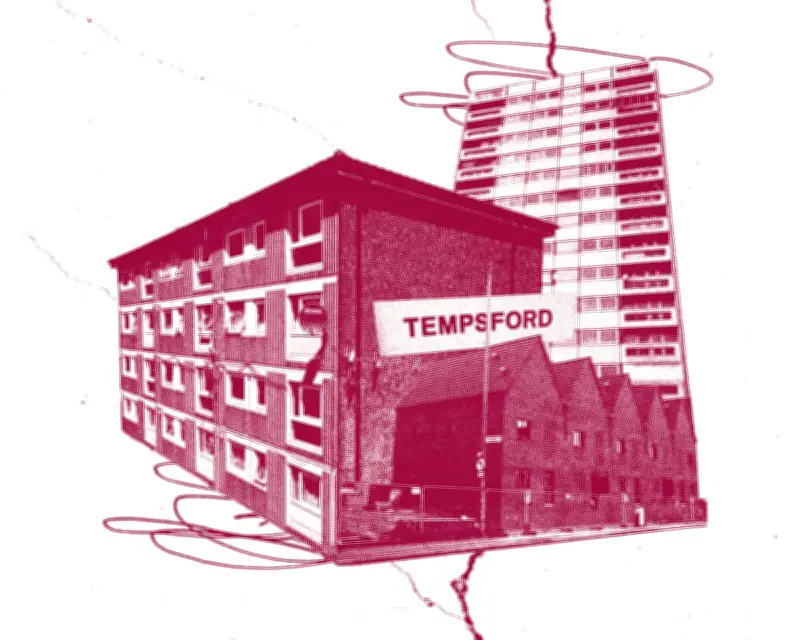
In Collyhurst Village, part of Manchester's Victoria North new town project, residents like Coral McKeown, 50, have been waiting years for new council homes. She has lived in a red-brick terrace for nearly three decades and was supposed to move into a gleaming new council house five years ago, but it remains behind heavy metal fences surrounded by building work. She does not expect it to be ready until next year at the earliest.
Her husband, Darren McKeown, 45, said the delays from Covid, trade tariffs, and the Iran war have made them less keen to move. They feel the development, a partnership between Manchester city council and Hong Kong-based developer Far East Consortium (FEC), represents two-tier regeneration. Private tenants get better amenities like toilets on the top floor and tiled bathrooms, while social housing tenants get lino floors and toilets in the kitchen. Some new townhouses are on the market for as much as £425,000, about £100,000 more than the average Manchester semi-detached house.
Obstacles from Private Developers
Julie Froud, a professor of financial innovation at the University of Manchester, said private-sector developers present councils with several obstacles. They need to drip-feed homes to maintain prices, and funding models limit the number of homes for social rent. Burnham adopted the basics of the foundational economy in his election platform, but Froud said he stopped short of plans in New York, where Mayor Zohran Mamdani introduced a citywide rent freeze.
As PM, Burnham could adopt more interventionist policies, sidelining private developers in favour of direct council control to eliminate two-tier housing. He would build on policies already in place by Rachel Reeves and Steve Reed, including a £39bn, 10-year social and affordable homes programme aiming to build 300,000 homes, 60% for social rent. Other initiatives include a £2.5bn National Housing Bank loans scheme, a 10-year rent settlement, and changes to right-to-buy.
Need for Focus and Devolution
Henry Overman, a professor of economic geography at the London School of Economics, said Burnham would need easy wins when constrained by a tight budget, further squeezed by a near-£5bn hole in defence spending. He believes devolution offers the best route to speedier decision-making, but urged Burnham to focus on only a few projects. 'Burnham says he wants to raise economic output and living standards everywhere, giving people good homes everywhere. Yet this would dissipate his energies and lead to diminishing returns,' Overman said.
Gavin White, Manchester city council's executive member for housing and regeneration, said giving more powers to councils would prevent two-tier developments. He said the council chose FEC 'because they shared our values and had the ambition to match our vision.' However, many councils have lost their expertise in housing development after 40 years of privatisation.




