
Simon Jenkins, a Guardian columnist, argues that Britain should spend less on defence, calling it a waste of money that could be better used for employment, welfare, and economic growth. He criticises the lack of debate on defence spending, noting that parliament, media, and thinktanks only discuss spending more or far more, never less.
Questioning the Russian Threat
Jenkins acknowledges Russia's actions in Ukraine but questions the claim by European army chiefs that Russia could march to war across Europe by 2029. He suggests this date is designed to pressure European taxpayers into compensating for the US's reluctance to be NATO's military backbone. He notes that Keir Starmer's defence plan commits 2.7% of GDP by 2030, while NATO's target of 3.5% by 2035 is seen as a deterrent to Vladimir Putin. However, Jenkins insists even 2.7% is too much, as there is no evidence Russia intends to attack British territory.
Historical and Economic Perspectives
Jenkins references realists like George Kennan and Henry Kissinger, who questioned treating Moscow as an evil power beyond its neighbours. He recalls Mikhail Gorbachev telling US General Colin Powell: "I'm very sorry, you'll have to find a new enemy." Jenkins argues that military spending is no deterrent against the pesky activities of Russian and Chinese agencies, and that aiding foreign friends is a matter of money, not warmongering.
The Military-Industrial Complex
Jenkins warns against the "military-industrial complex," echoing President Eisenhower's 1961 warning. He notes that in 1998, the defence lobby pushed for "expeditionary armed forces" without clear justification, leading to tragic outcomes in Afghanistan and Iraq. He also criticises the £63bn renewal of Britain's nuclear deterrent, which receives little debate despite its questionable necessity.
Wasteful Spending on Expensive Hardware
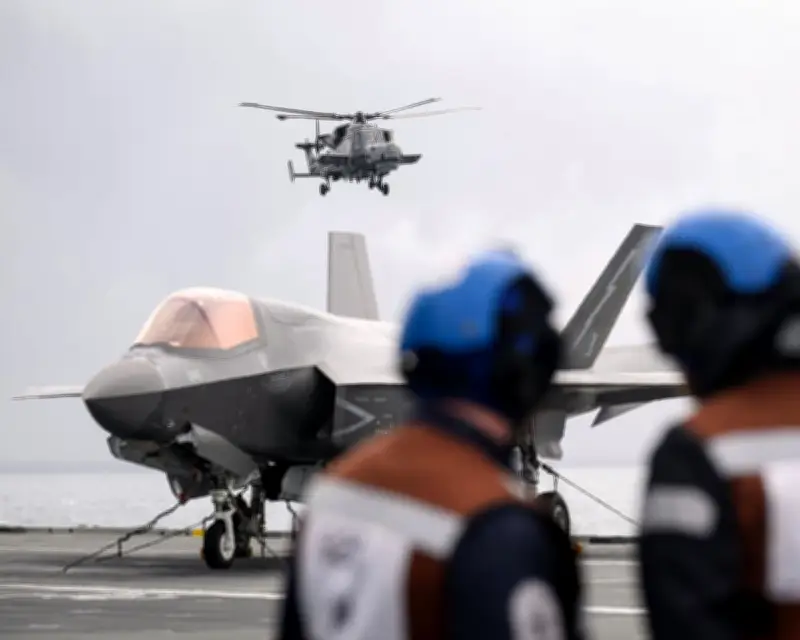
Jenkins highlights examples of wasteful defence spending: David Cameron was told it would cost more to cancel the second aircraft carrier than to build it; Boris Johnson sent a carrier to the South China Sea for a "global Britain" pose, and warships to the Black Sea to challenge Russia, costing billions. He also points to the nearly 600 Ajax armoured vehicles, years overdue and shown in Ukraine to be outdated against drones. At a defence conference, NATO's Deputy Allied Commander Air Chief Marshal Sir Johnny Stringer admitted the need for mass-produced low-cost drones, not expensive platforms.
Domestic Projects vs. Defence
Jenkins criticises Keir Starmer's plan to slash transport and energy projects to fund defence, without specifying which ones. He contrasts the £5bn drone programme with the £100bn HS2 railway, which he calls needless and not due for completion before 2043. He concludes that British governments do not lack money, but spend it poorly on conspicuous consumption like defence.




