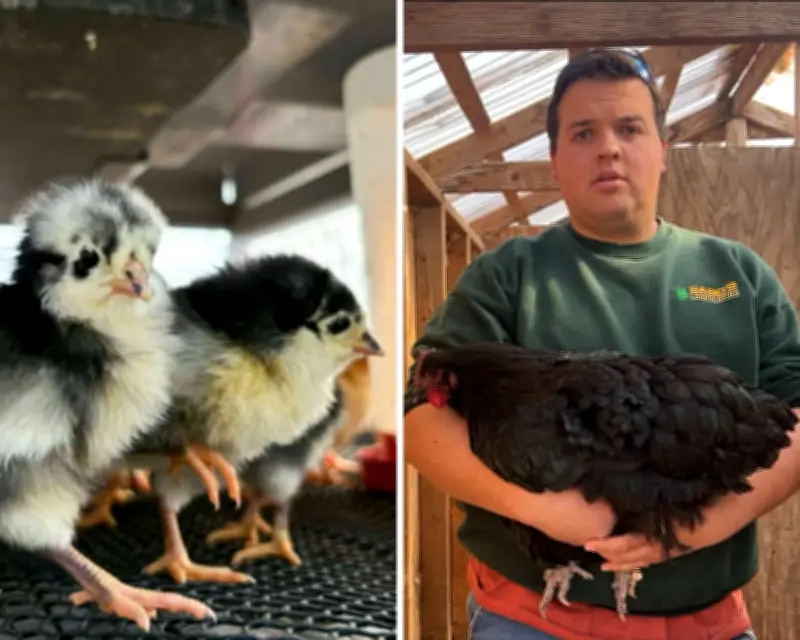
Joshua Beebe, owner of Tardif Poultry Farm in Connecticut, lost his entire flock of 5,000 birds in 2024 due to a salmonella outbreak. Now, as avian influenza (HPAI H5N1) continues to spread across the US, small poultry farms like his operate under constant threat. A single confirmed case of bird flu could wipe them out financially.
Daily Vigilance at Tardif Poultry Farm
Beebe starts each day by cleaning the tires of every vehicle entering his farm. "We spray them off and scrub them with a brush. It’s a precaution; the goal is to eliminate as many potential avenues for a pathogen to enter as possible," he said. The farm, located east of Hartford, raises chickens, turkeys, Pomeranian geese, and various ducks, including Toulouse and Welsh Harlequin breeds.
Since the current wave of bird flu was detected in eastern Canada in 2021, fear of the virus has tormented farmers. Although the northeastern US is not high-risk, outbreaks are possible. Vigilance comes at a high cost in time, money, and mental strain.
Trauma of Depopulation
In mid-2024, state-mandated testing detected salmonella in some of Beebe's birds. The bacterium can spread through eggs and infect humans. The farm was quarantined, and Beebe faced a choice: depopulate or retest every bird at $6.50 each. With 5,000 birds, retesting was unaffordable. "I didn’t know what was happening to us," he said.
Beebe and his team euthanized the birds using carbon dioxide, a process that took about 10 days. "It was emotionally draining. I haven’t gone a day without seeing birds when I walk out my door in over 10 years. The silence was the worst," he recalled. The farm remained under quarantine until February 2025.
Strict Biosecurity Measures
To prevent future outbreaks, Beebe enforces strict rules. No one is allowed in the bird area except employees, who must change boots between stations and wear laundered clothes. Birds are segregated by age, and new arrivals are quarantined for 21–35 days. Dead birds are buried or composted; larger die-offs are incinerated off-site.
Netting, reflective ribbon, and fake owls deter wild birds. However, risks remain. "Even one gram of bird droppings can contain billions of viral particles," said virologist Ilaria Capua. Climate change may alter migratory patterns, increasing exposure.
Financial Burden on Small Farms
Beebe estimates repopulating the farm has cost nearly $50,000, including $14,000 for chickens alone. He sought indemnity from the USDA but was deemed ineligible because the depopulation was considered voluntary. Connecticut agriculture commissioner Bryan Hurlburt said the state has no program to offset such losses. "We do not have a program at the current time that would offset any of the losses," he stated.
Since 2022, bird flu has affected over 174 million commercial birds in the US, with 71 human cases since February 2024, according to the CDC. For small farms like Tardif, the threat remains ever-present.