
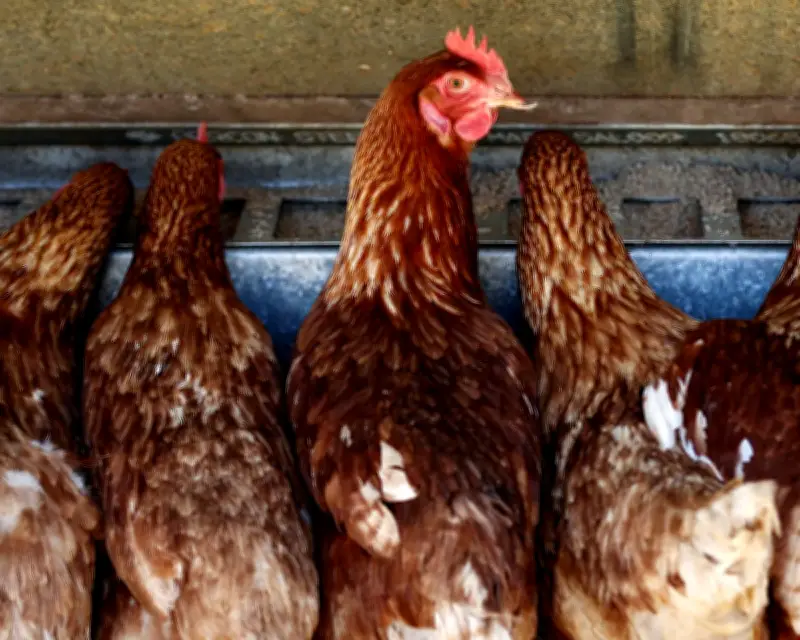
An outbreak of the highly virulent bird flu strain H5N1 in commercial poultry flocks could push egg prices over $10 a carton, business groups have warned. So far, there is no evidence that H5N1 bird flu has spread to poultry in Australia, following the first confirmed cases in wild birds across two states.
Worldwide, the H5 variant has caused "unprecedented levels of ongoing outbreaks", and 140 million farmed birds have died or been culled since January last year, according to the World Organisation for Animal Health. In the United States, the spread and control of the virus was linked to a 220% increase in egg prices in early 2025.
Poultry farms could be closed for months
The WA Chamber of Commerce and Industry this week warned that if the virus were to reach commercial flocks it could push egg prices above $10 a carton. The industry group's chief executive, Will Golsby, called for governments to prepare an industry support package in the event culling was required.
"An outbreak would likely require a farm to be closed for several months. Farmers would then need to source new chickens, grow them to productive size and navigate re-entry to markets and supply chain," he said.
The poultry industry, which contributes more than $10bn to the national economy, employs thousands of workers, and produces half of the animal protein eaten in Australia, already has plans in place to limit the spread to millions of birds housed on farms and facilities across the country. It successfully contained and eradicated high pathogenicity H7 bird flu outbreaks in 2024 and 2025. That response resulted in the destruction of about 2 million chickens, the loss of about 7% of Australia's egg layer flock, and a jump in egg prices. One poultry farmer told the ABC he lost more than 500,000 birds and millions in revenue as a result of those outbreaks.
More species could carry the virus
Dr Robyn Alders, a veterinarian and honorary professor with the Australian National University, said an added challenge with the current H5N1 variant was the wider range of species that could carry the virus, including a wider variety of wild birds and mammals, and potentially even feral, pest or domestic animals. The recent H7 bird flu outbreaks were attributed to wild ducks.
That's why biosecurity measures were important, Alders said. These could include strict hygiene and movement controls, separating chickens from wild birds, and ensuring feed or water was inaccessible to wildlife. "For many years now, in some of the large poultry producing countries in Europe, during the migratory season, the governments will encourage producers to keep their flocks indoors, in sheds," she said. While larger producers may be able to keep birds inside, that could be challenging for some free range, family-run operations, and pasture-raised birds, Alders said.
The Australian agriculture department warns that H5N1 could spread directly to poultry from wild birds, and also via multiple different routes including contaminated clothing, equipment or vehicles, feed or water supply.
The 'stamping out' strategy
Australia's largest poultry producer, the Ingham's Group, announced a "complete lockdown" in Western Australia last week, following confirmation of the first positive case, with the company seeking an exemption to allow free-range chickens to be kept indoors. Egg producers in South Australia have been taking precautions including restricting unnecessary visitors, disinfecting vehicles, equipment and footwear, educating staff and closely monitoring their flocks.
"Australia has well-established national arrangements in place to respond to biosecurity incursions, including bird flu, with states and territories managing the on-ground response and the Commonwealth leading national coordination," a spokesperson for the agriculture department said. In the event of an outbreak, a national response would be activated, which could require mass culling; globally, 20 million cases in poultry have resulted in the loss of 140 million birds. Surveillance testing and vaccination have also formed part of the global response.
Australia's Ausvet plan details all aspects of the "stamping out" strategy, from potential infection pathways, testing, quarantine and movement controls, to approved methods for culling and disposal. Under the plan, the "default" is to contain and eradicate the disease, while minimising public health, animal welfare, environmental and economic impacts.
Euthanasia response
Acceptable methods for culling in the Ausvet plan include the use of carbon dioxide gas and a water-based expansion foam. The RSPCA has called for governments and the poultry industry to fast-track research into, and approval of, more humane killing methods, such as the use of nitrogen in gas or foam. The plan said additional measures may be considered in response to H5 bird flu, including emergency vaccination of poultry. However, at this stage, the agriculture minister, Julie Collins, has said that vaccines, if used, would be primarily for threatened native wildlife.
Alders said governments and industry had agreements in place for compensation if culling was required. "The incentive is there for them to detect and report early, and then have full movement control, quarantine, culling as required, and then decontamination and disposal of carcasses."




