
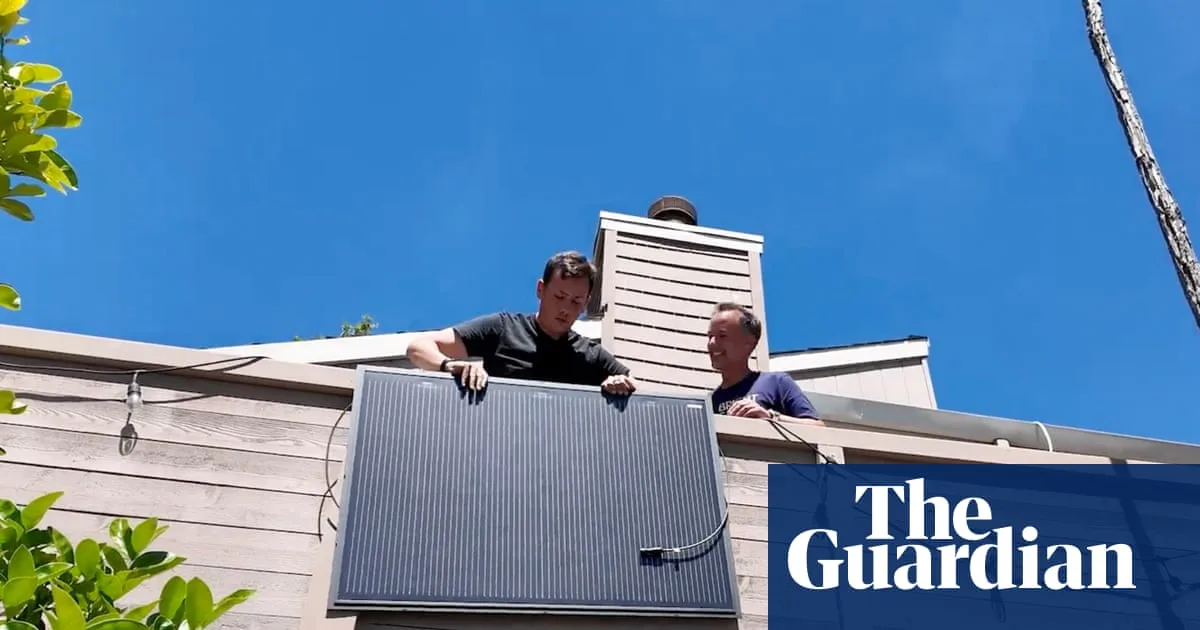
More Americans are turning to small solar panels for balconies and backyards as a way to cut rising electricity bills. Since 2020, US residential energy prices have surged by about 30%, making power the largest household energy expense after gasoline, according to the US Energy Information Administration.
Alex Curtis, a resident of Sunnyvale, California, recently installed a lightweight, thin-film solar panel on his condo balcony. The $400 kit from Bright Saver, a non-profit advocating for plug-and-play solar, weighs about 10lbs and plugs directly into a standard wall outlet. Curtis estimates it will save him $30 to $50 per month.
The setup is simple: hang the panel on a balcony or prop it in a backyard and plug it in. A small inverter syncs the solar energy with the home's electrical infrastructure. Bright Saver co-founder Cora Stryker says the units can trim monthly costs by 10% to 25%, depending on the number of panels installed. Savings can increase if paired with batteries to store excess energy.
While the technology is new in the US, it is widespread in Europe. Germany has an estimated 4 million balcony solar units, known as Balkonkraftwerk. US adoption has been slower due to utility regulations and safety concerns, which Stryker calls "patently ridiculous" for such small systems.
In 2025, Utah became the first state to officially authorize plug-in solar. Overall, 34 states and Washington DC have introduced legislation to allow the technology, with it passing in Colorado, Connecticut, Maine, Maryland, New Hampshire, and Virginia. For Stryker, it is a matter of personal liberty: "Don't tell me what to do in my own back yard and on my own balcony."




