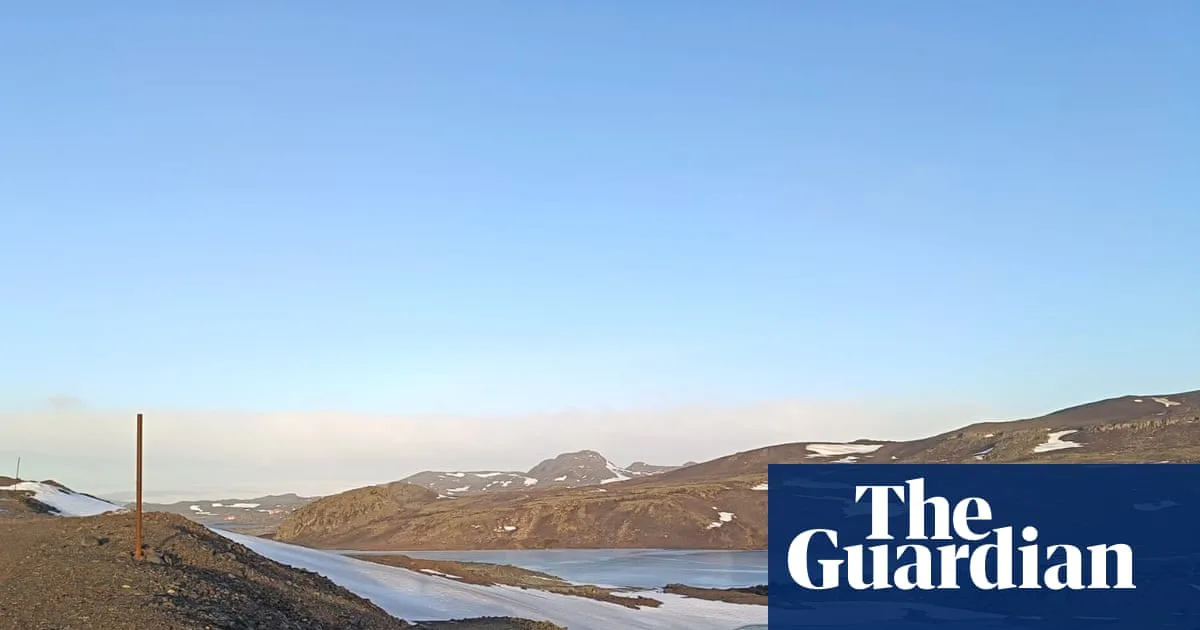
Arctic Sea Ice Ties Lowest Winter Maximum Amid Global Heat Surge
Arctic sea ice has reached a tie for its lowest winter peak on record, a stark indicator of climate change as unprecedented heat smashes temperature records across the globe. The National Snow and Ice Data Center reported that the ice's maximum extent before the summer melt measured 5.52 million square miles (14.29 million square kilometers), slightly below last year's 5.53 million square miles but considered statistically equivalent.
Unprecedented Global Heat Shatters Records
This alarming ice data coincides with a massive heatwave that has broken March temperature records worldwide. Climatologist Maximiliano Herrera described the extreme March temperatures as "by far the most extreme heat event in world climatic history," warning that conditions were expected to worsen in subsequent days. The heat has been particularly intense across the United States, Mexico, Australia, Northern Africa, and parts of Northern Europe.
In the United States, sixteen states broke March temperature records in the past week, with twenty-seven locations experiencing temperatures high enough to tie or surpass their hottest April days. Mexico has seen thousands of records shattered, some exceeding typical May highs. Asia has been hit even harder, with "dozens of thousands of monthly records" broken by margins of 30 to 35 degrees Fahrenheit (17 to 19 degrees Celsius).
Steady Decline in Arctic Ice Reflects Warming Trend
This year's sea ice maximum was approximately 525,000 square miles (1.36 million square kilometers) lower than the 1981 to 2010 winter average peak—an area roughly twice the size of Texas. Walt Meier, a senior scientist at the National Snow and Ice Data Center, explained that as polar regions warm, there is less opportunity for ice growth, leading to a steady decline in winter maximums. "It's not like we are seeing a regime shift or anything. It's more of a steady decline in the winter and at the maximum," Meier said, noting that this lower starting point gives the summer melt season a head start.
Summer Sea Ice Critical for Climate Stability
The summer melt season, which precedes the Arctic sea ice minimum measured in September, is particularly crucial. Reduced white ice during summer means less sunlight is reflected, allowing oceans to absorb more heat. This absorption can warm the Arctic closer to temperatures found further south, potentially altering atmospheric pressure and the jet stream—a phenomenon that may contribute to extreme weather events, though this theory remains controversial.
It is important to note that melting sea ice does not directly contribute to sea level rise, as it is already floating. However, its decline has significant implications for wildlife, such as polar bears and seals that depend on it, and for geopolitics, as reduced ice opens new shipping routes and increases interest in regions like Greenland.
Antarctic Contrast and Future Outlook
While the Arctic faces record lows, Antarctica recently set a record for the coldest March day anywhere on Earth at minus 105.5 degrees Fahrenheit (minus 76.4 degrees Celsius). Antarctic sea ice, heavily influenced by local weather and ocean factors, hit its annual low in February. Although smaller than the 30-year average, it was not near the record lows of the past three years.
Meier cautioned that the winter maximum, while a clear signal of global warming, does not guarantee a record-low summer, as winter ice growth is more variable with weather changes. Nonetheless, the trend underscores the ongoing impact of climate change on polar regions and the planet as a whole.